




Here’s a bet I’m willing to make: within a decade, the most controversial conservation tool won’t be a national park or a carbon credit — it’ll be a freezer full of DNA. The Trump administration just announced a partnership with Colossal Biosciences, the Dallas-based company that claims to have resurrected the dire wolf, to collect and store genetic material from America’s most imperiled species. And honestly? It’s either a brilliant hedge against extinction or a distraction from the real work of keeping habitats intact. Maybe both.
The initiative, called the “National Genetic Heritage Program,” will see the U.S. Fish and Wildlife Service and the Department of the Interior funnel samples from at-risk plants and animals to Colossal’s biobanking facilities. We’re talking tissue, blood, and reproductive cells — everything needed to potentially clone or de-extinct species down the line. The first batch includes the Florida panther, the California condor, and the black-footed ferret, three species that have hovered near the edge for decades.
Colossal’s CEO Ben Lamm told reporters the partnership could “rewrite the playbook on biodiversity preservation.” But let’s be clear: this isn’t about bringing back the passenger pigeon tomorrow. It’s about insurance. Genetic insurance against a planet that’s heating up faster than most models predicted — a reality underscored by events like Europe’s deadly heatwave that claimed hundreds of lives last summer. If we can’t stop the warming, maybe we can at least save the blueprints.
The Dire Wolf Factor: Hype or Hope?
Colossal made headlines in April 2025 when it unveiled three live dire wolf pups — a species that went extinct 13,000 years ago. The company used DNA from ancient fossils and edited the genome of a gray wolf to produce the animals. Critics called it a PR stunt. Supporters called it a proof of concept. Either way, it got the government’s attention.
“The dire wolf project demonstrated that the underlying technology works,” said Dr. Elena Torres, a conservation geneticist at the University of California, Davis. “But there’s a massive gap between creating a handful of engineered animals and restoring a functional population in the wild. This partnership needs to be transparent about what’s realistic.”
The program’s budget hasn’t been fully disclosed, but early estimates suggest $15 million in federal funding over three years, with Colossal matching that in-kind through lab space and sequencing equipment. That’s pocket change compared to the $1.5 billion the U.S. spends annually on endangered species recovery. But it’s a symbolic shift — the government is now officially betting on biotech as a conservation tool.
What’s Actually in the Freezer?
The biobanking effort will prioritize species with fewer than 500 individuals left in the wild. That includes the red wolf (fewer than 20 in the wild), the Hawaiian petrel (estimated 1,000 breeding pairs), and the Puerto Rican crested toad (down to 300 adults). Plant species like the Florida torreya and the Alabama canebrake pitcher plant are also on the list.
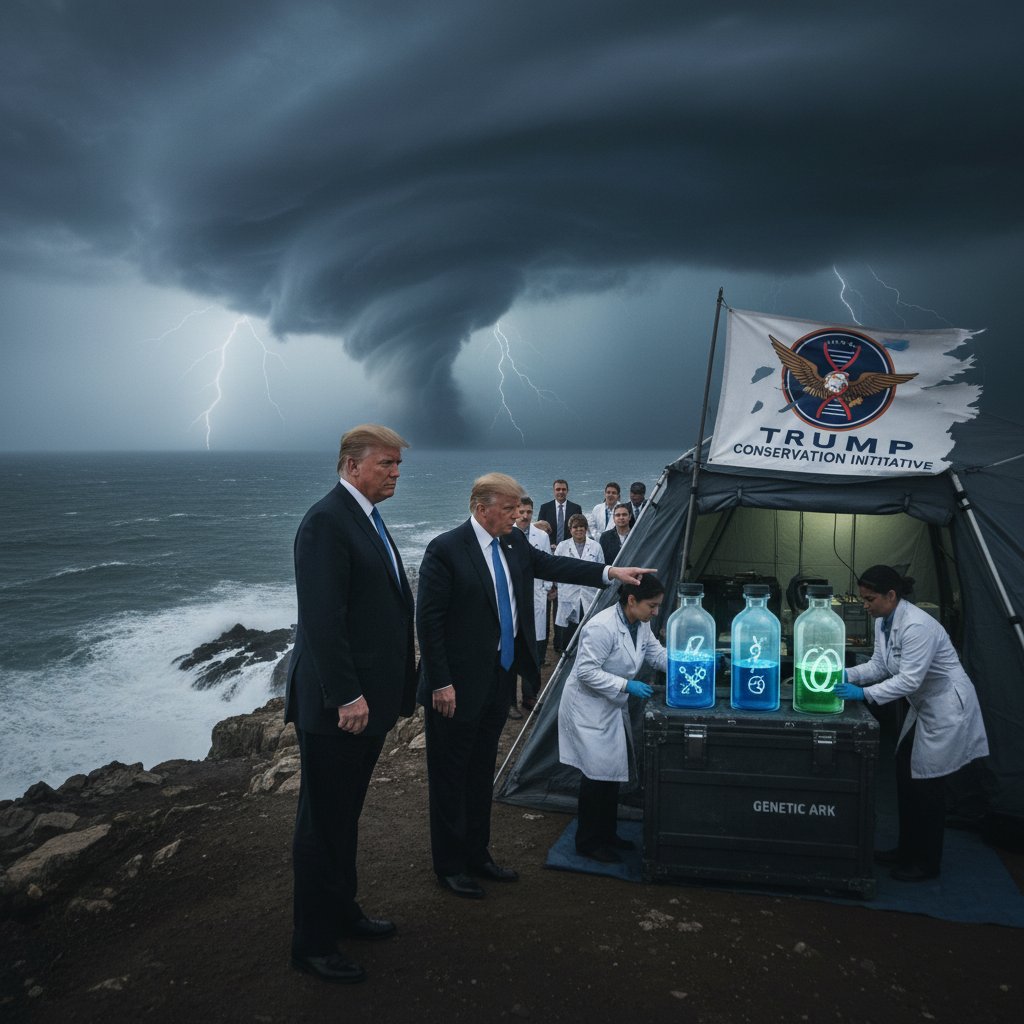
Samples will be stored at Colossal’s facility in Dallas and at a backup site in Colorado. Each sample gets a unique barcode, sequenced genome, and metadata about the animal’s health, location, and genetic diversity. The goal is to create a “genetic ark” — a living library that could one day be used to reintroduce genes into struggling populations or, in worst-case scenarios, resurrect species entirely.
But here’s the uncomfortable question: what happens when the habitat those species need is gone? You can’t release a cloned Florida panther into a parking lot. The Saharan dust that’s been adding an apocalyptic hue to Europe’s unrelenting heat is a reminder that climate change doesn’t respect borders — or recovery plans. Biobanking without habitat protection is like building a lifeboat while the ship is still sinking.
“We’re not choosing between habitat conservation and genetic rescue — we need both,” said Dr. Marcus Reed, a wildlife biologist with the U.S. Fish and Wildlife Service. “But if we lose the genetic diversity now, we lose the option to restore it later. This program buys us time.”
The Ethical Tightrope
Not everyone is cheering. Environmental groups have raised concerns about “techno-optimism” — the idea that technology can solve problems created by human activity without addressing root causes like deforestation, pollution, and climate change. The Center for Biological Diversity called the partnership “a distraction from the real work of protecting ecosystems.”
And there’s the money question. Colossal is a private company valued at over $10 billion, backed by investors who expect returns. The company has talked about commercializing its gene-editing tools for livestock and pets. Critics worry that public funds could end up subsidizing private profits while the actual conservation work — land acquisition, invasive species removal, captive breeding — remains underfunded.
But look at the alternative. Species are vanishing at a rate 1,000 times higher than the natural background extinction rate. The U.S. has lost 23 species to extinction since 1970, including the ivory-billed woodpecker and the Bachman’s warbler. If biobanking gives us a second chance — even a slim one — isn’t it worth trying?
Dr. Torres again: “I’d rather have the samples and not need them than need them and not have them. That’s the logic of insurance. But we need to be honest about the odds. Cloning a species doesn’t restore its ecological role. It doesn’t bring back the insects it ate or the trees it pollinated.”
What This Means for You
If you’re a taxpayer, you’re now funding a genetic backup plan for the nation’s biodiversity. If you’re a conservationist, you’re watching the playbook expand — for better or worse. And if you’re a species on the brink, well, your DNA just got a lot more valuable.
The program will publish its first progress report in December 2025, detailing how many samples have been collected and which species are prioritized. In the meantime, the administration is pushing for legislation that would allow the use of biobanked material in federal recovery plans — a move that could fundamentally change how the Endangered Species Act is implemented.
So here’s the forward-looking take: this partnership is a bet that technology can outrun extinction. It’s a bet that might pay off for the California condor, the black-footed ferret, and a handful of others. But it’s also a bet that could distract from the harder, messier work of keeping the planet livable in the first place. The freezer is full. The question is whether we’ll ever need to open it.
Frequently Asked Questions
What is the National Genetic Heritage Program?
It’s a partnership between the U.S. Fish and Wildlife Service and Colossal Biosciences to collect and store DNA samples from endangered species. The goal is to preserve genetic material that could be used for cloning, genetic rescue, or future reintroduction efforts.
Will this bring back extinct species like the passenger pigeon?
Not immediately. The program focuses on currently endangered species, not extinct ones. However, the technology developed through this partnership could eventually be applied to de-extinction projects. Colossal has already produced dire wolf pups, but that’s a separate effort.
How is this funded, and who benefits?
The federal government is contributing $15 million over three years, with Colossal matching that in-kind. The samples will be stored in both public and private facilities. Critics worry about private profit from public funds, but supporters argue the technology and data will be shared with the broader conservation community.