





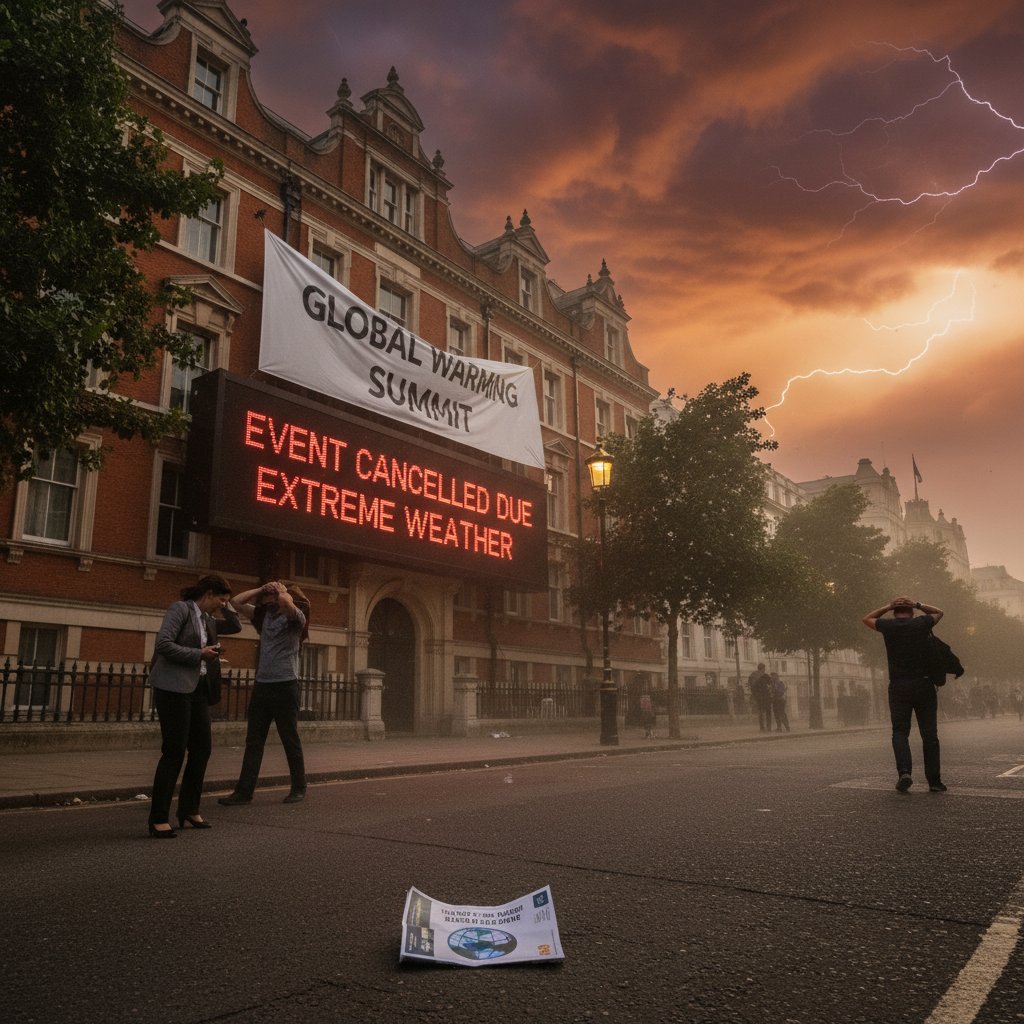
Let’s get this straight: London just canceled a conference about surviving extreme heat because it was too hot. If that doesn’t sum up the absurdity of our climate moment, I don’t know what does.
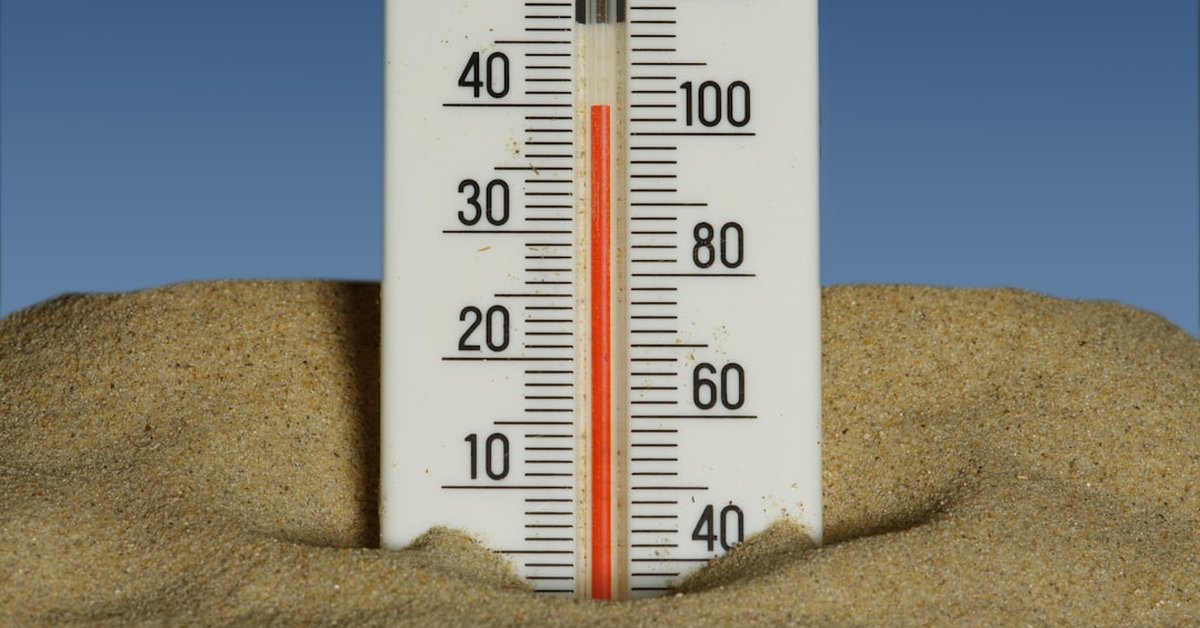
On Tuesday, organizers of the Urban Heat Resilience Summit — a gathering of urban planners, public health officials, and climate scientists — pulled the plug hours before it was set to begin at the Queen Elizabeth II Centre in Westminster. The reason? Britain’s Met Office had issued an unprecedented Level 4 heat health alert, with temperatures in central London hitting 38.7°C (101.7°F) by midday. The venue’s aging air conditioning system simply couldn’t keep up. So the very people who’d flown in to discuss how to protect cities from scorching heat found themselves — you guessed it — vulnerable to scorching heat.
“It’s the perfect metaphor,” said Dr. Eleanor Frost, a climate adaptation researcher at the University of Oxford who was scheduled to speak at the summit. “We’re literally unable to hold a meeting about heat because of heat. That’s not irony. That’s a warning siren.”
When the Solution Becomes the Victim
The summit was supposed to be a showcase of Britain’s preparedness. Organizers had planned workshops on green roofs, cool pavements, and early-warning systems — the kind of stuff that sounds great on PowerPoint. But the real world doesn’t run on PowerPoint. By 10 a.m., the venue’s cooling system had failed in three of the four conference halls. Staff handed out bottles of water and advised attendees to stay in shaded areas. By noon, they called it off.
It’s not an isolated incident. Across Europe, Europe’s Deadly Heatwave: Record Temperatures Claim Hundreds has shown that even wealthy nations are struggling to adapt. The U.K. has spent years talking about heat resilience — but talk doesn’t cool buildings. “We’ve been saying for a decade that our infrastructure isn’t designed for 40°C days,” said James Whitmore, a civil engineer who consults for Transport for London. “And now we’re seeing it in real time. Air conditioning in most London offices was installed when the hottest day was 30°C. That’s a 25% increase in load. The systems just can’t cope.”
Whitmore pointed out that the problem isn’t just about comfort. In 2022, a heatwave killed over 3,000 people in the U.K., according to the Office for National Statistics. The elderly, the isolated, and those without access to cooling are most at risk. And yet, the summit cancellation shows that even the experts aren’t immune.
“We design for the past, not the future. And the past is gone.” — Dr. Eleanor Frost
A City Unprepared for Its Own Future
London is, by many measures, a world-class city. But it was built for a temperate climate that no longer exists. The Tube, famously, has no air conditioning on the deep-level lines. Platforms routinely hit 35°C. Schools close. Hospitals divert patients. And now conferences about heat — they cancel.
The irony hasn’t been lost on social media. #HotTake trended on X (formerly Twitter) with memes showing a melting snowflake logo of the summit. But behind the jokes is a serious question: If we can’t even run a meeting about heat, how are we going to run a city through a heatwave?
Part of the answer, experts say, is that the U.K. has been slow to adopt cooling standards that are routine in hotter countries. “Look at Dubai or Singapore,” said Dr. Frost. “They don’t have this problem because they’ve engineered for heat. But there’s this weird British attitude that air conditioning is wasteful or unnecessary. It’s not. It’s life-saving.”
And it’s not just about AC. The city’s green spaces — which can reduce local temperatures by 2–3°C — are unevenly distributed. Poorer neighborhoods have fewer parks and more concrete, creating urban heat islands that amplify the danger. Traveling to Europe in a Heat Wave? Essential Safety Tips for 2025 highlights that tourists are often the most vulnerable, but locals don’t fare much better. The summit’s cancellation is a stark reminder that no one is truly prepared.
The Science of ‘Too Hot to Function’
What exactly happened at the Queen Elizabeth II Centre? According to a spokesperson for the venue, the cooling system — a set of rooftop chillers installed in 2009 — failed under the load. “We had maintenance crews working from 6 a.m., but the ambient temperature exceeded design thresholds,” the spokesperson said. “We apologize to all attendees.”
The design threshold for most U.K. commercial buildings is around 32°C. On Tuesday, it was nearly 39°C. That’s not a glitch — that’s a structural vulnerability. And as Reuters reported in 2022, the U.K. is seeing heatwaves that are 10 times more likely due to climate change. The Met Office has warned that 40°C days could become normal by 2050.
So what does that mean for the summit’s attendees? They went home — some to sweltering flats, others to hotel rooms with working AC. But the real work — the planning, the networking, the knowledge exchange — evaporated. “We lost a day of collaboration,” said Whitmore. “And we don’t have days to waste.”
The irony is that the summit was supposed to produce a ‘London Heat Resilience Action Plan’ by the end of the year. Now the organizers are scrambling to reschedule — possibly for autumn, when the weather will be cooler. But autumn is also when the next crisis comes: flooding.
What This Means for You
If you’re reading this in the U.S., Canada, or the U.K., this story isn’t just about London. It’s about every city that built its infrastructure for a climate that no longer exists. New York, Chicago, Toronto, Vancouver — they all have buildings designed for yesterday’s weather. And yesterday’s weather isn’t coming back.
The next time you see a conference on climate adaptation, ask yourself: Is the venue itself adapted? Because if the experts can’t keep cool, what chance do the rest of us have?
For now, the summit organizers are promising a virtual event next week. But virtual meetings can’t test cool pavement or install green roofs. They can’t retrofit a building. They can’t save a life when the heat hits 40°C and the AC fails.
Look, I’m not saying we should panic. But I am saying we should stop pretending that a few solar panels and some bike lanes are enough. The heat is here. And it’s canceling our meetings — literally. The question is whether we’ll start listening before it cancels something more important.
Frequently Asked Questions
Why was the extreme heat event canceled?
The Urban Heat Resilience Summit was canceled because the venue’s air conditioning system failed due to record-breaking temperatures in London, which exceeded 38°C. Organizers deemed it unsafe for attendees and staff.
How common are such heat-related cancellations in the U.K.?
They’re becoming more common. In 2022, multiple schools, hospitals, and transport services were disrupted during the July heatwave. This is the first known cancellation of a climate conference due to heat, but experts say it won’t be the last.
What can cities do to prevent this in the future?
Key measures include upgrading building cooling systems to handle higher temperatures, increasing green spaces and tree cover, implementing cool roof technologies, and establishing early-warning systems. The U.K. government has pledged funding for heat resilience, but critics say it’s too little, too late.