





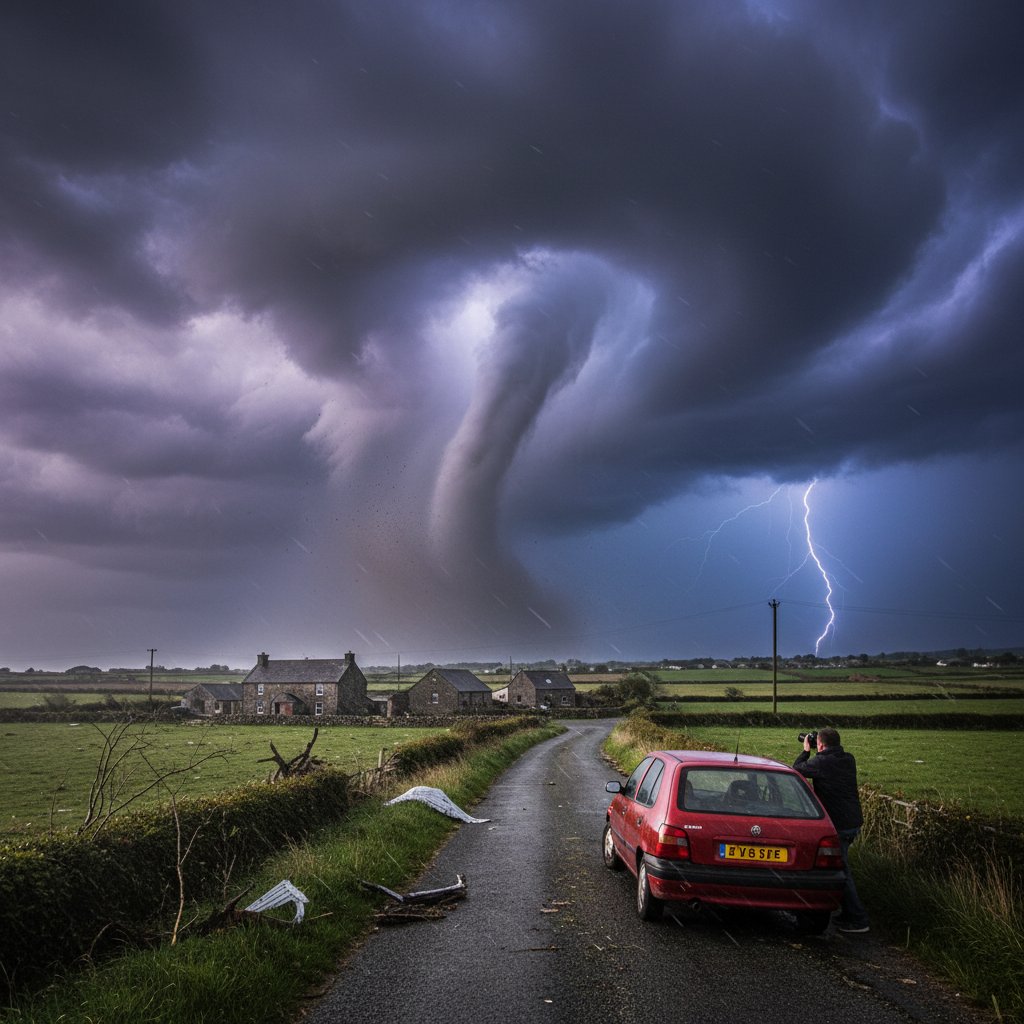
Residents of the quiet farming town of Athenry, County Galway, are still picking up the pieces after a rare tornado tore through the area on the afternoon of December 9. The twister — which meteorologists now classify as an EF1 with windspeeds reaching 110 miles per hour — ripped roofs off homes, toppled stone walls, and flung debris across fields for nearly two kilometers. Miraculously, no fatalities were reported, but at least four people suffered minor injuries, and dozens of families have been displaced.
For most people in Ireland, tornadoes are something that happens in Oklahoma, not in the lush green countryside of the Emerald Isle. But this event is part of a broader pattern: extreme weather events — from Bay of Biscay storms to freak heatwaves — are becoming more common across Europe. The question is no longer whether these events will happen, but how bad they’ll get.
A Quiet Afternoon, Then Chaos
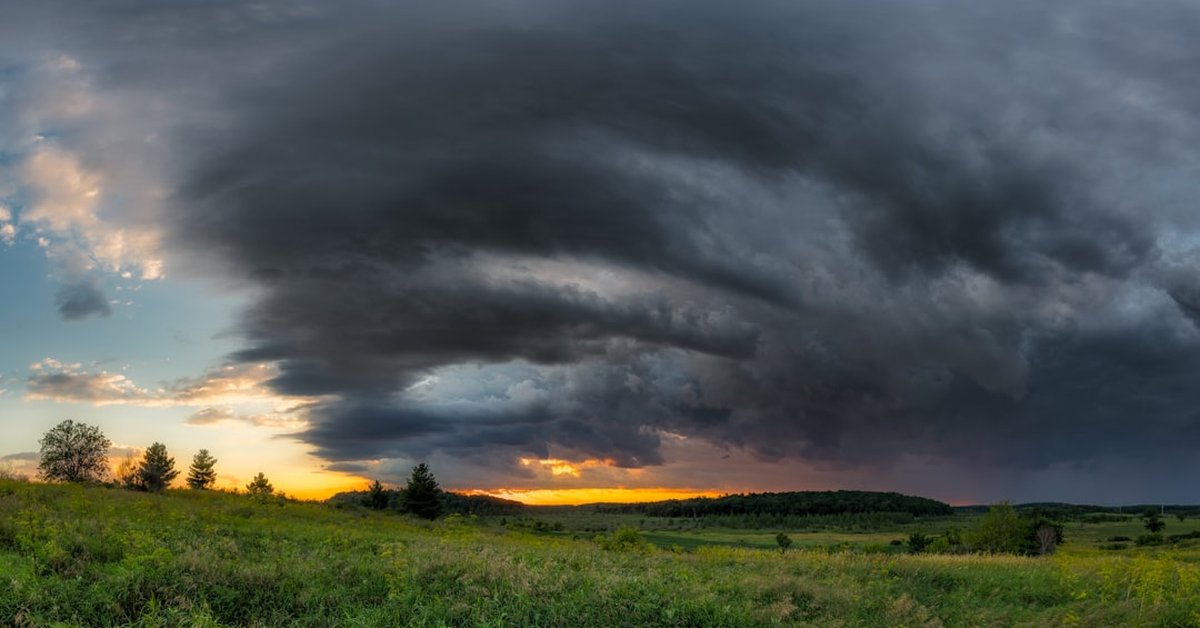
Just before 3 p.m., the sky over Athenry turned an ominous greenish-black. Locals described hearing a roar like a freight train — a sound many recognized only from newscasts. “I looked out the window and saw a funnel cloud touching down behind the church. It was surreal,” said Aoife O’Brien, a shopkeeper who watched the tornado cross the main street. The storm lasted less than five minutes, but the damage was extensive. Dozens of homes lost their roofs, windows were blown out, and several cars were overturned. The local school suffered structural damage, though classes had ended hours earlier.
The Irish weather service, Met Éireann, had issued a yellow wind warning earlier in the day but did not predict a tornado. “Tornadoes are notoriously difficult to forecast in this part of the world,” explained Dr. Niamh McCarthy, a meteorologist at the Irish National Meteorological Service. “The conditions that produce them — high instability, wind shear, and a triggering mechanism — don’t occur often here. But when they do, they can be surprisingly intense.”
This tornado, with its path of more than a mile, is now one of the strongest documented in Ireland since modern records began in the 1950s. The previous record-holder was a 2014 tornado in the village of Belturbet, County Cavan, which also reached EF1 strength. But while rare, the frequency of Irish tornadoes may be ticking up. A 2020 study from University College Dublin found that the number of reported funnel clouds and tornadoes in Ireland has doubled since the early 2000s — something researchers link to warming sea surface temperatures in the North Atlantic.
Why Ireland? The Science Behind the Surge
Tornadoes require a specific recipe: warm, moist air near the ground, cooler dry air aloft, and a change in wind direction with height — wind shear. In Ireland, these ingredients rarely come together in the right proportions. But as the climate shifts, the recipe is changing. “A warmer atmosphere holds more moisture, and that’s a key fuel for thunderstorms,” said Professor Liam O’Dwyer, a climatologist at the University of Galway. “When you combine that with the natural variability of our weather patterns — like a low-pressure system from the Atlantic — you get more intense storms.”
The storm that spawned the Athenry tornado was part of a broader weather system that also brought Europe’s scorching heat shifts east earlier in the year, demonstrating how interconnected weather patterns have become. O’Dwyer notes that while it’s too early to attribute any single tornado to climate change, the trend is clear: “The risk of severe thunderstorms in Ireland is increasing. We can’t say this exact event was caused by climate change, but the background conditions are exactly what we expect.”
The event also echoes other recent extreme weather episodes across Europe. In November, the Bay of Biscay saw a storm that unleashed 100-mph winds and freak lightning — a storm that was itself linked to unusually warm ocean temperatures. And last summer, a heatwave shattered records across Western Europe, causing thousands of deaths. The common thread? An atmosphere that is warmer, wetter, and more volatile than ever before.
What This Means for You and Your Property
For the average person — whether you live in Ireland, the UK, or North America — the takeaway is simple: tornadoes can happen anywhere. The UK and Ireland record about 30-50 tornadoes per year combined, though most are weak and short-lived. But a single strong one can cause millions in damage. The last major tornado to hit the UK was in 2005, when a T4-rated (roughly EF2) twister struck Birmingham, injuring 19 people and causing £40 million in damage.
In Athenry, emergency services are still assessing the total cost, but early estimates suggest at least €10 million in damage. The Irish government has activated the Humanitarian Assistance Scheme to help affected families. “This is a wake-up call,” said local councillor Seamus Finnerty. “We’ve been lucky for so long, but the luck may be running out.”
For homeowners, the advice is straightforward: check your insurance policy. Most standard home insurance in Ireland covers storm damage, but some policies exclude wind damage or have high deductibles. Meteorologists also recommend paying attention to severe weather warnings, even if they seem overly cautious. “In a place like Ireland, people tend to ignore wind warnings because they’re used to strong winds,” said Dr. McCarthy. “But a tornado can develop so quickly that a yellow warning is actually a signal to stay alert.”
And it’s not just roofs and walls — there’s a mental toll. Psychological studies after tornado outbreaks show that survivors often experience post-traumatic stress disorder, especially if they had little warning. The fact that the Athenry twister touched down without a specific tornado warning has left many residents shaken. “I never thought I’d be scared of the weather in Ireland,” said one resident, Mary Kelly, as she surveyed her damaged home. “But now I’ll never look at a cloudy sky the same way.”
The Bigger Picture: A European Tornado Belt?
Could Ireland and the UK become a new tornado hotspot? It’s unlikely — but not impossible. Research published in the journal Weather and Climate Extremes suggests that as the planet warms, the areas most conducive to tornado formation will shift poleward. That could bring more severe storms to Northern Europe, while reducing them in parts of the United States. However, the effect is still uncertain. What’s certain is that the infrastructure and emergency response systems in places like Ireland are not designed for frequent tornadoes. Building codes don’t require tie-downs or safe rooms. Warning systems are minimal. As Dangerous Earthquake Swarm Rattles Japan has shown, preparedness is key when natural hazards become more common.
“We need to start thinking of tornadoes as a relevant hazard in Ireland,” said Professor O’Dwyer. “That means better forecasting, public education, and maybe even changes to building codes. Not this year or next, but within the next decade.”
The Athenry tornado is a snapshot of a changing climate — a warning that no region is safe from the extremes. For the people of this small town, recovery will take months. For the rest of us, it’s time to take notice. Because if a quiet Irish village can get hit by a tornado, anywhere can.
Frequently Asked Questions
How common are tornadoes in Ireland?
Tornadoes in Ireland are rare but not unheard of. The country sees an average of 10 to 15 reported tornadoes per year, though most are weak (EF0 or EF1). The Athenry tornado is one of the strongest on record in Ireland.
Is climate change making tornadoes more likely in Europe?
Climate change is increasing the moisture and instability in the atmosphere, which can fuel stronger thunderstorms. While it’s hard to attribute a single tornado to climate change, studies show that the conditions for tornado formation are becoming more frequent in parts of Western Europe.
What should I do if a tornado warning is issued in my area?
Seek shelter immediately in a basement or interior room on the lowest floor, away from windows. If you’re in a mobile home, get out and find a sturdy building or ditch. Cover your head and neck with your arms. Do not try to outrun a tornado in a vehicle — leave it and find a depression or low-lying area.