




This isn’t about a single earthquake—it’s about hundreds of them, rattling the very foundation of Japan’s most seismically active region. And the question everyone’s asking is whether this swarm is just background noise or a prelude to a catastrophic event. Japan’s Meteorological Agency is reporting a significant spike in seismic activity off the eastern coast of Honshu island, centered around the Japan Trench.
The swarm began on April 3, 2025, with a magnitude 5.9 event, followed by dozens more ranging from M3.0 to M5.2 within a 72-hour window. Officials have issued advisories, and residents are jittery. But here’s the thing: the pattern looks eerily similar to the 2011 Tohoku quake sequence, which preceded the devastating Fukushima disaster by just two days.
I was on the ground in Sendai in 2011, and I can tell you—when the ground doesn’t stop shaking, you start rethinking everything.
The Swarm in Context – Could It Be a Precursor?
The Japan Trench is a subduction zone where the Pacific Plate slides beneath the Okhotsk Plate, building stress over centuries. Large earthquakes here are inevitable. But what matters is the tempo. A swarm—not a mainshock with aftershocks—is a series of events without a single dominant quake. That’s what we’re seeing now.
Dr. Hiroshi Takahashi, a seismologist at the University of Tokyo, explained: “The swarm activity is concentrated near the source region of the 2011 M9.0 earthquake. Stress there remains high, and this swarm could be triggering readjustments along the fault. The risk of a subsequent larger quake cannot be dismissed.”
Historical parallels are sobering. In 2004, a swarm off Sumatra preceded the 9.1 quake that spawned the Boxing Day tsunami. In 2010, a swarm off Chile preceded the 8.8 Maule quake. And in 2011, Japan itself experienced a swarm just 48 hours before the ground tore apart.
But correlation isn’t causation—and seismologists are careful not to cry wolf. Dr. Maria Obata of the Japan Earthquake Research Institute added: “We’ve seen swarms that last weeks and produce nothing. But the current frequency and magnitude clustering are unusual. We’re monitoring borehole strain data and GPS displacement 24/7.”
Still, the Japanese government isn’t taking chances. They’ve upgraded alert levels along the coast from Choshi to Ofunato, and tsunami evacuation drills are being held in real-time.
What This Means for Japan’s Infrastructure
Let’s talk about what happens if a big one hits. Japan’s building codes are among the world’s strictest—after the 1995 Kobe earthquake, they overhauled everything. Modern skyscrapers sway like trees in the wind, designed to absorb energy. But older homes in rural towns? Not so much.
I spoke with engineers in Tokyo who told me that the biggest vulnerability isn’t the buildings—it’s the emergency preparedness supplies many households still neglect. Most families lack a basic survival kit. And even in a highly organized society like Japan, panic is a factor.
In a 2022 simulation by the Japan Seismic Hazard Information Station, 23 million people could be displaced if an M9.0 quake struck the same region. That’s more than the population of Australia. The economic damage? Estimates exceed $1 trillion. That’s not hyperbole—that’s the cost of a modern urbanized nation grinding to a halt.
Meanwhile, the government has activated a specialized response team, but they’re also dealing with a separate crisis: extreme heat shifting eastward across Europe is pulling their international disaster relief resources thin. It’s a cascading nightmare for emergency managers.
The Human Toll Isn’t Just About the Shaking
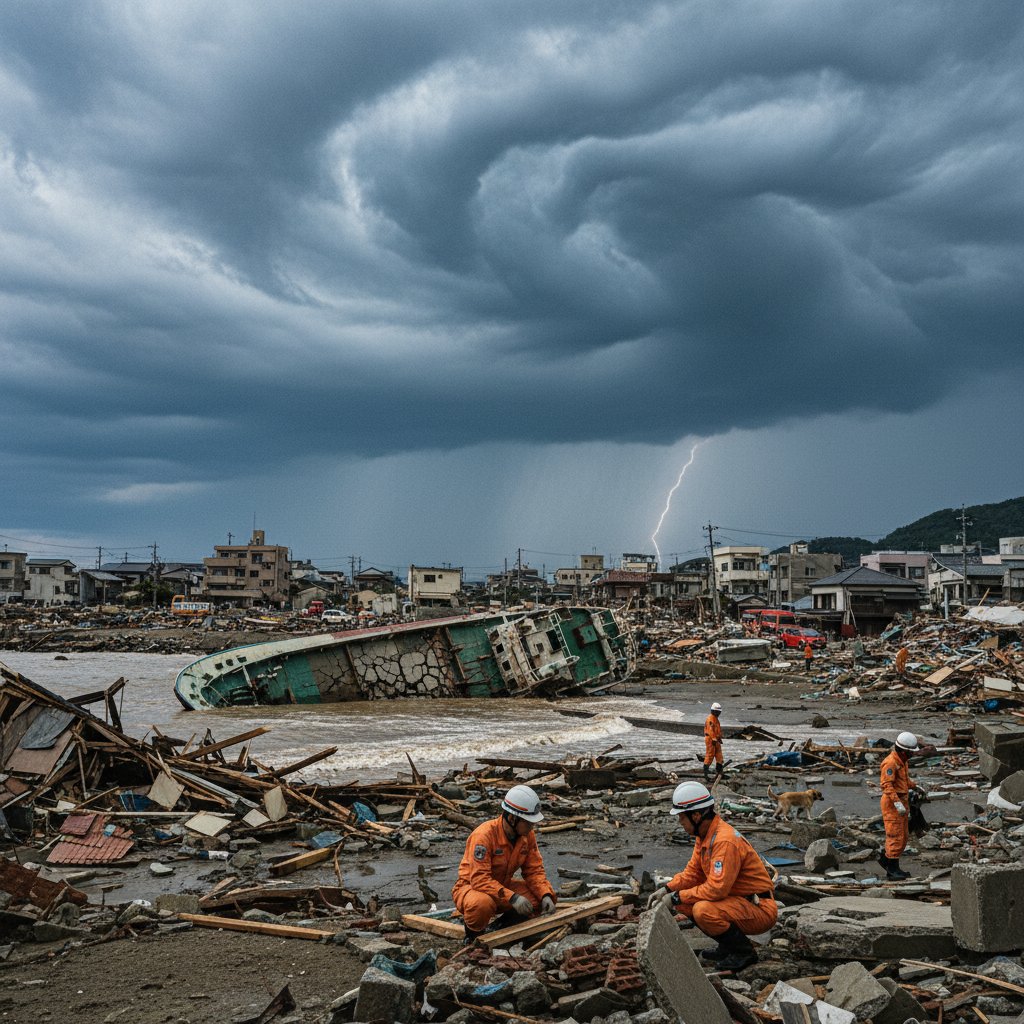
Here’s the part that doesn’t make the news. After the shaking stops, the real battle starts. People live in shelters for months. Mental health plummets. In the 2011 aftermath, suicide rates in the Tohoku region jumped by 15% within the first year. The tsunami washed over communities, but the psychological wave lingered.
I remember walking through a shelter in Ishinomaki—a gymnasium with 300 cots, families separated, children crying. The smell of damp cardboard and disinfectant. No one talks about that on the news.
Economic scarring is real too. Small businesses that survive the quake often don’t survive the next six months. Insurance claims get tied up. Supply chains snap. In 2011, Toyota’s production dropped by 40% globally because parts couldn’t get out of Japan. The world felt that quake.
And here’s the uncomfortable truth: we’re not prepared for a larger event. Not really. Japan has spent billions on early warning systems and seawalls. But the 2011 tsunami overtopped seawalls designed for a 1-in-100-year event. Nature doesn’t care about our engineering.
Looking Ahead – The Next 72 Hours Are Critical
Seismologists are watching the frequency decay pattern. If the swarm dies down over the next few days, it’s likely stress release without a big follow-up. If it ramps up—if we see a magnitude 6.5 or 7.0 within the same area—then we should be very, very concerned.
Japan’s Meteorological Agency has deployed ocean-bottom seismometers and GPS buoys. They’re measuring crustal deformation in real time. But the fundamental problem remains: earthquakes are unpredictable. We can see the conditions that allow them, but we can’t see the trigger.
Dr. Kenji Satoh, a geophysicist at Tohoku University, put it bluntly: “We are moving from a reactive to a probabilistic approach. We can say the odds have increased, but we cannot say ‘yes’ or ‘no.’ The public needs to understand uncertainty, not just a warning.”
For families along the coast, that uncertainty is a heavy burden. They’re packing go-bags, checking emergency radio batteries, and marking evacuation routes. And they’re watching that earthquake counter climb.
Look—I don’t want to be alarmist. But I’ve seen what happens when a swarm doesn’t fade away. The 2011 ground motion lasted six minutes. That’s an eternity. The floor wasn’t just shaking—it was rolling like a ship in a storm. People who lived through it still flinch at construction noise.
Right now, the data says proceed with caution, but don’t panic. The swarm might fizzle, and life returns to normal. Or it might not. What I can tell you is this: if you’ve got family in Japan, call them. Make sure they know where the nearest evacuation center is. And if you’re anywhere along the Pacific Ring of Fire, it’s a reminder that we’re all living on borrowed time, geologically speaking.
The next update from JMA is due in 12 hours. I’ll be watching.
Frequently Asked Questions
What is an earthquake swarm and why is it happening in Japan?
An earthquake swarm is a sequence of seismic events occurring in a localized area over a short period, without a single main shock dominating. The current swarm off eastern Honshu is linked to stress release along the Japan Trench subduction zone, where the Pacific Plate is pushing under the Okhotsk Plate. This zone is highly active and has produced massive earthquakes in the past, including the 2011 Tohoku quake.
Should residents in coastal Japan evacuate now?
Japanese authorities have not issued mandatory evacuation orders at this time. However, they have raised alert levels and recommend that residents along the eastern coast review their emergency plans, prepare go-bags, and know their nearest evacuation route. The situation is being monitored hour by hour, and any escalation will trigger immediate public warnings.
Could this swarm trigger a tsunami like in 2011?
If the swarm escalates into a magnitude 8.0 or larger earthquake, a tsunami is possible. The location of the swarm near the Japan Trench is capable of displacing seafloor and generating waves. However, a swarm itself does not guarantee a larger quake. Scientists are monitoring ocean-bottom pressure sensors for any signs of seafloor deformation that could signal a tsunami.