




Caracas, Venezuela – The earth shook for 12 seconds. For Andreina Valerio, that’s all it took to lose everything. “I hear my son crying beneath the rubble,” she told reporters on Saturday, her voice breaking. Her five-year-old, along with her partner and in-laws, is trapped under what used to be their apartment building in Cumaná, Sucre state.
The 6.1-magnitude earthquake struck at 7:45 p.m. local time on Friday, March 7, 2025, according to the United States Geological Survey (USGS earthquake monitoring). The epicenter was located 12 miles northeast of Cumaná, at a shallow depth of 10 kilometers. Shallow quakes—those under 20 kilometers—cause far more surface damage, and this one was no exception. At least three buildings collapsed in the city center, but the damage is likely much worse in rural areas where infrastructure is fragile.
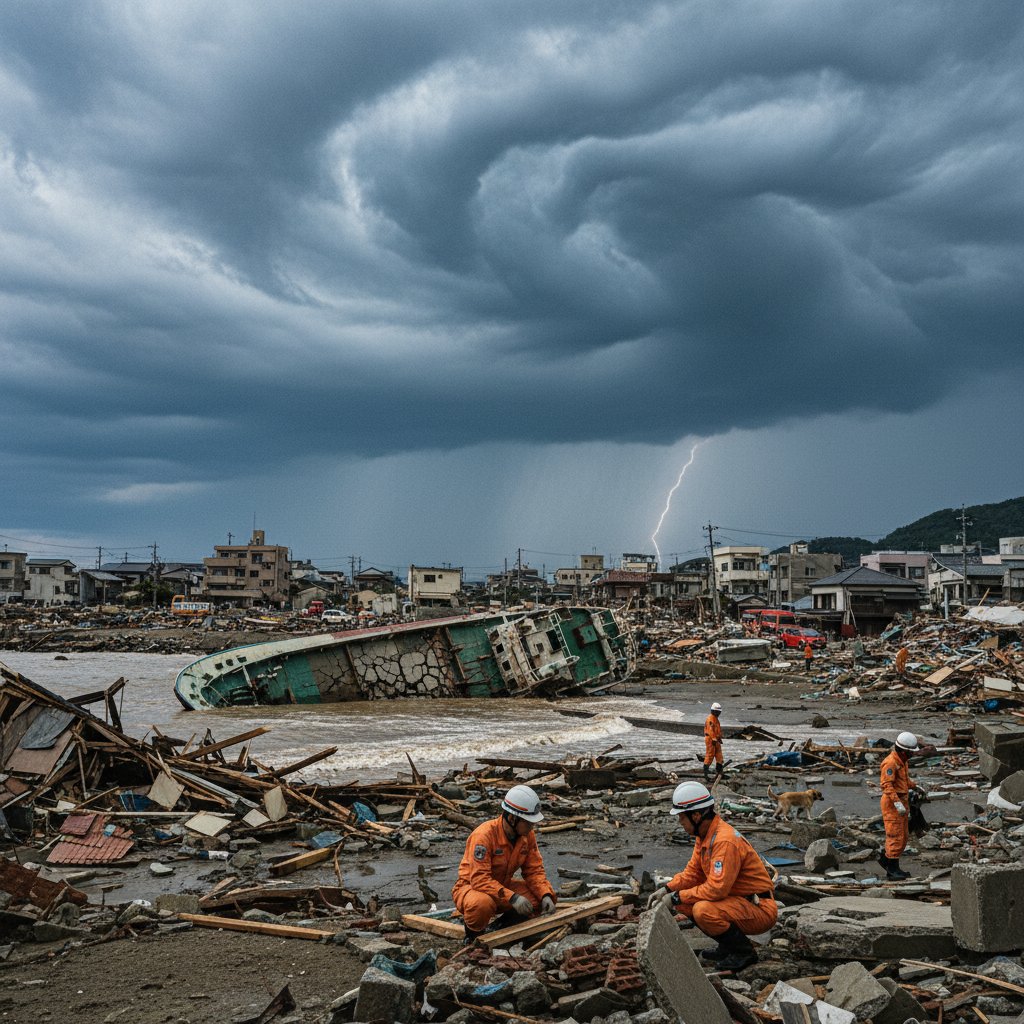
Valerio’s story is gutting. She was outside buying bread when the quake hit. She ran back. “I saw the building fold,” she said. “Like paper.” Now she sits on a curb, wrapped in a borrowed jacket, staring at a pile of concrete and twisted rebar. Rescue workers have pulled out two bodies so far. They are still digging. But there is no heavy machinery. And the screams—her son’s—have gotten quieter.
Why Shallow Quakes Hit Harder
This isn’t just a tragic anecdote. It’s a lesson in seismology—one that matters from the Andes to California to Japan. The depth of Friday’s quake, just 10 kilometers, meant the energy released traveled almost straight up. No dissipation. The ground acceleration in Cumaná peaked at 0.5 g. That’s enough to topple unreinforced masonry buildings—which most older structures in Venezuela are. They’re made of clay bricks and cement, with little steel rebar. They are death traps.
Dr. Maria Contreras, a seismologist at the Universidad de Oriente, explained the mechanics: “When an earthquake is shallow, the compressional and shear waves arrive almost simultaneously. You don’t get a warning. The ground just shakes violently. In Cumaná, many buildings are over 50 years old and were built before modern seismic codes. They will fail.”
“I hear my son crying. But the sounds are less frequent now. I’m begging for a machine, just one machine, to lift the concrete.” — Andreina Valerio
This is not Venezuela’s first big quake. In 1997, a 6.9-magnitude tremor near Cariaco killed 73 people and destroyed thousands of homes. The region sits on the boundary between the Caribbean and South American tectonic plates, where they slide past each other at a rate of about 20 millimeters per year. That’s slow, but the stress builds for decades. And when it releases—as it did Friday—it’s violent.
And look, there’s no getting around the fact that Venezuela’s economic collapse has made this worse. The country’s electrical grid is failing. Hospitals are short on fuel. Rescue teams lack basic tools. In the New York City fog disaster, emergency response was hampered by visibility. Here, it’s hamstrung by poverty. The entire nation holds its breath while Cumaná waits.
A City on Shaky Ground
Cumaná is Venezuela’s oldest continuously inhabited city—founded in 1515. It sits on a flat coastal plain, meaning the shaking in loose sediment amplified the waves. That effect, called site amplification, can double ground motion compared to bedrock. It’s why the damage is oddly concentrated. One building stands untouched; the next one, 20 feet away, is a heap of rubble.
Rescue efforts are now a race against time. The “golden hour” for rescue is 72 hours—but after that, survival rates drop steeply. As of late Saturday, authorities had deployed 200 National Guard troops and a handful of sniffer dogs. But the heavy equipment? It’s stuck. The main highway from Caracas has cracks from the quake, slowing traffic to a crawl.
Dr. James Reynolds, a disaster response specialist with the Pan American Health Organization, told CyclonePost: “The primary need now is for jackhammers, concrete cutters, and search cameras. Without them, rescuers are using crowbars and their hands. That’s medieval. In 2025, we should be better than this.”
And behind every number is a name. Andreina Valerio. Her son. Her partner. Andres, her brother-in-law. They’re buried under maybe 15 feet of debris. She hasn’t eaten in 20 hours. She won’t leave. “I gave birth to him,” she said. “I will not abandon him now.”
What This Means for Us
If you live anywhere near a fault zone—and that includes much of the US West Coast, Alaska, and even parts of the Midwest—this should hit home. The United States sees about 20,000 earthquakes annually, according to the USGS. Most are too small to feel. But the big ones—the magnitude 7s and 8s—they happen faster than a siren can wail. And building codes are only as good as the enforcement behind them. In California, stricter codes have saved tens of thousands of lives. In Venezuela, lax codes cost them.
So here’s the uncomfortable truth: infrastructure inequality is a death sentence. The same quake that cracks a sidewalk in Tokyo can flatten a village in Venezuela. The difference isn’t luck. It’s planning, investment, and political will. And while the world watches, Andreina Valerio sits on a curb, listening. She hears nothing now. “The crying stopped an hour ago,” she whispered.
Rescuers are still digging. They’ve got a jackhammer now—one, borrowed from a nearby construction site. They say they’ll work all night. But the silence is growing.