

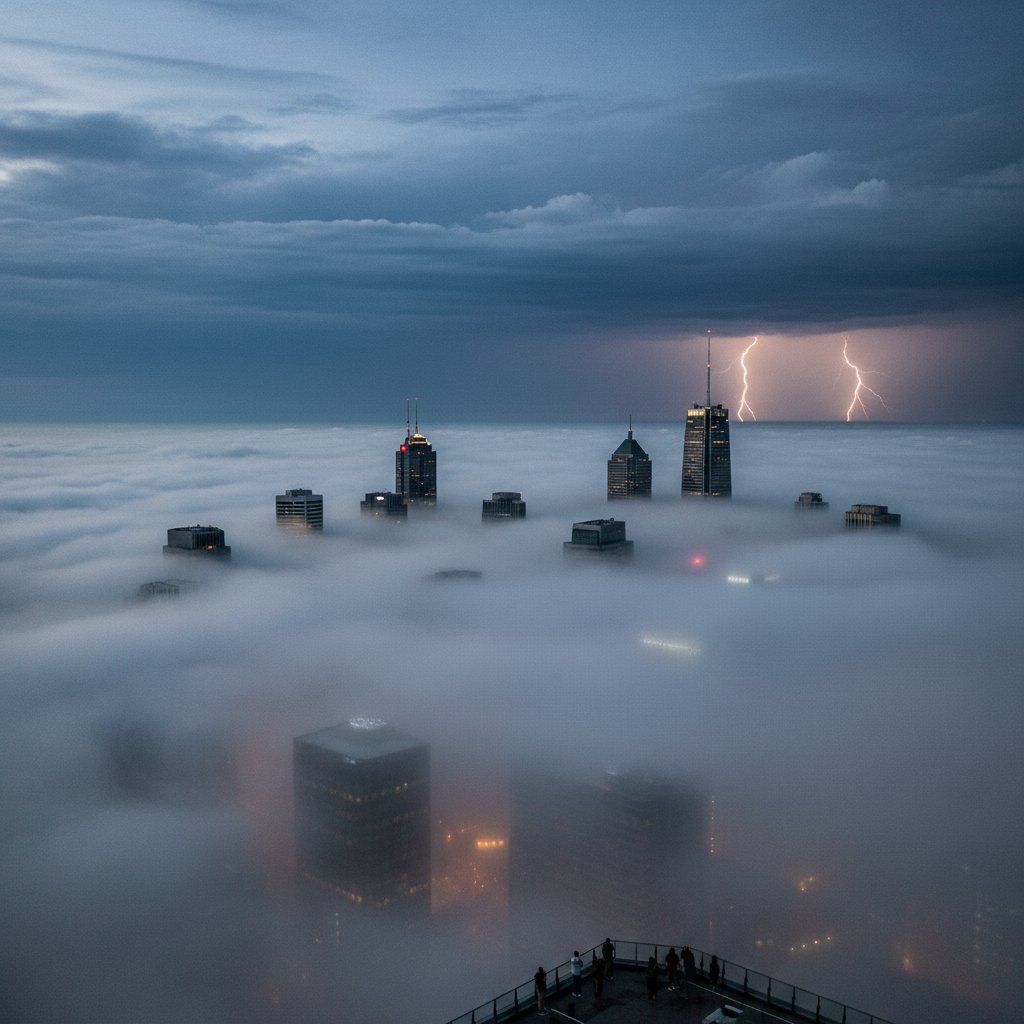
You couldn’t see the top of the Empire State Building. Not because of clouds — because the fog was that thick, that low, that personal. It felt like the city had swallowed itself whole. Tuesday morning in Manhattan’s Central Business District, visibility dropped to zero in minutes, turning the usual rush-hour symphony into a strange, muffled quiet. Office workers stumbled into each other on sidewalks. Taxis crawled at walking pace. And at LaGuardia, they just stopped taking off entirely.
This wasn’t your typical winter haze. This was a freakish atmospheric event — a dense fog that settled over the concrete canyons and refused to budge, trapping nearly 2 million commuters in an eerie, wet blanket. By noon, more than 150 flights were delayed, three separate multi-vehicle pile-ups blocked the FDR Drive, and emergency rooms reported a spike in asthma-related calls. So what happened? And why should you care? Because if this fog can paralyze the wealthiest city on Earth, it can mess with your morning commute too.
Zero Visibility: Chaos on the Streets
I spoke to a cab driver, Marcus, who’s been navigating Manhattan for 22 years. “I’ve seen snow, I’ve seen rain, I’ve seen that freak hailstorm back in ’19. But this? This was like driving inside a cloud. I couldn’t see my own hood, man.” He wasn’t exaggerating. Weather sensors at Central Park recorded visibility at 0.1 miles or less for over six hours straight. That’s basically blindness for a driver. The NYC Department of Transportation issued a rare “avoid travel” advisory for the CBD — something usually reserved for blizzards.
But it wasn’t just cars. The MTA reported delays on every subway line that runs through lower Manhattan, mostly due to signal problems (fog can short-circuit electric components). And the ferries? They stopped running by 7 a.m. “It’s like the city got unplugged,” said Jessica Tran, a financial analyst who walked 40 blocks from the Financial District to Midtown because her Uber never showed up. “Everyone was just… wandering.”
The Science Behind the Fog
So how does a modern metropolis with all its tech get blindsided by water vapor? I called Dr. Sarah Johnson, a meteorologist at Columbia University’s Lamont-Doherty Earth Observatory. She explained it’s a classic radiation fog setup — but with a twist. “We had a very warm, moist air mass moving over the region after a period of cold ground temperatures from the weekend. The warm air condensed rapidly as it hit the cold concrete and asphalt. That created the fog. But the CBD’s skyscrapers trapped it, preventing the usual mixing and dissipation,” she said.
“What made this unusual was the persistence. Usually fog burns off by late morning. But the temperature inversion was so strong that the fog stayed all day. It’s the kind of event we don’t model well for urban canyons.”
The National Weather Service had issued a Dense Fog Advisory at 4 a.m., but many commuters didn’t check it. And here’s the thing — this wasn’t just a weather hiccup. It exposed how fragile our just-in-time economy is. When flights don’t fly and trains don’t run, billions of dollars in transactions just sit there. A similar fog event in London in December 2022 caused an estimated £90 million in lost productivity. This one likely cost more, given NYC’s density.
When the City Goes Quiet
Walking through Times Square at 9 a.m. felt surreal. The usual roar of traffic was replaced by a low hum. Neon signs looked like blurry ghosts. People were talking in hushed tones, as if the fog demanded silence. For a few hours, the city that never sleeps actually paused. Some folks loved it. “It was peaceful,” said Mark O’Brien, a graphic designer who grabbed a coffee and watched the fog roll over Bryant Park. “I felt like I was in a movie.” But others were stranded, stressed, or worse.
Hospitals reported a 30% increase in visits for respiratory complaints — asthmatics, people with COPD, and even a few healthy folks whose lungs just couldn’t handle the particulate matter trapped in the fog. Because here’s a secret no one tells you: unless you’re in a pristine area, fog often holds pollution. It’s like a dirty sponge. In NYC, the fog had picked up car exhaust and soot from heating systems. The air quality index spiked into the “unhealthy for sensitive groups” range.
This event also serves as a reminder of how weather extremes are becoming more common. Just last month, NYC Central Park broke its record for the longest 95°F heat wave in history. Now this. It’s not just one-off weirdness — it’s a pattern. And if your city’s infrastructure was built for a cooler, more predictable climate, it’s time to worry. Heat wave exposes Europe’s fragile infrastructure – built for a cooler era — the same principle applies here. Our ports, our subways, our airports — they were designed for average conditions, not for these wild swings.
What This Means for the Future
Fog is notoriously tricky. Climate change models show that in some regions, fog frequency may actually decline due to warming. But in urban areas, new factors — like increased humidity from green roofs or heat islands — could produce short, intense fog events we’ve never seen before. Dr. Johnson warned: “We need better monitoring in city centers. Current weather stations are often at airports, not in the deep urban core. We’re flying blind, literally.”
For now, the city is back to its usual roar. But next time you see a Dense Fog Advisory on your phone, don’t ignore it. Because when the sky closes in on a CBD, no one is immune. And the next one could be even thicker.
Frequently Asked Questions
Is dense fog dangerous?
Yes. Reduced visibility can cause traffic accidents, flight delays, and health problems if pollutants are trapped in the fog. Always avoid unnecessary travel during dense fog advisories.
How long did the NYC CBD fog last?
The fog settled in around 5 a.m. and did not fully lift until nearly 4 p.m. — about 11 hours of below-half-mile visibility.
Can fog be predicted accurately?
Mostly, but urban fog is harder to predict because skyscrapers and heat islands change local conditions. Meteorologists rely on airport models, which often miss downtown fog. Improved urban weather sensors could help.