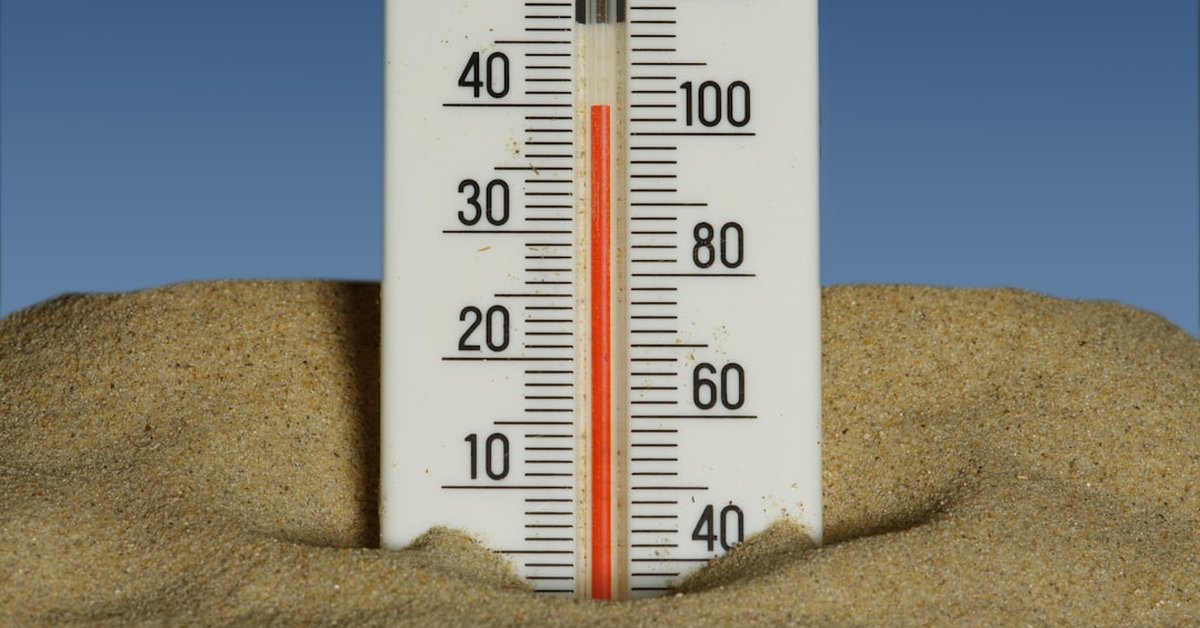








The mercury hit 44.8°C in Sicily last week, and the streets of Palermo turned into an oven. Tourists collapsed at ancient ruins. Hospital emergency rooms filled with the elderly, their bodies unable to cool down. Across the continent, from Madrid to Berlin to London, the same story unfolded: record-breaking heat, infrastructure buckling, and a rising death toll that officials are only now beginning to tally.
But here’s the thing. Instead of hearing urgent calls to slash emissions or redesign cities, a growing number of European politicians are pushing a different solution: more air-conditioning. It’s a response that solves an immediate problem while ignoring—and arguably making worse—the root cause.
Look, nobody wants to suffer through another 40°C day without AC. I get it. But when the primary political reaction to a climate-fueled crisis is to crank up the cooling, something fundamental is being missed. This isn’t just about comfort. It’s about whether we’re willing to treat the disease or just the symptom.
The Heat Is Unprecedented — But Predictable
Europe’s heatwaves are no longer anomalies; they’re a seasonal feature. July 2023 was the hottest month ever recorded globally, and Europe warmed twice as fast as the global average over the past three decades. As we saw with the UK June heat record shattered for third day in a row at 36.4°C, these extremes are rewriting what’s considered normal.
The numbers are stark. The World Health Organization estimates that heat killed over 60,000 people in Europe during the summer of 2022 alone. That’s more than the continent’s entire road traffic death toll for a year. And those are just the counted deaths—the real figure is likely higher.
“Heat is the silent killer of climate change,” says Dr. Elena Garcia, a climate policy researcher at the University of Barcelona. “It doesn’t come with dramatic footage like floods or fires, but it’s far deadlier. And the political response has been pathetically inadequate.”
In Italy, the government declared a state of emergency in five southern regions. In Spain, the health ministry activated a national heat plan—essentially a system of alerts and cooling centers. But these are reactive, stopgap measures. The deeper question is whether leaders are finally ready to tackle the structural causes.
They aren’t. Not really. Not yet.
Political Responses: Band-Aids or Systemic Change?
In France, President Macron’s government announced subsidies for air-conditioning units for low-income households. In Germany, the coalition debated tax breaks for ‘climate-friendly’ cooling systems. In the UK, the Conservative party floated a “cooling homes strategy” that focuses heavily on installing AC in public buildings and new homes.
None of these plans includes a serious commitment to reduce the emissions that are making the heat worse in the first place. Instead, they treat air-conditioning as a silver bullet—a technological fix that lets everything else stay the same.
“It’s the path of least resistance,” says Dr. James Morton, professor of public health at the London School of Hygiene & Tropical Medicine. “Installing AC is politically easy because it’s visible, it’s popular, and it doesn’t threaten established industries. But it’s a short-term solution that locks in long-term problems.”
The irony is thick enough to cut with a knife. AC units run on electricity, much of which is still generated by fossil fuels. They also leak refrigerants that are thousands of times more potent than CO₂ as greenhouse gases. So by cooling our homes, we’re heating the planet faster—a feedback loop that guarantees even more intense heatwaves.
While some focus on personal preparedness—like the smartest $150 you’ll spend on storm safety—the scale of this crisis demands collective action that goes far beyond gadgets.
The AC Paradox: Cooling the Present, Warming the Future
Air-conditioning isn’t inherently evil. In hospitals, it saves lives. In extreme heat, it prevents heatstroke. The problem is treating it as the primary adaptation strategy rather than a last resort.
Europe currently has much lower AC penetration than the US—only about 20% of households have it, compared to 90% in America. But as heatwaves intensify, that number is rising fast. The International Energy Agency predicts that global energy demand from air-conditioning will triple by 2050, led by emerging economies and, increasingly, Europe.
This isn’t just an energy problem; it’s a justice problem. Those who can afford AC will retreat into cool bubbles, while the poor, the elderly, and the marginalized bake. We’re building a two-tier society of climate resilience. Sound familiar?
“We’ve seen this playbook before,” says Dr. Garcia. “In the United States, air-conditioning became a symbol of progress, but it also enabled suburban sprawl, car dependency, and disconnection from the outdoors. Europe has a chance to avoid that trap.”
The key is passive cooling: better insulation, reflective roofs, shading from trees, green corridors, and urban planning that reduces the ‘heat island’ effect. These solutions work, they’re cheap, and they don’t require burning more fuel. But they also demand political will and long-term investment—two things in short supply during election cycles.
What History Tells Us
The pattern isn’t new. When the 2003 European heatwave killed 70,000 people, most governments did little more than set up emergency hotlines. When the 2019 heatwave broke records, countries rushed to install AC in homes. Now, in 2024 and beyond, we’re seeing the next logical step: institutionalizing air-conditioning as a default response.
But history also shows that transformative change is possible. After the 2003 heatwave, France redesigned its emergency response system, created a color-coded alert system, and mandated that retirement homes have cooling rooms. Those measures saved lives in subsequent heatwaves. What’s missing is the equivalent for prevention: policies that reduce emissions at the pace science demands.
According to the latest IPCC report, every fraction of a degree of warming increases the frequency and intensity of extreme heat. To stop the upward spiral, we need to cut global emissions by nearly half by 2030. Air-conditioning alone won’t do that—in fact, it’ll make it harder.
And the cost of inaction? A recent study in Nature Communications estimated that without aggressive climate mitigation, European heat-related deaths could quadruple by the end of the century. That’s not a distant scenario. That’s our children’s reality.
What Comes Next
The debate over AC vs. climate action is a false choice—we need both, but in the right proportions. The real question is whether politicians will have the courage to push for systemic change while also providing immediate relief. So far, the signals aren’t encouraging.
As I write this, another heat dome is settling over southern Europe. Greece is on fire. Italy is baking. Spain is bracing for temperatures above 42°C. And somewhere, a policymaker is drafting a press release about subsidies for air-conditioning.
It’s not that they’re wrong. It’s that they’re not nearly ambitious enough.
Frequently Asked Questions
Why are politicians focusing on air-conditioning instead of climate mitigation?
Short-term relief is more politically palatable than long-term systemic changes. Air-conditioning offers immediate comfort to voters, while addressing root causes—such as carbon pricing, phasing out fossil fuels, and transforming transport—requires unpopular policies and international cooperation that can take years to bear fruit.
What are the downsides of relying more on air-conditioning?
AC units consume vast amounts of electricity, often from fossil fuels, creating a feedback loop that worsens climate change. They also emit refrigerants that are potent greenhouse gases—hydrofluorocarbons (HFCs) can be thousands of times more powerful than CO₂. Plus, widespread AC use strains power grids, leads to blackouts, and deepens social inequality as the wealthy seal themselves off from heat.
What should governments do instead or in addition?
Invest in passive cooling: green roofs, reflective building materials, tree planting, and natural ventilation. Improve building insulation. Design cities with wide green corridors and water features. And, crucially, accelerate the transition to renewable energy so that when AC is used, it’s powered by clean sources. The most effective long-term solution remains aggressive emission cuts to limit future warming.