
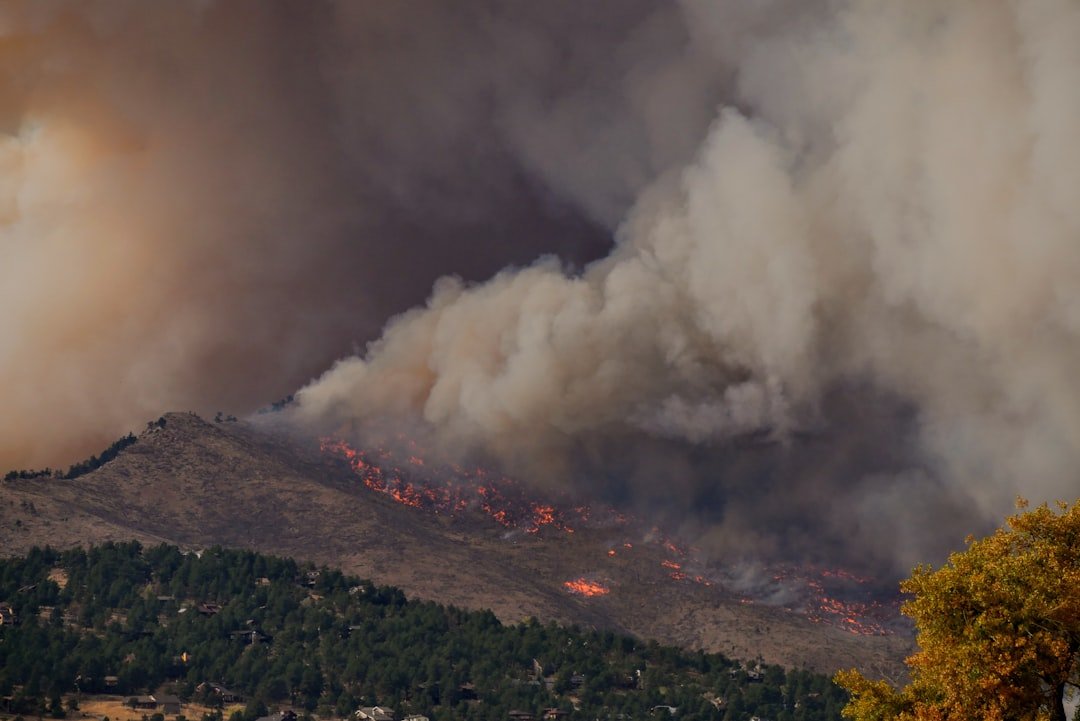
Most people picture wildfires as a California problem — Hollywood hillsides glowing orange, celebrities evacuating. The reality this year is far grimmer and geographically wider. As of mid-July 2024, the heart of the fire crisis has shifted to the interior West, with Utah, Colorado, Idaho, and New Mexico bearing the brunt. Thousands of acres have already burned, firefighters have died, and smoke plumes are drifting across state lines, creating air quality emergencies hundreds of miles from the flames. This isn’t a California story. It’s a Western story — and it’s getting worse.
Utah’s Blistering Start: The Silver King and Other Fires
Utah rarely makes national headlines for wildfires. That’s changing in 2024. The Silver King Fire, burning since July 6 in Fishlake National Forest, has consumed over 18,000 acres with just 15% containment as of July 15. That’s 28 square miles of high-elevation pinyon-juniper woodland turned to ash. Fire behavior analysts are calling the growth rate “extreme” — the fire jumped 4,000 acres in a single 24-hour period last week.
But Silver King isn’t alone. The Deer Springs Fire in Kane County has burned 11,200 acres, and the Little Twist Fire near Moab torched 6,500 acres in just three days. Combined, Utah has seen over 45,000 acres burn since July 1 — that’s more than the state typically sees in an entire August. And the season isn’t half over.
“The fuel moisture levels we’re seeing in Utah are the lowest we’ve recorded in 20 years,” said Dr. Emily Chen, a fire ecologist at the University of Utah. “These fires are burning with an intensity that overwhelms containment lines within hours.”
Colorado: Fatalities and a Growing Toll
Colorado’s fire season turned deadly on July 10. The Quarry Fire in Jefferson County, which has burned 8,200 acres southwest of Denver, claimed the life of a 34-year-old hotshot crew member when a falling snag — a burned, unstable tree — struck him during mop-up operations. It was the third firefighter death in Colorado this year, following two others in June on the Burro Fire in the San Juan National Forest.
The numbers are stark: as of July 15, Colorado has recorded 1,200 wildfires in 2024, burning 112,000 acres. That’s 40% more fires than the 10-year average for this point in the season. The state’s firefighting budget, already strained, is projected to hit $120 million by September — nearly double the initial allocation.
“We’re seeing fires start earlier, grow faster, and resist containment longer,” said Mark Torres, a retired U.S. Forest Service incident commander now consulting for Colorado’s Division of Fire Prevention and Control. “The window for initial attack is shrinking. If you don’t hit a fire in the first two hours, you’re looking at a multi-week campaign.”
And it’s not just the flames. The smoke from Colorado’s fires has drifted as far east as Kansas and Nebraska, triggering air quality alerts for particulate matter 2.5 — the tiny particles that penetrate deep into lungs. In Denver, air quality index readings hit 175 on July 12, a level deemed “unhealthy” for all residents. Hospitals reported a 22% increase in ER visits for asthma and COPD exacerbations that day.
The Smoke Superhighway: How Wildfire Pollution Travels
Here’s what most people don’t get: wildfire smoke doesn’t respect borders. The same high-pressure ridge that’s baking the West with triple-digit temperatures is trapping smoke in the atmosphere and pushing it eastward. Satellite imagery from NOAA shows a plume stretching from the Utah-Colorado border all the way to the Great Lakes — a smoke superhighway over 1,000 miles long.
In Salt Lake City, PM2.5 levels hit 185 micrograms per cubic meter on July 14 — that’s 12 times the World Health Organization’s recommended 24-hour limit. Schools canceled outdoor sports practices. Construction crews were sent home. The city opened three cooling centers with air filtration, but demand overwhelmed supply within hours.
This isn’t just a Western problem anymore. The heat wave that engulfed the U.S. over the July 4 weekend created the perfect conditions: dried-out vegetation, unstable air, and lightning from dry thunderstorms. Those storms sparked dozens of new fires across Idaho and Montana. The smoke from those fires is now drifting into Canada, prompting air quality warnings in Alberta and Saskatchewan.
And here’s the irony — while Western states burn, some communities are dealing with a different kind of heat politics. Europe’s debate over air conditioning as a political symbol seems almost absurd when you’re choking on smoke at 103°F. But the underlying issue — how societies adapt to extreme heat and fire — is the same on both continents.
What’s Coming Next: August and Beyond
The National Interagency Fire Center’s July outlook predicts above-normal fire potential across most of the West through August. The monsoonal moisture that typically brings relief to the Four Corners region has been weak and spotty this year. New Mexico, which saw the largest fire in its history in 2022 (the Hermits Peak-Calf Canyon Fire at 341,000 acres), is bracing for another brutal season. The South Fork Fire in the Gila National Forest has already burned 25,000 acres since July 8.
Firefighters are exhausted. The U.S. Forest Service reports that over 15,000 personnel are currently assigned to wildfires nationwide — that’s 80% of the available workforce. Federal firefighting costs have already exceeded $2.3 billion for fiscal year 2024. And with climate projections showing hotter, drier summers becoming the norm, this isn’t a one-year anomaly.
“We’re in a new fire regime,” said Dr. Chen. “The old models don’t work. We need to rethink everything — from where we build homes to how we manage forests to how we fund firefighting.”
For residents across the West, the message is simple: have a go-bag ready. Know your evacuation zone. Check air quality before you step outside. And understand that this fire season — like the ones before it — is a direct line from a warming planet to your front door.
Frequently Asked Questions
How can I protect myself from wildfire smoke?
Stay indoors with windows and doors closed. Use a HEPA air purifier if possible. If you must go outside, wear an N95 mask — cloth masks won’t filter smoke particles. Check AirNow.gov for real-time air quality readings in your area. Avoid strenuous outdoor activity when AQI exceeds 150.
What causes most wildfires in the Western U.S.?
Human activity causes roughly 85% of wildfires — unattended campfires, discarded cigarettes, power lines, and arson. Lightning causes the rest. But the severity of fire behavior is driven by drought, low humidity, and abundant dry vegetation — conditions that are becoming more common due to climate change.
Are firefighter deaths increasing?
Yes. According to the National Fire Protection Association, firefighter fatalities on wildfires have averaged 18 per year over the last decade, up from 12 per year in the 1990s. The leading causes are vehicle crashes, being struck by trees or other objects, and medical emergencies like heart attacks. The 2024 season is on track to exceed that average.