




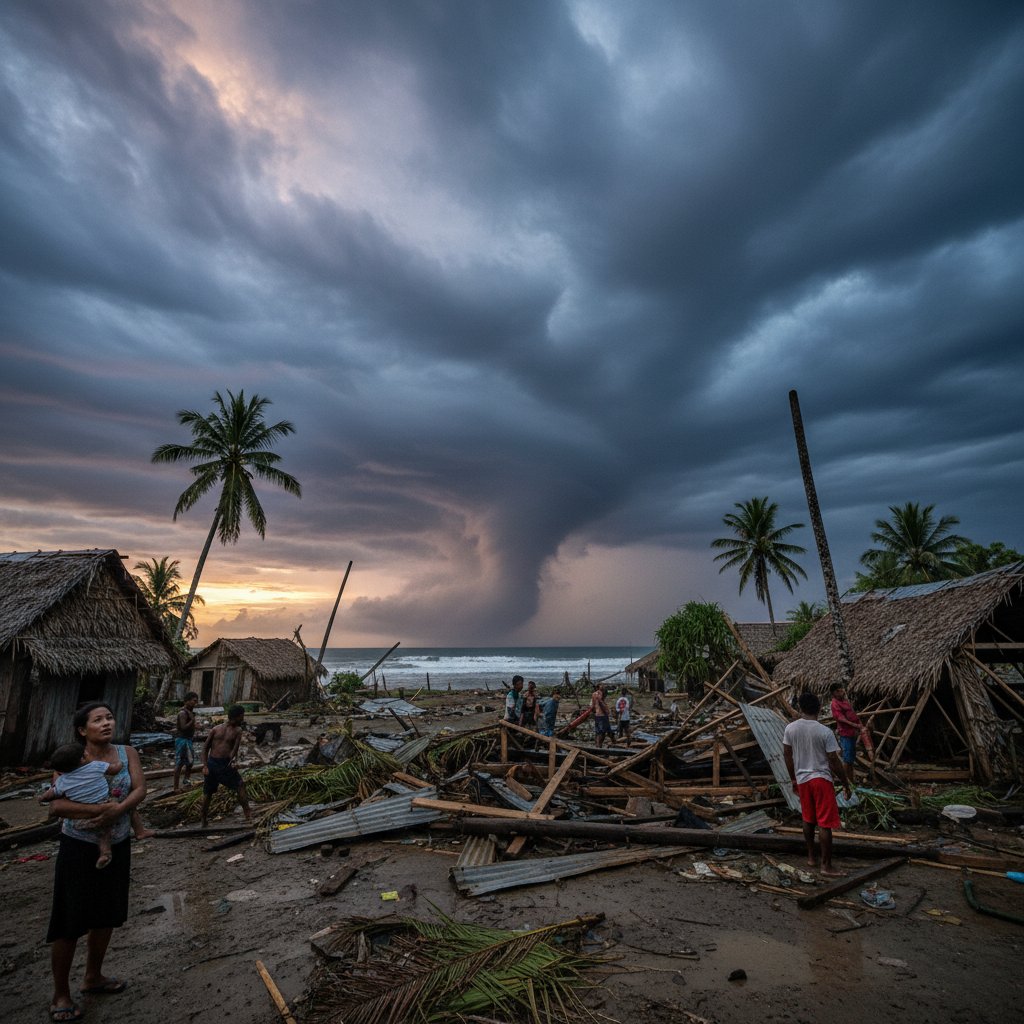
A 5.3 magnitude earthquake rattled the Vanuatu Islands on Tuesday at 13:58 UTC, shaking buildings and triggering brief panic across the archipelago. For residents living on these Pacific islands, the tremor wasn’t just a geological footnote — it was a reminder that they sit directly on the Ring of Fire, where the ground moves without warning.
The quake struck at a depth of 35 kilometers, according to preliminary data. That’s shallow enough to cause damage if it hits near populated areas. And this one did. The epicenter was roughly 80 kilometers northwest of Port Vila, the capital, on Efate Island. People felt it. Hard.
No tsunami warning was issued — a relief, given that the region averages at least one major tsunami generation event every decade. But the immediate risk isn’t the only concern here. Vanuatu, ranked as the world’s most disaster-prone country by the UN University’s World Risk Report, faces a compounding crisis: a 5.3 quake might not level buildings, but it weakens infrastructure already battered by cyclones, volcanic activity, and rising seas.
Why 5.3 Matters More Than You Think
Magnitude alone doesn’t tell the whole story. The Modified Mercalli Intensity scale measures what people actually feel. In this case, reports from the U.S. Geological Survey estimated IV (Light) to V (Moderate) shaking in the epicentral area. That means dishes rattled, windows cracked, and people ran outside. For a region where many structures are made of timber, corrugated iron, and unreinforced masonry, even moderate shaking can compromise stability.
“A 5.3 earthquake in California might cause minimal damage because of strict building codes,” says Dr. Elena Torres, a seismologist at the Pacific Disaster Center. “In Vanuatu, the same magnitude can knock down older structures and trigger landslides on steep volcanic slopes. The geology amplifies the risk.”
And that’s exactly what emergency responders are bracing for. The Vanuatu Meteorology and Geo-Hazards Department issued a statement advising residents to check for structural cracks and watch for aftershocks. Aftershocks in the 4.0 to 4.5 range are common in the hours following a 5.3 event. They can topple already weakened walls.
Living on the Edge: Vanuatu’s Seismic Reality
Vanuatu sits at the convergent boundary where the Australian Plate slides beneath the Pacific Plate. This subduction zone produces frequent earthquakes — the country experiences over 1,000 measurable tremors a year. Most are too small to notice. But every few years, a 7.0 or greater event reminds everyone of the danger.
In 2018, a 7.5 earthquake struck near the island of Tanna, killing one person and causing widespread damage. In 2010, a 7.5 quake generated a local tsunami that flooded coastal villages. So Tuesday’s 5.3 is mild by those standards — but it’s also a warning shot.
“Every moderate quake is a stress test for communities that have limited resources to rebuild,” says James Kalo, a disaster risk reduction specialist with the Vanuatu Red Cross. “We have to treat every event seriously because the next one might be bigger.”
And bigger quakes are inevitable. Seismologists track a cycle of strain accumulation along the Vanuatu subduction zone. The last major rupture was in 2016 (a 7.0 Mw) near the Santa Cruz Islands. The longer the gap, the more tension builds.
Global Context: What This Means for You
You might be thousands of miles away, reading this from a desk in Chicago or London. But plate tectonics doesn’t respect borders. A 5.3 in Vanuatu doesn’t directly threaten North America or Europe. Yet it’s part of a broader pattern of seismic activity that reminds us how interconnected the planet is.
When the ground shakes under the Pacific, it can destabilize seafloor slopes, generating tsunamis that travel at jet speeds across the ocean. The 2004 Indian Ocean tsunami originated from a 9.1 earthquake off Sumatra — but waves reached Africa. The 2011 Tohoku earthquake in Japan sent debris across the Pacific to Alaska and California. Vanuatu’s location puts it in the path of subduction zone faults that could produce magnitude 8+ events.
That’s why agencies like the U.S. Geological Survey’s Earthquake Hazards Program monitor this region continuously. And it’s why the Pacific Tsunami Warning Center provides real-time bulletins. If a bigger quake hits, you’ll see alerts on your phone within minutes.
Meanwhile, extreme weather events elsewhere — like the extreme heat wave gripping Europe — remind us that disasters often compound. Heat waves dry out soils, which then can’t absorb rainfall, leading to flash floods. Earthquakes trigger landslides. Cyclones destroy buildings. The common thread: vulnerable populations bear the brunt.
And speaking of compounding disasters, consider how heat is killing us quietly in the United States. It’s the deadliest weather threat here, but we rarely think of it as a crisis. Vanuatu’s earthquake is a similar quiet threat — until it’s not.
What Happens Next
Local officials are conducting damage assessments by helicopter and drone. So far, no casualties have been reported — a good sign. But in remote villages without radio contact, it can take days to confirm everyone is safe. The Vanuatu government has activated its National Disaster Management Office’s emergency operations center.
For travelers and expats, the advice is straightforward: stay away from steep slopes, check with your embassy, and download the USGS Earthquake app for aftershock alerts. For the 300,000 residents of Vanuatu, Tuesday was just another Tuesday in an earthquake-prone paradise. They’ll go back to fishing, farming, and preparing for the next one.
But as Dr. Torres puts it: “We don’t know when the big one will hit. But we do know that every 5.3 brings us a step closer.”
Frequently Asked Questions
Was there a tsunami after the Vanuatu earthquake?
No. The Pacific Tsunami Warning Center reviewed the data and determined that the magnitude and depth (5.3 Mb at 35 km) did not pose a tsunami threat. Tsunami generation typically requires a magnitude 7.0+ event with vertical seafloor displacement.
How common are magnitude 5 earthquakes in Vanuatu?
Very common. Vanuatu experiences roughly 10-20 earthquakes of magnitude 5.0 or higher every year. Most go unnoticed by residents because they occur offshore or at great depth. This one was felt because it was shallow and relatively close to populated areas.
Should travelers to Vanuatu be concerned about earthquakes?
Travelers should be aware of the risk but not overly alarmed. Vanuatu has well-established protocols for earthquake and tsunami warnings, including sirens and SMS alerts. Check the Vanuatu Meteorology and Geo-Hazards Department website for real-time updates. It’s also wise to ensure your accommodation has an emergency plan.