





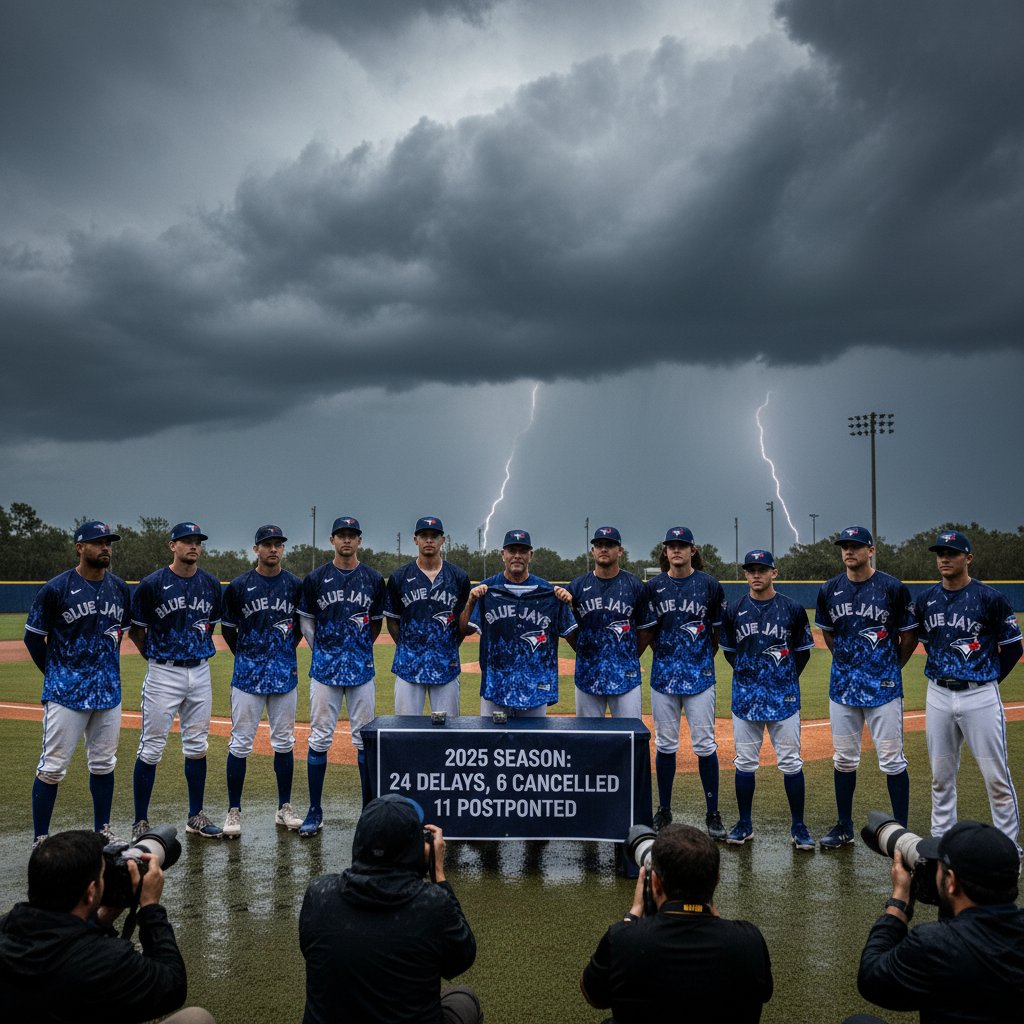
Nobody is talking about this, but a minor league baseball team in Florida just did something that perfectly captures the absurdity of playing through a changing climate. The Dunedin Blue Jays — Toronto’s Single-A affiliate — unveiled their new “Rain Delay” jerseys this week, and honestly? They’re kind of perfect.
The jerseys aren’t just a fashion statement. They’re a monument to the 2025 season, a year so drenched in weather chaos that the team endured 24 rain delays, 6 outright cancellations, and 11 postponements. That’s 41 weather-related disruptions in a season that’s barely 132 games long. Do the math — that’s nearly one in every three games interrupted by the sky opening up.
“It felt like we were checking the radar more than the scoreboard,” said Mike Drury, the Blue Jays’ clubhouse manager, in a press release. “We started joking that our real home game was against the weather. Then someone said we should make a jersey about it. And here we are.”
The jerseys feature a dark gray base — think thundercloud gray — with a subtle radar pattern woven into the fabric. The team’s name is spelled out in a font that mimics weather alert text. On the back, instead of a player’s name, it says “RAIN DELAY.” The whole thing is a masterclass in turning lemons into lemonade. Or, you know, turning a rainout into merch.
When 24 Delays Become a Marketing Strategy
Let’s put those numbers in perspective. The Dunedin Blue Jays play at TD Ballpark, a stadium that’s about 20 miles from Tampa Bay in a region that’s no stranger to afternoon thunderstorms. But 2025 was different. The team saw 24 rain delays that lasted anywhere from 30 minutes to over three hours. Then there were the 6 cancellations — games wiped entirely, no makeup date possible. And the 11 postponements, where games were rescheduled, often squeezing doubleheaders into already packed weeks.
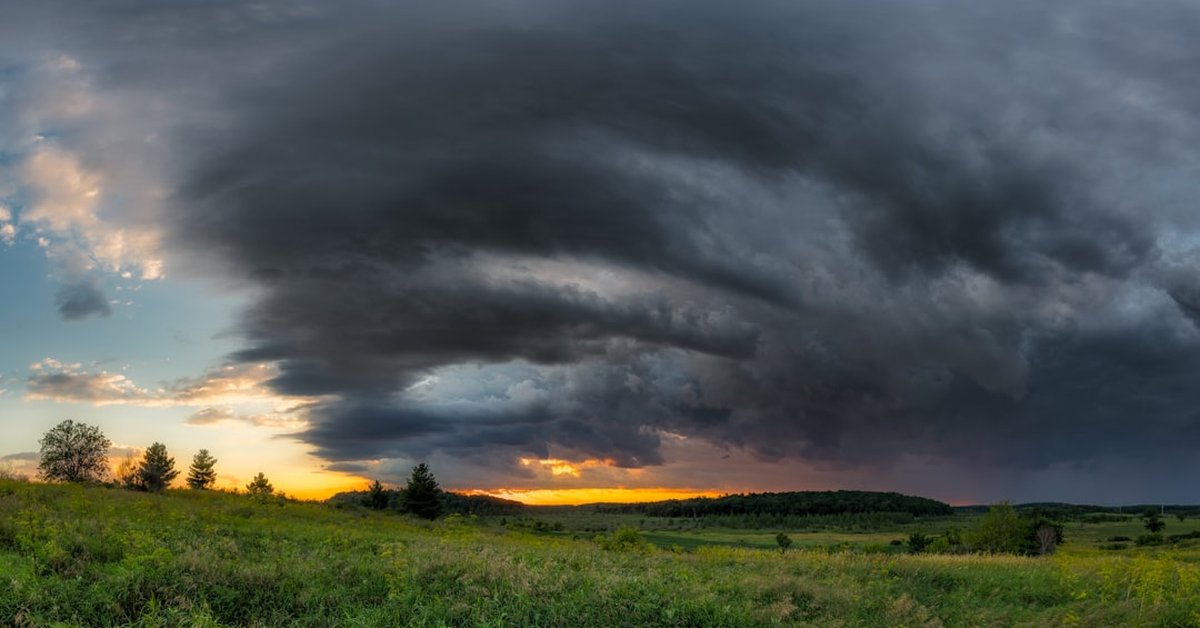
For context, the average minor league team might see 10 to 15 weather disruptions in a typical season. Dunedin nearly tripled that. Dr. Allison C. Patterson, a climatologist at the University of Florida who studies extreme weather patterns, told me the numbers aren’t just bad luck. “What we’re seeing in Florida — and across the southeastern U.S. — is an increase in what meteorologists call ‘training thunderstorms,’” she said. “These are storms that form along the same path, dumping rain on the same areas for hours. It’s not just a quick shower. It’s a system that parks over you.”
And Florida’s been getting hit hard. Just last week, London’s Heat Crisis showed how extreme weather is disrupting events globally. But while Londoners are canceling heat conferences, Floridians are selling rain jerseys.
What a Baseball Jersey Says About Climate Adaptation
Here’s the thing — this isn’t just a funny story about a minor league team making the best of a soggy situation. It’s a window into how institutions are adapting to weather patterns that are shifting under their feet. Baseball, a sport built on consistency and routine, is increasingly at the mercy of the sky.
Major League Baseball saw a 15% increase in weather-related postponements between 2010 and 2024, according to a 2024 analysis by the National Oceanic and Atmospheric Administration. The trend is even more pronounced in the minors, where games are often played in older stadiums with less sophisticated drainage systems. And in Florida, the combination of rising temperatures — which fuel more intense thunderstorms — and sea level rise, which pushes groundwater closer to the surface, means fields stay wet longer.
“It’s not just about the rain during the game,” said Dr. Marcus Rivera, a sports turf management specialist at the University of Georgia. “It’s about what happens after. If the field is saturated, you can’t just let the sun dry it out — the ground stays soft, the grass gets torn up, and you risk player injuries. Teams are having to invest in better drainage, portable field covers, even subsurface heating systems just to keep play possible.”
In a way, the Rain Delay jersey is a celebration of resilience. But it’s also a warning. While Europe is grappling with record heatwaves that claim hundreds of lives, Florida is drowning in rain. Both sides of the same coin.
The Business of Bad Weather
The jerseys go on sale this Friday at the team store and online. Proceeds will go toward upgrading the stadium’s drainage system — a move that feels both practical and painfully ironic. The team is literally selling the problem to fix the problem.
Early buzz has been strong. The team’s social media post announcing the jerseys racked up over 50,000 views in the first 12 hours. Fans are already calling it the best minor league merch of the year. And honestly, it’s hard to argue. It’s clever, it’s honest, and it speaks to something real.
But look — let’s not sugarcoat this. Twenty-four rain delays in one season isn’t quirky. It’s a logistical nightmare. Players lose rhythm. Fans get frustrated. Concession stands lose revenue. And for a minor league team operating on thin margins, every rained-out game is a hit to the bottom line. The jerseys are a brilliant PR move, but they can’t fix the underlying problem: the weather isn’t what it used to be, and baseball — like everything else — is going to have to adapt.
So what does that adaptation look like? More retractable roofs? More night games to avoid afternoon storms? A shorter season? Nobody knows yet. But if you want a glimpse of the future, look at the Dunedin Blue Jays. They’re not waiting for answers. They’re selling the rain.
Frequently Asked Questions
What are the Dunedin Blue Jays “Rain Delay” jerseys made of?
The jerseys are made from a polyester blend with a moisture-wicking finish — which is ironic, given the theme. The design includes a dark gray body with a radar pattern and weather alert-style lettering.
Where can I buy the Rain Delay jersey?
The jerseys will be available at the Dunedin Blue Jays team store at TD Ballpark and on their official website starting this Friday. Sizes range from youth small to adult 3XL, and they retail for $69.99.
Are the jerseys just a gimmick, or do they serve a purpose?
Both. The jerseys are a clever marketing move that has generated significant buzz for the team. But they also serve a practical purpose — proceeds go toward upgrading the stadium’s drainage system, which is sorely needed after the 2025 season’s 24 rain delays.