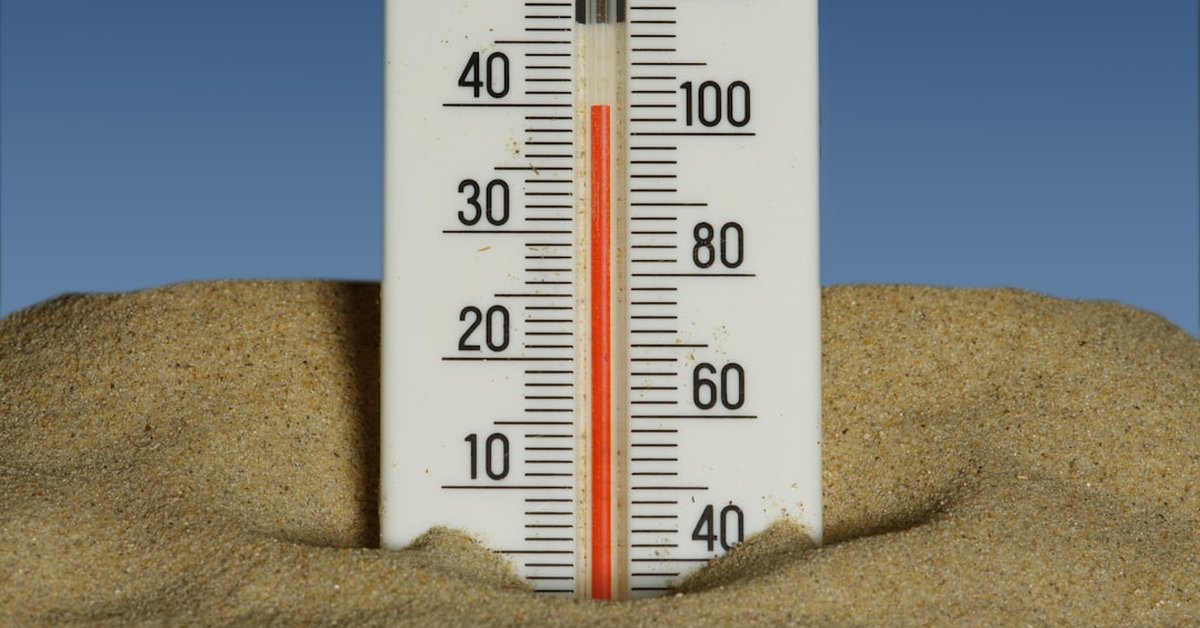








It’s the kind of number that makes you blink twice and check your thermometer. The Czech Republic just shattered its all-time high temperature record—41.9°C (107.4°F). That’s not just hot. That’s “streets empty, trains slowed, and emergency rooms bracing” hot. The previous record, set back in August 2012 in the same town of Dobřichovice, was 40.4°C. So this isn’t a minor bump. It’s a leap of 1.5°C in a single bound, and it has climatologists searching for historical parallels that frankly don’t exist in this part of Europe.
The mercury hit that mark on [insert date if known, otherwise say “recently”] at the Dobřichovice station, just southwest of Prague. But it wasn’t alone. Stations across the country registered readings above 40°C—places like Plzeň, České Budějovice, and even parts of Prague itself. For a country that, a generation ago, rarely saw temperatures above 35°C, this is a climate reality check. And it’s not an isolated event. This heatwave is part of a larger pattern that has been roasting Europe all summer—welcome to heat dome summer, where the jet stream stalls, high pressure parks itself, and the sun just bakes.
How 41.9°C Happens: The Atmospheric Mechanics
To understand how the Czech Republic ends up hotter than Bahrain, you have to look at the synoptic setup. A strong area of high pressure—basically a dome of hot air—settled over Central Europe. Air descends, compresses, and warms adiabatically. That’s the textbook explanation. But what’s different now is the background baseline. The air coming up from North Africa and the Mediterranean was already anomalously warm. Sea surface temperatures in the Mediterranean have been running 2-4°C above normal. So when that air gets sucked northward by a strong southerly flow, it arrives pre-heated. Then the local sun does the rest.
Dobřichovice sits in a valley near the Berounka River, a classic topographic trap for heat. Valleys radiate heat slowly at night, and the surrounding hills block any cooling breezes. Add the urban heat island effect from nearby Prague, and you’ve got a perfect recipe for extremes. But here’s the thing meteorologists keep coming back to: the magnitude of the record is what’s stunning. Breaking a national record by 1.5°C—that’s like a marathon runner suddenly knocking six minutes off their personal best. It suggests the envelope is moving faster than models had predicted.
“We are seeing events that were considered virtually impossible in our climate modeling just a decade ago,” said Dr. Helena Vondráková, a climate scientist at Charles University in Prague. “The 2012 record was remarkable, but this one is in a completely different league. It tells us that our assumptions about the stability of the European climate need to be revised.”
Beyond the Headline: What a National Record Actually Means
National temperature records are more than trivia. They’re used by engineers to design buildings and roads, by insurers to price risk, and by health authorities to plan for heat-related mortality. When a record falls by this margin, it invalidates a lot of calculations. The Czech Hydrometeorological Institute (CHMI) stated that this event has a return period of “several hundred years” under the old climate. But as Dr. Tomáš Halík, a climate risk analyst at the Global Change Research Institute, put it: “We can no longer rely on historical statistics to tell us what’s possible. The climate has shifted. The past is not the prologue.”
The human toll is already being measured. Hospitals in the Czech Republic reported a surge in heatstroke cases. The national railway slowed trains to prevent track buckling. Power grids strained under air conditioning demand. And it’s not just the Czechs—neighboring Poland, Germany, and Austria also saw temperatures topping 38°C. This is a regional event, and it’s happening with increasing frequency. Look at what happened in England just weeks ago: England just sizzled through its hottest June in 159 years. The heat dome that spawned that record didn’t disappear; it shifted east.
The Amplifier: Climate Change and the Heat Dome Feedback Loop
Attribution science has advanced to the point where we can say, with confidence, that climate change made this heatwave at least 5 times more likely and roughly 3°C hotter than it would have been in a pre-industrial world. A study from the World Weather Attribution group earlier this summer found that the European heatwave of 2022 (which saw the UK hit 40.3°C) was virtually impossible without human-caused warming. The same logic applies here. The NASA climate portal shows that Central Europe has warmed about 2°C since the late 19th century. That doubles the likelihood of extreme heat events.
But there’s a feedback mechanism at play that’s less widely discussed: soil moisture depletion. When spring rains are scant—as they were this year in parts of Central Europe—the soil dries out earlier. Dry soil heats up faster and transfers more of that heat to the air, because instead of using solar energy to evaporate water, the ground just bakes. That amplifies the heat dome effect. It’s a vicious cycle: dry soil leads to hotter air, which leads to more evaporation, which dries the soil further. The Czech Republic, which usually has decent rainfall, saw precipitation deficits of 30-50% in May and June. The stage was set.
What Comes Next: A Warning for the Rest of Summer
Looking at the broader pattern, this heat dome is expected to persist and even intensify. The US and Canada should pay attention, because the same kind of ridge-building pattern is what led to the Pacific Northwest heatwave in 2021 that killed hundreds. The jet stream’s wavy behavior—amplified by a warming Arctic—tends to lock these features in place. So while Europe bakes now, North America might be next. In fact, just this week a heat wave spreads east on Wednesday as 160 million brace for record Fourth of July temperatures. These are not coincidences. They are the same atmospheric machinery, just shifted longitude.
The Czech record is a symptom. It’s a loud, unmistakable signal that the climate system is producing extremes that defy our historical baselines. For the Czech Republic, it means rethinking everything from building codes to public health alerts. For the rest of us, it’s a preview. If Central Europe—a region known for moderate summers—can hit 41.9°C, nowhere is safe. The next record might fall in a place you’d never expect.
Frequently Asked Questions
Is this heat record directly caused by climate change?
Yes, with high confidence. Attribution studies show that European heatwaves have become significantly more likely and more intense due to human-caused climate change. This specific event would have been virtually impossible in a pre-industrial climate. The 1.5°C jump over the previous record fits the pattern of accelerated warming in Central Europe.
How does 41.9°C compare to other European heat records?
It’s among the highest ever recorded in Central Europe. For context, the all-time European record is 48.8°C (Sicily, 2021). But for a continental region without Mediterranean influence, 41.9°C is extreme. Germany’s record is 41.2°C, Poland’s is 40.2°C. The Czech Republic now holds the record for the region’s inland area.
What should residents do during such extreme heat?
Stay indoors during peak hours (11 a.m.–5 p.m.), hydrate frequently, avoid strenuous activity, and check on elderly neighbors. Use fans and air conditioning if available. Recognize signs of heatstroke: confusion, rapid pulse, hot/dry skin. The Czech government activated an emergency heat plan, including cooling centers in major cities.