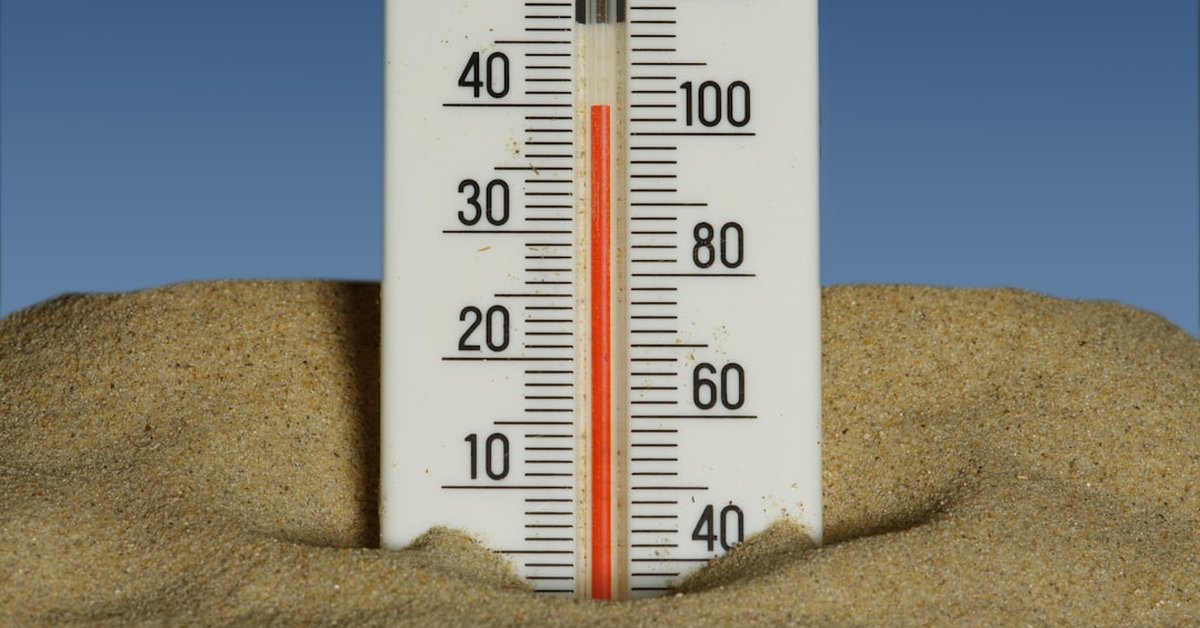








Serial heatwaves are no longer a fluke — they’re becoming the new baseline for summer. And if the latest forecast models are right, millions of people across the US, UK, and Canada should brace for a relentless string of extreme heat events starting as early as June. This isn’t alarmism; it’s calculated probability based on sea-surface temperature anomalies, atmospheric blocking patterns, and the fading influence of El Niño.
Simon King, chief meteorologist at the UK Met Office, put it bluntly: “The signals are stark. We’re looking at a summer where the chance of consecutive heatwaves is significantly elevated — not just in the UK, but across the northern mid-latitudes.” His team’s three-month outlook, released in early May, shows a 60–70% probability of above-average temperatures for England and Wales, with the highest risk concentrated in July and August. Across the Atlantic, NOAA‘s Climate Prediction Center echoes that sentiment: much of the contiguous US has a 50–60% chance of above-normal heat, with a troubling tilt toward persistence rather than isolated spikes.
What the Models Are Telling Us
The data keeps piling up. Global sea-surface temperatures have been at record highs for 12 consecutive months. The Atlantic is running 1–2°C warmer than the 1991–2020 average, and the North Pacific is cooking too. That extra heat doesn’t just dissipate — it fuels the atmosphere. When you combine that with a weakening El Niño transitioning toward a potential La Niña by late summer, you get a recipe for stalled weather patterns. And stalled patterns mean heatwaves that linger, retreat, and then return. That’s the definition of a serial heatwave: multiple extreme heat events separated by short cool interludes — sometimes just a day or two.
NOAA’s seasonal outlook shows the highest probabilities for heat across the Southwest, the Plains, and the Midwest. But even the Northeast isn’t spared — Boston and New York face a 40–50% chance of above-normal temperatures. In the UK, the Met Office’s three-month forecast flags a 35% chance of a hot summer (defined as the warmest 20% of summers historically), compared to a 10% chance of a cold one. Those aren’t even odds — they’re a tilted deck.
Look, the science here is straightforward: a warmer baseline makes every heatwave more intense. A 1°C rise in the average global temperature means a heatwave that would have hit 40°C in 1990 now hits 41°C. But the real kicker is frequency. A BBC analysis from earlier this year showed that the number of heatwave days in southern Europe has tripled since the 1950s. The same pattern is emerging in North America. We’re not just talking about hot days — we’re talking about clusters of them.
The Mechanics Behind Serial Heatwaves
Here’s where it gets technical — but I’ll keep it grounded. Serial heatwaves are almost always driven by a persistent high-pressure system, often called a heat dome. That dome acts like a lid on a pot, trapping warm air and preventing convection. Normally, weather systems move eastward every few days, bringing relief. But when the jet stream weakens or becomes wavy, those high-pressure systems park themselves over a region for a week or more. Then they break down, only to reform a few hundred miles away and roll back over the same area. That’s how you get a heatwave in mid-July, a brief cool spell, and then another heatwave in early August — same places, same misery.
This summer, forecasters are watching a very specific signal: the state of the North Atlantic Oscillation (NAO). A negative NAO phase — which is more likely given the warm North Atlantic — tends to favor blocking high pressure over northern Europe and the eastern US. In 2022, that setup gave the UK its first 40°C day. In 2023, it baked the southern US for weeks. The pattern is repeating.
And it’s not just about land temperatures. The ocean heat content is scary. The Atlantic Meridional Overturning Circulation (AMOC) is slowing, and while that might sound like a cold future in movies, in the short term it can pump extra warmth into the mid-latitudes. “We’re seeing an ocean-atmosphere coupling that amplifies heatwave risk across multiple continents simultaneously,” says Dr. Rebecca Thomas, a climate scientist at the University of Reading. “The ocean isn’t just a passive reservoir — it’s actively pushing the atmosphere into a state that favors extreme heat.”
What This Means for the US, UK, and Canada
Let’s get specific. For the United States, the biggest concern is the Southwest and Southern Plains. Texas, Oklahoma, and New Mexico could see seven to ten days above 105°F (40°C) in July alone — with only brief breaks. That’s dangerous for infrastructure, agriculture, and human health. In the UK, the focus is on southern England and the Midlands. The Met Office’s Heat Health Watch is already on amber alert for June, which is unusually early. In Canada, the prairies and interior British Columbia are at risk. The 2021 heat dome that killed over 600 people in British Columbia is still fresh in memory. That event was a 1-in-1,000-year heatwave — but climate change is making such events more likely. A repeat might not be 1,000 years away; it could be in the next decade.
Europe is facing a similar predicament. Europe’s Scorching Heat Shifts East: What’s Next for Millions? — that’s the article we ran last week. The heatwave that grilled Spain and France in June is now migrating toward the Balkans and Poland. And the policy response? Mixed. As Europe Sweats, Some Politicians Talk of Air-Conditioning, Not Climate Action — that piece highlighted the disconnect between short-term fixes and long-term mitigation. Sound familiar? Same debate is happening in North America. Air-conditioning saves lives, but it also stresses grids and spews more greenhouse gases if the power comes from fossil fuels.
Preparation: More Than Just Staying Hydrated
So what do you do? Start with the basics: know your local heat-health plan. The CDC’s Extreme Heat Guide recommends identifying cooling centers early, checking on elderly neighbors, and never leaving pets in cars. But for serial heatwaves, you need a different mindset. It’s not one battle — it’s a campaign. Plan for rolling power outages if the grid gets stressed. Have backup charging for medical devices. If you’re in agriculture, consider heat-tolerant crop varieties or shifted planting schedules. Urban planners should look at reflective roofs and street trees — not just for this summer, but for every summer after.
There’s also a psychological toll. Repeated heatwaves wear people down. Sleep disruption, irritability, and even increased violence have been linked to prolonged heat. “We need to treat serial heatwaves as a public health emergency, not just a weather story,” says Dr. Thomas. She’s right.
The question is whether we’ll treat this summer as a wake-up call or just another season. The models are screaming. The data is unambiguous. Serial heatwaves are here, and they’re coming in waves.
Frequently Asked Questions
What exactly is a serial heatwave?
A serial heatwave is a sequence of two or more distinct extreme heat events within a single summer season, separated by only a few days of cooler weather. Unlike a single prolonged heatwave, serial heatwaves pile up cumulative stress on health, infrastructure, and ecosystems — recovery time is minimal.
How do forecasters predict heatwaves months in advance?
Meteorologists use a combination of global climate models, sea-surface temperature patterns, teleconnections like the NAO and ENSO, and historical analogs. They don’t predict exact dates, but they can estimate the probability of above-normal temperatures over a three-month window. Confidence increases as the season approaches.
Is climate change directly responsible for more serial heatwaves?
Yes. A warming climate raises the baseline temperature, making every heatwave hotter. More importantly, it alters atmospheric circulation patterns — like a weaker jet stream — that make weather systems more likely to stall. That’s the key driver behind serial events. Multiple studies have linked the increase in heatwave frequency and duration to human-caused climate change.