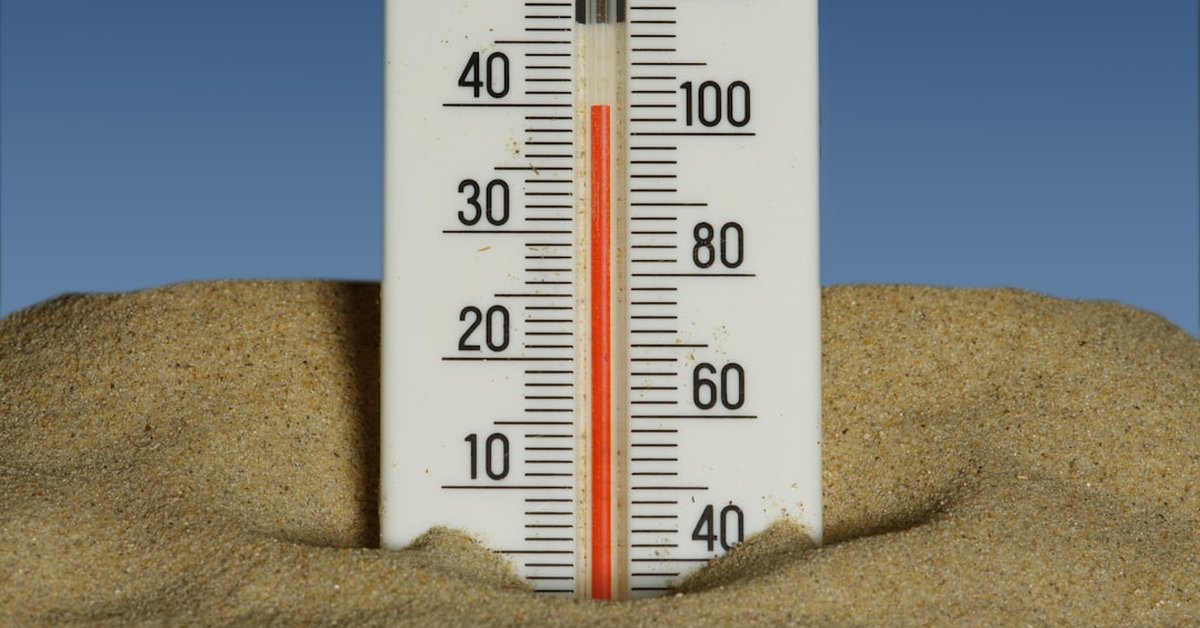







If you still think of British summers as gray drizzle interrupted by a brief, polite sun, think again. What the UK is experiencing right now isn’t a heatwave — it’s a reckoning. For the third day running, the country’s hottest June temperature on record has been smashed. On Thursday, the mercury hit 36.4°C (97.5°F) at Yeovilton in Somerset, eclipsing the record set just 24 hours earlier. And that record had itself already broken the one from Tuesday. Three consecutive days. Three different records. That’s not normal — and climatologists say we’re only at the beginning.
The Numbers Behind the Heat
The UK Met Office confirmed Thursday’s reading at its station in Yeovilton, a Royal Navy airfield in South West England. It beats Wednesday’s provisional record of 36.3°C at Charlwood, Surrey, which had already surpassed Tuesday’s 35.7°C at Heathrow. To put that in context: the previous all-time June record for the UK was 35.6°C, set in 2019. Before that, it was 35.3°C in 1976. For it to be beaten three times in a single week is statistically jarring — and climate scientists point directly to human-caused warming. “We’re seeing a step change in the likelihood of extreme events,” said Dr. Friederike Otto, a climatologist at Imperial College London and co-lead of the World Weather Attribution network. “What used to be a one-in-a-thousand-year heat event in the UK is now something we should expect every few decades — or sooner.”
Why This June Heatwave Hits Different
It’s not just the peak temperatures. It’s the duration. The UK is enduring a “tropical night” phenomenon — overnight lows staying above 20°C in parts of London and the South East — which leaves homes, built for insulation against cold, baking like greenhouses. Hospitals are seeing a spike in heat-related admissions. Train tracks are buckling. And critically, the country’s infrastructure was never designed for this. Look, the UK has had heatwaves before — 1976, 2003, 2019 — but three successive daily records suggests something structural has shifted. The Met Office’s UK Climate Projections have warned for years that summers will grow hotter and drier. But even those projections may have been conservative. “The models are catching up, but reality is moving faster,” said Dr. Mark McCarthy, head of the Met Office’s National Climate Information Centre.
The timing matters too. June is still early summer; the hottest weather in the UK typically arrives in July or August. If records are falling now, what happens when the jet stream shifts again next month? Already, parts of Spain and France are sweltering under conditions that have been linked to hundreds of excess deaths. In a grim twist of irony, an extreme heat awareness event in London was canceled because the heat was too dangerous to hold outdoors. And across the Channel, Europe’s deadly heatwave has already claimed lives — with record temperatures in France, Italy, and Spain.
What This Means for You
For readers in the US, UK, and Canada, this isn’t just a faraway weather story. The same atmospheric pattern driving this European heat dome — a persistent ridge of high pressure stalled over Western Europe — is connected to the broader waviness of the jet stream, which also influences North American weather. A growing body of research links a wavier jet stream to more frequent “blocking” events, where heat or cold gets stuck in place. So yes, what happens in Somerset doesn’t stay in Somerset. “The climate system is an interconnected machine,” said Dr. Jennifer Francis, senior scientist at Woodwell Climate Research Center. “When you see records falling like dominoes in one region, it’s a signal that the whole system is under stress.”
For travelers heading to Europe this summer, the risks are real. Heatstroke, power outages, and flight cancellations are becoming more common. The UK’s rail network slows down when tracks get too hot. Air conditioning is rare in homes and older hotels. The essential safety tips for traveling in a European heatwave are worth reviewing before you pack your bags.
A Closer Look at the 1976 Comparison
Every heatwave gets measured against 1976, the benchmark summer in British memory. That year, the UK endured 15 consecutive days above 32°C and a drought that lasted months. But 1976 was an outlier, a freak combination of a weak Atlantic circulation and a very strong ridge. Today, that outlier is becoming a baseline. “The 1976 heatwave is still famous, but it happened in a world that was about 0.8°C cooler globally,” noted Otto. “Now we’re 1.2°C above pre-industrial levels. The same atmospheric setup today produces temperatures at least a degree higher.” That’s reflected in the numbers: the 1976 June record was 35.3°C. This week it was beaten by 1.1°C. The difference is small in absolute terms but massive in terms of excess heat overload on people, infrastructure, and ecosystems.
And then there’s the “apocalyptic” factor — you may have heard about Saharan dust adding an eerie orange tint to European skies in the coming days. That’s because the same southerly winds dragging hot air northward are also lifting fine dust from the Sahara. It’s a visual reminder that the heat is not a local problem — it’s a continental, interlinked event.
The Infrastructure Challenge
Britain’s housing stock is among the oldest and least adapted to heat in the developed world. Over a third of homes were built before 1945, with solid brick walls that store heat and release it at night. The National Health Service is already bracing for a surge in admissions — heat-related illnesses, cardiovascular strain, and respiratory complications. Hospitals in parts of southern England have declared “critical incidents” to free up capacity. The government has activated the Level 3 Heat Health Alert for much of England, urging people to stay hydrated, check on the elderly, and avoid the sun between 11 a.m. and 3 p.m. But for many, especially those in urban heat islands like London, there’s no escape. Cities like the capital can be up to 10°C warmer than surrounding rural areas.
The Met Office official statement acknowledged the severity: “The likelihood of such events will continue to grow as the climate warms.” It’s a dry phrase, but behind it lies a clear warning: this isn’t a one-off. The UK’s infrastructure, from rail to health to energy grids, needs to be rethought for a hotter reality.
What’s Next?
As of Friday, the heatwave shows no sign of breaking. Forecast models indicate the ridge will hold over the weekend, with temperatures possibly rising again — though perhaps not enough to break the record for a fourth day. But the bigger picture is grim. The World Meteorological Organization notes that Europe is warming faster than any other continent — at roughly twice the global average. The UK, tucked in the northwest corner, was long thought to be a “cool refuge.” That’s changing. The question now is not if another record will fall, but when — and by how much. For those living in the heat, the answer is already here. It’s 36.4°C, and it’s just June.
Frequently Asked Questions
Why are UK June records falling three days in a row?
This is due to a persistent high-pressure system (heat dome) sitting over Western Europe, pulling hot air north from Africa and the Mediterranean. The underlying warming from climate change has raised baseline temperatures, making it easier for natural weather patterns to break records repeatedly.
How does the UK’s 36.4°C compare to extreme heat elsewhere?
While 36.4°C may seem modest compared to the 45–50°C seen in India or the US Southwest, the UK’s infrastructure and population are not adapted to such heat. Many homes lack air conditioning, and the health system is strained. The relative temperature anomaly — how far above the local norm — is what makes it dangerous.
Will this heatwave lead to government action on climate adaptation?
Previous heatwaves have prompted some policy changes, like adjustments to rail speed limits and public health campaigns. However, critics say the pace of adaptation is far too slow. The Climate Change Committee has urged the government to invest in heat-resistant housing, green spaces, and early warning systems. The current event may intensify pressure for faster action.