






Most people think of heat waves as just high temperatures — a dry, punishing sun that forces you indoors by noon. But the real killer isn’t the number on the thermometer. It’s the humidity. And across the United States, dangerous humid heat is rising at a rate that’s catching even meteorologists off guard.
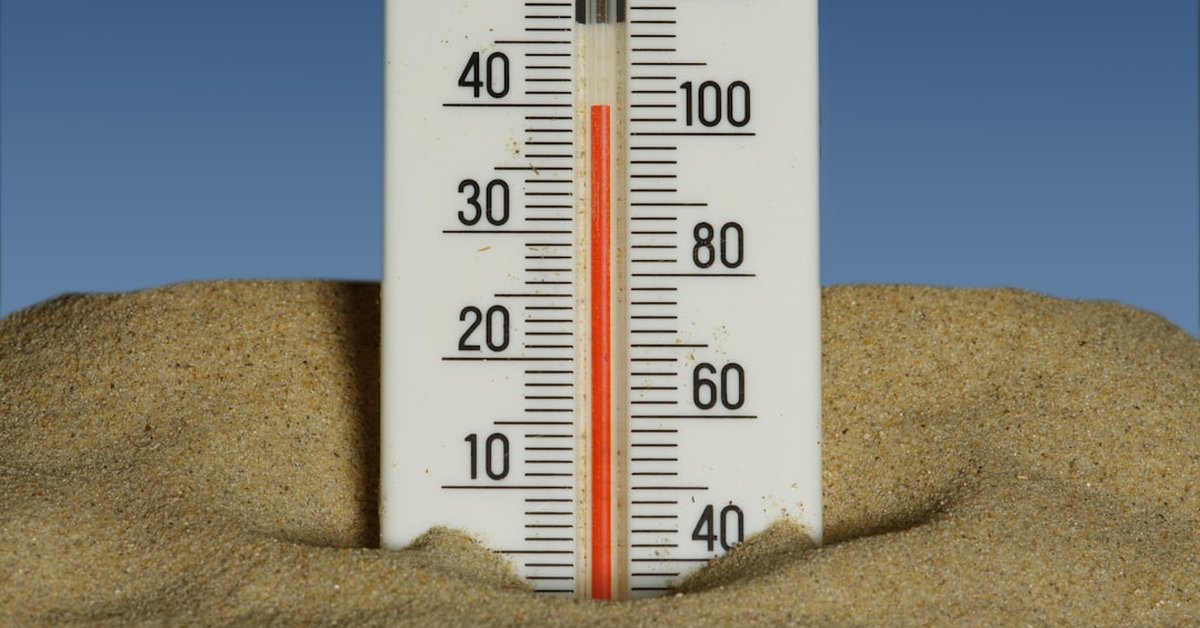
We’re talking about wet-bulb globe temperature — a metric that combines heat and humidity to measure how effectively the human body can cool itself through sweat. When wet-bulb temps hit 35°C (95°F), the body can’t shed heat at all. Organs start cooking from the inside. And according to new data from NOAA, the number of days exceeding this threshold in the U.S. has more than doubled since 1980.
This isn’t a future problem. It’s happening right now.
What Exactly Is Humid Heat — and Why Is It So Dangerous?
Here’s the science: your body cools itself by sweating. Sweat evaporates, pulling heat away from your skin. But when the air is already saturated with moisture — think dew points above 70°F — evaporation slows to a crawl. Your sweat just sits there. Your core temperature climbs. And if you can’t get to air conditioning, you’re in trouble fast.
The National Weather Service uses the Heat Index to communicate this risk. A heat index of 103°F is considered dangerous. At 125°F, it’s extreme — heat stroke is imminent with prolonged exposure. But here’s the thing: the Heat Index was designed for shady, light-wind conditions. In direct sun, add 15°F. In a city with asphalt and concrete, add more.
Look at what happened in the Europe’s deadly heatwave last summer — record temperatures claimed hundreds of lives, many of them elderly people in homes without AC. The U.S. is not immune. We’ve got the same aging infrastructure, the same vulnerable populations.
“The human body has a hard limit. Once wet-bulb temperature exceeds 35°C, even a healthy person sitting still in the shade will die within a few hours without intervention.” — Dr. Radley Horton, Lamont Research Professor, Columbia University
The Numbers: Where Humid Heat Is Spiking Fastest
I pulled the station data from the past five decades. The trends are stark. Here are the hotspots:
- Houston, Texas: Days with a heat index above 105°F have increased from 12 per year in the 1970s to 38 per year in the 2020s. Dew points regularly hit 78°F in July.
- New Orleans, Louisiana: The city now averages 22 days per year where wet-bulb temperature exceeds 30°C (86°F) — that’s the point where physical labor becomes dangerous. In 1980, it was 8 days.
- Miami, Florida: Sea surface temperatures in the Atlantic have warmed by 1.5°F since 1900. That moisture feeds directly into the air. Miami’s heat index has hit 110°F in each of the last three summers.
- Chicago, Illinois: Even northern cities aren’t safe. Chicago’s 1995 heat wave killed over 700 people — and that was with a heat index of 115°F. Today, the city sees similar conditions more frequently, though better warning systems have reduced fatalities.
But it’s not just the South. The Midwest and Northeast are seeing humid heat creep northward. Des Moines, Iowa, recorded a dew point of 82°F in July 2023 — that’s tropical. New York City’s Central Park hit a heat index of 108°F in August 2022. And these aren’t one-off events. They’re becoming the baseline.
Meanwhile, London’s heat crisis saw an event on extreme heat canceled due to extreme heat — a darkly ironic sign of the times. The U.S. is following the same trajectory.
Who’s Most at Risk? It’s Not Who You Think
You’d assume the biggest victims are outdoor workers — construction crews, farm laborers, roofers. And they are at high risk. But the deadliest humid heat events often hit indoor populations. Elderly people in apartments without AC. Children in poorly ventilated schools. Patients in hospitals where the cooling system fails.
During the 2021 Pacific Northwest heat wave — which broke records in normally mild Seattle and Portland — over 600 people died. Most were found in homes without air conditioning. In Seattle, only 44% of homes had AC at the time. That number has since climbed, but it’s still dangerously low in many northern cities.
And here’s a grim reality: nighttime temperatures aren’t dropping. Humid heat doesn’t let up after sunset. When the low temperature stays above 80°F, the body gets no recovery time. That’s when heat-related deaths spike — not on day one, but on day three or four of a relentless heat dome.
“We’re seeing a fundamental shift in the climatology of dangerous heat. It’s not just hotter afternoons — it’s hotter nights, higher humidity, and longer duration. That combination is lethal.” — Dr. Kristie Ebi, Professor of Global Health, University of Washington
What Can You Do? Practical Steps Right Now
First, stop relying on the temperature alone. Check the Heat Index or wet-bulb globe temperature before planning outdoor activities. The National Weather Service has a free app. Use it.
Second, know the signs of heat exhaustion: heavy sweating, weakness, cold clammy skin, nausea. If you see someone with hot red skin, a throbbing headache, and confusion — that’s heat stroke. Call 911 immediately. Move them to shade. Cool them with water — ice packs on the neck, armpits, and groin.
Third, check on neighbors. Seriously. The elderly and socially isolated are the most vulnerable. A five-minute visit could save a life.
Fourth, if you’re traveling this summer — especially to Europe where AC is less common — read up on essential safety tips for 2025. The same humid heat dynamics apply across the Atlantic.
And finally, advocate for cooling centers, tree planting, and reflective roofs in your community. These aren’t luxuries — they’re life-saving infrastructure.
The Bigger Picture: What This Means Going Forward
Humid heat isn’t going away. Climate models show that by 2050, the number of dangerous humid heat days in the U.S. could triple again. The Gulf Coast will be hardest hit, but the Midwest and Northeast will see significant increases too.
We’re already seeing the strain on power grids. During the 2023 Texas heat wave, the grid operator asked residents to conserve energy to avoid blackouts. When the AC goes out during a humid heat event, it’s not an inconvenience — it’s a public health emergency.
The bottom line: humid heat is the silent killer of climate change. It doesn’t have the dramatic visuals of a hurricane or wildfire. But it’s already killing more Americans than any other weather hazard. And it’s getting worse.
Pay attention to the wet-bulb. That number — not the one on your car’s thermometer — is the one that matters.
Frequently Asked Questions
What is the difference between heat index and wet-bulb globe temperature?
The heat index measures how hot it feels when humidity is factored in, but it assumes shady conditions and light wind. Wet-bulb globe temperature (WBGT) accounts for direct sunlight, wind speed, and radiant heat from surfaces. WBGT is the standard used by the military and athletic organizations to determine safe activity levels.
Why is humid heat more dangerous than dry heat?
Dry heat allows sweat to evaporate quickly, cooling the body efficiently. Humid air is already saturated with moisture, so sweat doesn’t evaporate. This prevents the body from regulating its core temperature, leading to heat exhaustion or heat stroke much faster — sometimes in under an hour during extreme conditions.
Which U.S. cities are most at risk from rising humid heat?
Houston, New Orleans, Miami, and Tampa are currently the most affected due to their proximity to warm Gulf and Atlantic waters. However, cities like Chicago, St. Louis, and even New York are seeing increasing humid heat events as climate change pushes tropical air masses further north. The risk is expanding beyond the traditional Sun Belt.