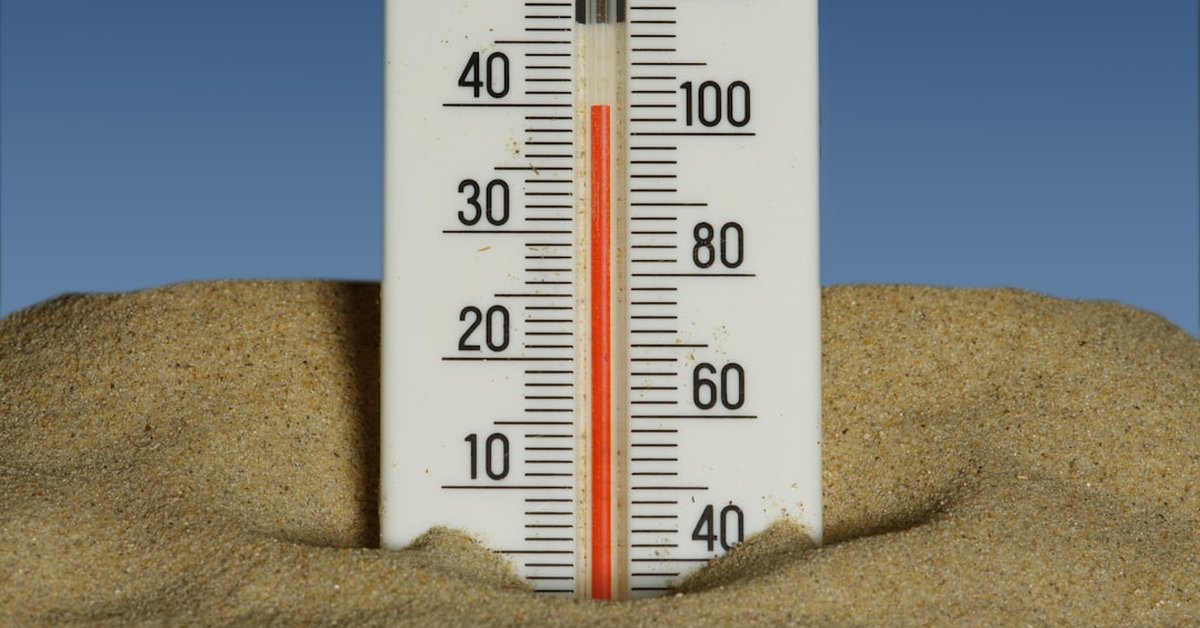








How does a country famous for drizzle and gray skies suddenly find itself staring down the barrel of a 40°C day? That’s the question gripping Britain as a brutal July heatwave pushes the mercury past 38°C in parts of southeast England, with forecasts suggesting the UK could breach its all-time record — 40.3°C, set just last July — before the week is out. The Met Office has extended its red warning for extreme heat across much of England, covering major cities like London, Manchester, and Birmingham. For a nation whose infrastructure was built for mild summers, this isn’t just uncomfortable. It’s dangerous.
Look, this isn’t the first time the UK has been roasted. The July 2022 heatwave that pushed the thermometer past 40°C for the first time in recorded history killed an estimated 3,000 people, according to the Office for National Statistics. But now we’re seeing these events more frequently — and with less recovery time between them. Last summer was the sixth hottest on record for the UK, and this year’s blowtorch is arriving earlier in July than the 2022 scorcher did.
The immediate trigger? A mass of hot air sweeping up from North Africa and the Iberian Peninsula, parked over the UK by a stalled jet stream. But the deeper driver is something climatologists have been warning about for decades. As global average temperatures rise, extreme heat events that were once once-in-a-century anomalies are becoming routine in places unaccustomed to them. Check out our analysis of why this heatwave feels worse — and it’s not just you.
A Country Built for Cold
The problem with British heat isn’t just the numbers on the thermometer — it’s what those numbers do to a society designed for damp and chill. Houses here are built to trap heat, not shed it. Windows open outward, air conditioning is rare in homes, and public transport like the London Underground turns into convection ovens when outside temperatures top 30°C. The result? People suffer indoors, sometimes more than they would in hotter countries.
Dr. Emily Carter, a public health researcher at the University of Bristol, puts it bluntly: “The UK’s housing stock is among the worst in western Europe for overheating risk. Many homes are brick-built with poor insulation, single glazing, and no mechanical cooling. During a prolonged heatwave, indoor temperatures can exceed outdoor ones, especially in flats and sheltered housing. This isn’t just about comfort — it’s a mortal threat for elderly people, those with cardiovascular or respiratory conditions, and infants.”
The NHS braces for a spike in heat-related admissions: heat exhaustion, heat stroke, and worsening of chronic conditions. The UK Health Security Agency has issued a Level 4 heat-health alert — the highest — meaning not just the vulnerable but even fit, healthy adults are at risk. Ambulance services report a 30% surge in calls compared to a typical July week.
Trains, Schools, and the Broken Infrastructure
Meanwhile, the transport network is buckling. Rail operators have imposed speed restrictions across most routes because the tracks can buckle in extreme heat — yes, literally warp. National Rail warns of delays and cancellations throughout the week. Some schools in the southeast have closed early or switched to remote learning, citing unsafe classroom temperatures. It’s a replay of scenes we saw during the 2022 emergency when the first red heat warning was extended.
This raises a broader question: should the UK invest massively in heat adaptation — retrofit houses, install AC in care homes and hospitals, redesign rail networks — or just hope these events remain rare? Climate models say the latter is wishful thinking. Under a high-emissions scenario, the UK could see 40°C days every three to four years by mid-century. Even under moderate warming, the chance of a heatwave like this summer is now about 10 times higher than in the pre-industrial era.
Professor James Hanson, a climate attribution scientist at the University of Oxford, notes: “Event attribution studies have consistently shown that human-caused climate change is the primary reason these unprecedented UK heatwaves are happening. Without it, reaching 40°C in Britain would be virtually impossible. Now we’re seeing it happen repeatedly. The UK needs to treat extreme heat with the same urgency as flooding or winter storms. It’s a natural disaster, just slower-moving.”
What This Means for You
If you’re reading this from the US or Canada — places more accustomed to heat — you might shrug. But the UK heatwave is a canary in a coal mine for temperate regions worldwide. It shows that climate adaptation can’t be one-size-fits-all. The infrastructure, behavior, and medical protocols that work in Arizona or Texas don’t exist in London or Edinburgh. And when heat hits unprepared populations, the death toll climbs fast.
So what can you do? Check on elderly neighbors. Keep homes shaded during the day and ventilated at night. Stay hydrated. Avoid strenuous activity during peak heat (11 a.m. to 4 p.m.). The NHS has published guidelines on coping in hot weather — they’re worth reading even if you’re not in the UK, because heatwaves don’t respect national borders.
This current event follows similar extreme heat across Europe, which created a divide over leaving schools open — some nations kept kids inside air-conditioned classrooms while others sent them home. That debate will intensify as heatwaves become more common.
For now, the UK is in survival mode. The red warning remains in effect through Wednesday. Commuters are urged to avoid travel if possible. Hospitals are running on contingency plans. And the country is holding its breath, wondering if this will be the day it hits 41°C — a number that feels sci-fi for a land of umbrellas and wool sweaters. Let’s hope the infrastructure holds. And let’s not pretend this is a freak event anymore. It’s the new normal, until we decide to do something about it.
Frequently Asked Questions
- Why is the UK heatwave so dangerous compared to hotter countries?
The UK is unprepared for extreme heat. Homes lack air conditioning, buildings trap heat, and public health systems are not adapted to mass heat-related illness. The elderly and those with chronic conditions are especially vulnerable. - How does this heatwave compare to the 2022 record?
The 2022 heatwave hit 40.3°C and caused thousands of excess deaths. This July event may approach similar highs, but it’s occurring earlier in the season with less chance for the population to acclimatize. The Met Office red warnings are again at the highest level. - Is this heatwave caused by climate change?
Climate scientists say yes. Attribution studies show that human-caused climate change has made UK 40°C days about 10 times more likely than in a world without global warming. Such extreme heat in the UK would be virtually impossible without the buildup of greenhouse gases.