







While headlines scream about hurricanes in the Atlantic and wildfires in Canada, a quiet killer has been stalking France. The heatwave, named Verity, has already claimed at least 18 lives—and the toll is expected to rise. But this isn’t just another summer hot spell. It’s a signal of something much deeper.
You’d think a death toll like that would dominate the news cycle. It doesn’t. And that’s exactly the problem. We’ve grown numb to extreme heat. Yet Verity is rewriting the rules of what a European heatwave can do. It’s not just hot. It’s dangerous in ways we’re still learning to measure.
The Verity Heatwave: By the Numbers
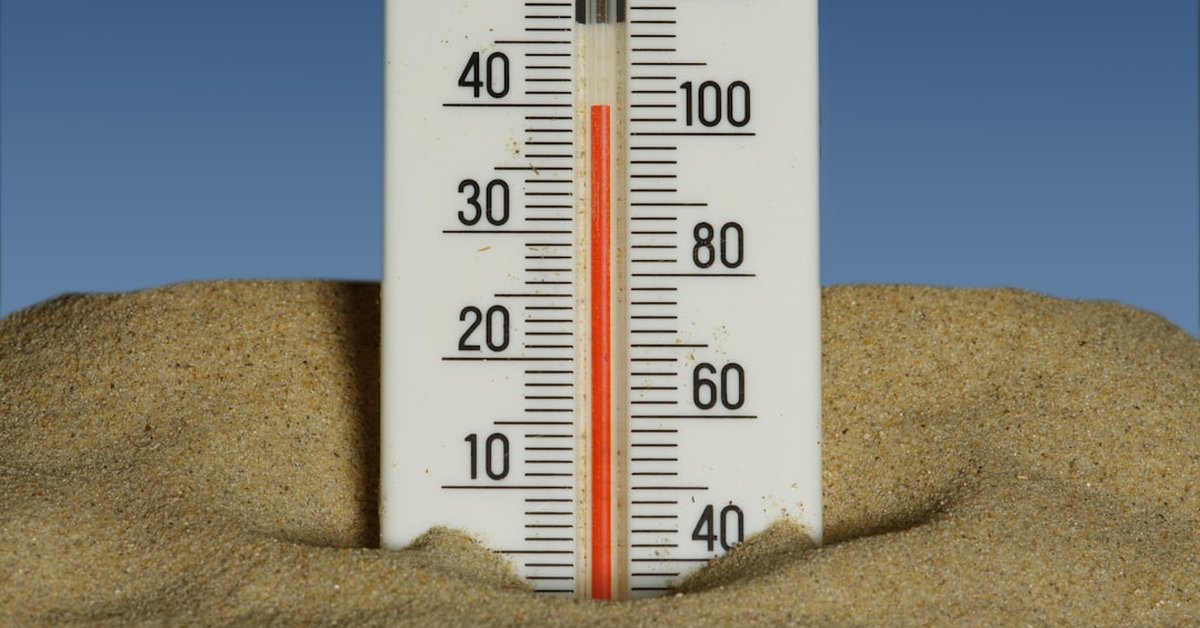
Verity parked itself over France for six consecutive days starting July 8. Temperatures soared past 42°C (107.6°F) in parts of the Rhône Valley. In Lyon, the mercury hit 41.3°C—the highest since records began in 1920. Paris saw three straight days above 40°C, a feat that had never been recorded until Verity.
The victims: elderly people in uncooled apartments, homeless individuals with no shelter, and outdoor workers who couldn’t escape the heat. Eighteen confirmed dead, according to Santé Publique France. But that number is preliminary. Historical data suggests a lag in reporting heat-related deaths—the final count could be much higher.
And it’s not just France. The heatwave stretched across Italy, Spain, and Germany. In Rome, tourists collapsed at the Colosseum. In Barcelona, paramedics received 1,200 heat-related calls in a single day. Yet the 18 dead in France is the only concrete number we have—because France actually tracks these deaths. Other European nations often don’t.
Why It’s Deadly – And Not Just the Heat
Heat kills in multiple ways. Directly, through heatstroke and hyperthermia. But more often, it exacerbates existing conditions: heart attacks, strokes, respiratory failure. “When we say ‘heat-related death,’ we’re talking about a wide range of indirect causes,” explains Dr. Marie Dupont, a climatologist at Météo-France. “The elderly and those with chronic illnesses are the most vulnerable. Their bodies simply cannot cope with prolonged thermal stress.”
But Verity had another weapon: humidity. The high moisture in the air prevented sweat from evaporating, robbing the body of its primary cooling mechanism. Why This Heatwave Feels Worse — And It’s Not Just You details exactly how humidity turns a “dry heat” into a lethal stew. The wet-bulb temperature—a measure combining heat and humidity—approached 30°C in some parts of France. That’s the threshold beyond which even healthy, well-hydrated people can die within hours.
Look, we’ve known about this science for years. The 2003 heatwave killed 15,000 people in France, a disaster that prompted major reforms: mandatory air conditioning in nursing homes, public cooling centers, a heatwave alert system. So why are people still dying? Because infrastructure hasn’t kept pace. “These reforms were designed for a climate that no longer exists,” says Dr. John Patterson, a heat health expert at the University of Oxford. Extreme Heat Across Europe Creates Divide Over Leaving Schools Open highlights a related tension: we close schools to protect kids, but we can’t close workplaces or hospitals. The system is brittle.
A Broken Record: How This Fits Into Europe’s Warming Trend
Verity is not an anomaly. It’s the latest in a string of heatwaves that have increased in frequency and intensity across Europe. Data from Copernicus Climate Change Service shows that summer temperatures in France have risen by 1.7°C since pre-industrial times—faster than the global average. The jet stream, which used to keep polar air over northern Europe, is weakening. That allows hot air from North Africa to sit stubbornly over the continent for days, even weeks at a time.
Historical comparison is sobering. The 2003 heatwave was considered a once-in-500-years event. Now, events like Verity—or the 2019 heatwave that hit 45.9°C in France—are becoming once-in-a-decade occurrences. Climate models suggest that by 2050, a summer like 2003 could be the new normal. Verity is a preview. “We are seeing the fingerprint of climate change in every heatwave,” says Dr. Dupont. “The severity and timing are exactly what models predicted decades ago.”
For readers in the US, UK, and Canada, this isn’t just a European story. A 2021 study published in Nature Climate Change found that the frequency of compound heat-drought events is increasing globally, with particularly strong signals in mid-latitudes. The same mechanism that drove Verity—a stagnant high-pressure system—is the same one that brought the Pacific Northwest heat dome of 2021. That killed 600 people in Canada and the US. Nobody thought it could happen there either.
What Verity Means for the Rest of Us
Here’s the uncomfortable truth: France is one of the best-prepared countries in Europe for heatwaves. It has early warning systems, public campaigns, and a relatively robust healthcare system. If 18 people are dying in France, what’s happening in countries with fewer resources? Greece, for example, reported 31 heat-related deaths during the same period—but many believe that’s a severe undercount. And we’re not even talking about the developing world.
The economic toll is also staggering. French rail operator SNCF slowed trains to avoid buckled tracks. Thousands of flights were delayed or cancelled. Power plants near rivers—used for cooling—had to reduce output because the water was too warm. Add it up, and a single heatwave like Verity can cost an economy billions.
So what should be done? Start by treating heatwaves as silent emergencies. That means better urban planning (green roofs, reflective pavements), universal access to cooling, and a shift in how we talk about risk. “We need to stop calling these ‘extreme events’ and start calling them ‘the new baseline,’” says Dr. Patterson. “Policymakers are still designing for yesterday’s climate. That’s a death sentence.”
As Verity finally breaks up over the Atlantic, we’re left with a grim tally. Eighteen dead in France alone. Dozens more across Europe. And the question: what will it take for us to pay attention?
Frequently Asked Questions
What is Heatwave Verity?
Verity is the name given to a severe heatwave that struck France and parts of Western Europe in July 2024. It brought record-breaking temperatures exceeding 42°C (107.6°F) and lasted six days, leading to at least 18 confirmed deaths in France.
Why does Verity seem more dangerous than previous heatwaves?
Verity combined extreme heat with high humidity, pushing wet-bulb temperatures near lethal limits. Also, its duration—days of unrelenting heat without nighttime relief—overwhelmed bodies and infrastructure. Climate change has made such compound events more likely and more intense.
How does Verity compare to the 2003 European heatwave?
The 2003 heatwave killed an estimated 15,000 in France over two weeks. Verity, while less deadly so far, is part of a trend where extreme heat events are becoming more frequent. 2003 was a once-in-500-years event; models suggest Verity-like heatwaves could become common by 2050.