




The ground shook beneath the Talaud Islands early Friday morning. At 05:38 UTC, a 5.0 magnitude earthquake struck the remote archipelago in North Sulawesi, Indonesia. For residents accustomed to the Earth’s restless movements, this was another jolt in a long history of seismic activity. But for the global audience watching from afar, this event underscores a sobering truth: Indonesia sits on one of the most volatile tectonic boundaries on the planet, and every tremor carries the potential for devastation.
The shaking lasted only seconds. Yet in communities where buildings are often constructed without modern engineering standards, even a moderate quake can topple walls, shatter windows, and send families running into the streets. The United States Geological Survey (USGS) reported the earthquake struck at a depth of 35 kilometers, roughly 150 kilometers southeast of the regional hub of Manado. No tsunami warning was issued, but local authorities urged vigilance—a standard protocol in a nation that experienced the 2004 Indian Ocean tsunami.
What This Means for Residents
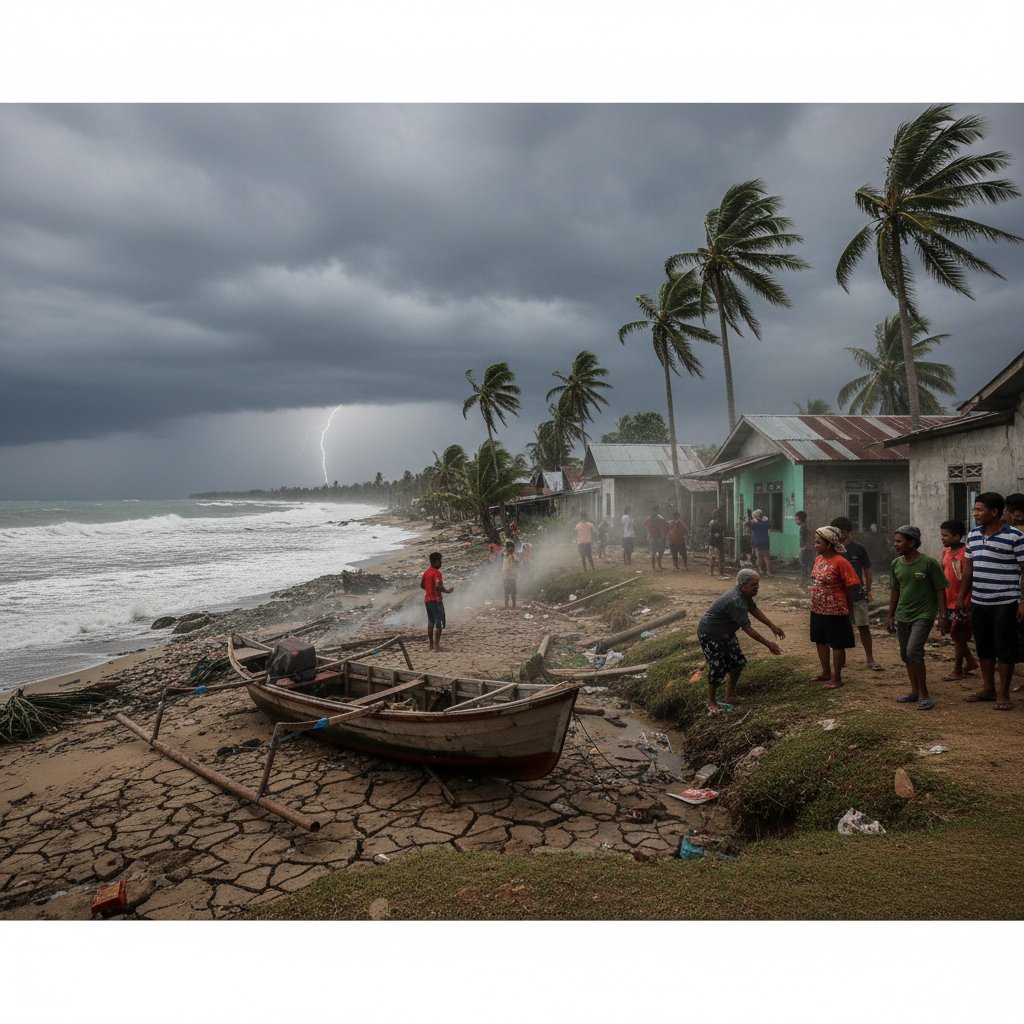
For the roughly 100,000 people living across the Talaud Islands, a 5.0 earthquake is a visceral reminder of vulnerability. Many homes are built from wood and corrugated metal, structures that can collapse under moderate shaking. Schools and hospitals, often the most critical infrastructure in a disaster, may lack reinforcement. The immediate danger is not just the quake itself, but the secondary hazards: landslides on steep volcanic slopes, cracks in roads that isolate villages, and the psychological toll of living on constant alert.
“Even a magnitude 5.0 can cause serious damage if the epicenter is shallow and close to populated areas,” explains Dr. Maria Santos, a seismologist at the Pacific Tsunami Warning Center. “In regions like Sulawesi, where building codes are not always enforced, the risk is disproportionately high. This event should remind us that moderate earthquakes demand the same preparedness as larger ones.”
The Talaud Islands are no stranger to shaking. They lie within the “Ring of Fire,” a 40,000-kilometer horseshoe of seismic activity that encircles the Pacific. Indonesia alone records thousands of earthquakes each year, most too small to feel. But when a 5.0 strikes, it penetrates the daily lives of islanders. Fishing boats return early. Markets empty. Parents hold their children a little tighter. The rhythm of life is interrupted, even if only briefly.
Indonesia’s Tectonic Tinderbox
The geological mechanics behind Friday’s earthquake are straightforward: the Philippine Sea Plate is subducting beneath the Sunda Plate at a rate of several centimeters per year. This convergence builds stress along fault lines, releasing it suddenly as earthquakes. The Talaud region sits at a complex triple junction where the Pacific, Philippine Sea, and Australian plates interact. This makes the area prone to both shallow crustal quakes and deeper subduction events.
But behind the simple physics lies a pattern of recurring disaster. In 2018, a 7.5 magnitude earthquake on Sulawesi Island triggered a tsunami and liquefaction that killed over 4,300 people. The Talaud Islands, while remote, are not immune to similar cascading hazards. “Every earthquake in this region is a data point for understanding a larger system,” says Professor Kenji Tanaka, a geophysics researcher at the University of Tokyo. “The 5.0 event is not alarming by itself, but it provides valuable information about stress accumulation along the subduction zone. We need to monitor the area for potential larger events.”
The 2004 Sumatra-Andaman earthquake, a magnitude 9.1, remains the deadliest in recorded history, claiming over 227,000 lives across the Indian Ocean. That catastrophe reshaped global tsunami warning systems, but the underlying tectonic forces remain unchanged. For Indonesia, the question is not “if” a major earthquake will strike, but “when.”
Historical Comparisons and Preparedness Gaps
Compared to the megathrust earthquakes that rattle global headlines, a 5.0 appears minor. Yet history shows that moderate earthquakes can be deadlier than their magnitude suggests. The 2010 Haiti earthquake, a 7.0, killed over 100,000 people due to poor construction. Closer to the Talaud region, the 2009 Padang earthquake (7.6) killed over 1,100 in West Sumatra. These examples highlight a critical lesson: vulnerability is not just about the earthquake’s size, but about the resilience of the built environment.
In the Talaud Islands, infrastructure is limited. Roads are often unpaved. Hospitals may lack backup generators. Communication networks can fail when towers topple. The Indonesian government has made strides in early warning systems, including the Indonesian Tsunami Early Warning System (InaTEWS). But delivering alerts to remote islands remains a challenge. “The last mile problem is acute in archipelagic nations,” notes Dr. Lina Wu, a disaster risk reduction specialist at the Asian Development Bank. “Even if a warning reaches a district office, it may not reach a fisherman at sea or a farmer in the hills. Community-based drills and local knowledge are essential.”
Friday’s earthquake did not cause a tsunami, but the threat is ever-present. The 2018 Sulawesi disaster caught many off guard because the tsunami struck without a major foreshock. In the Talaud Islands, schools conduct drills. Village heads are trained to recognize natural warning signs: a sudden recession of the sea, or the rumbling of the ground. These grassroots efforts save lives, but they cannot replace systemic investment in seismic retrofitting and land-use planning.
What Comes Next for the Talaud Region
In the wake of a 5.0 earthquake, the immediate concern is aftershocks. The USGS typically forecasts a 5% to 10% chance of a larger earthquake within the next week. For residents, this means sleeping lightly, avoiding unstable structures, and keeping emergency supplies ready. Indonesian authorities will likely deploy teams to assess damage, particularly in remote villages inaccessible by road.
Looking forward, this event serves as a reminder that the Ring of Fire does not sleep. Climate change, while not directly causing earthquakes, can exacerbate the aftermath: changing rainfall patterns may trigger landslides on slopes weakened by seismic shaking. As global temperatures rise, coastal communities in the Talaud Islands face a double exposure to earthquakes and sea-level rise. The compounding risks demand integrated disaster management strategies that address both geological and climate hazards.
“We cannot prevent earthquakes, but we can reduce their impact,” says Dr. Santos. “Every moderate quake is a test of our preparedness systems. The Talaud earthquake is a wake-up call for all nations living in seismically active zones.”
The Earth will continue to move. The question is whether the buildings, policies, and communities built upon it will stand firm. For now, the Talaud Islands have felt another tremor. The world watches, waits, and learns.