

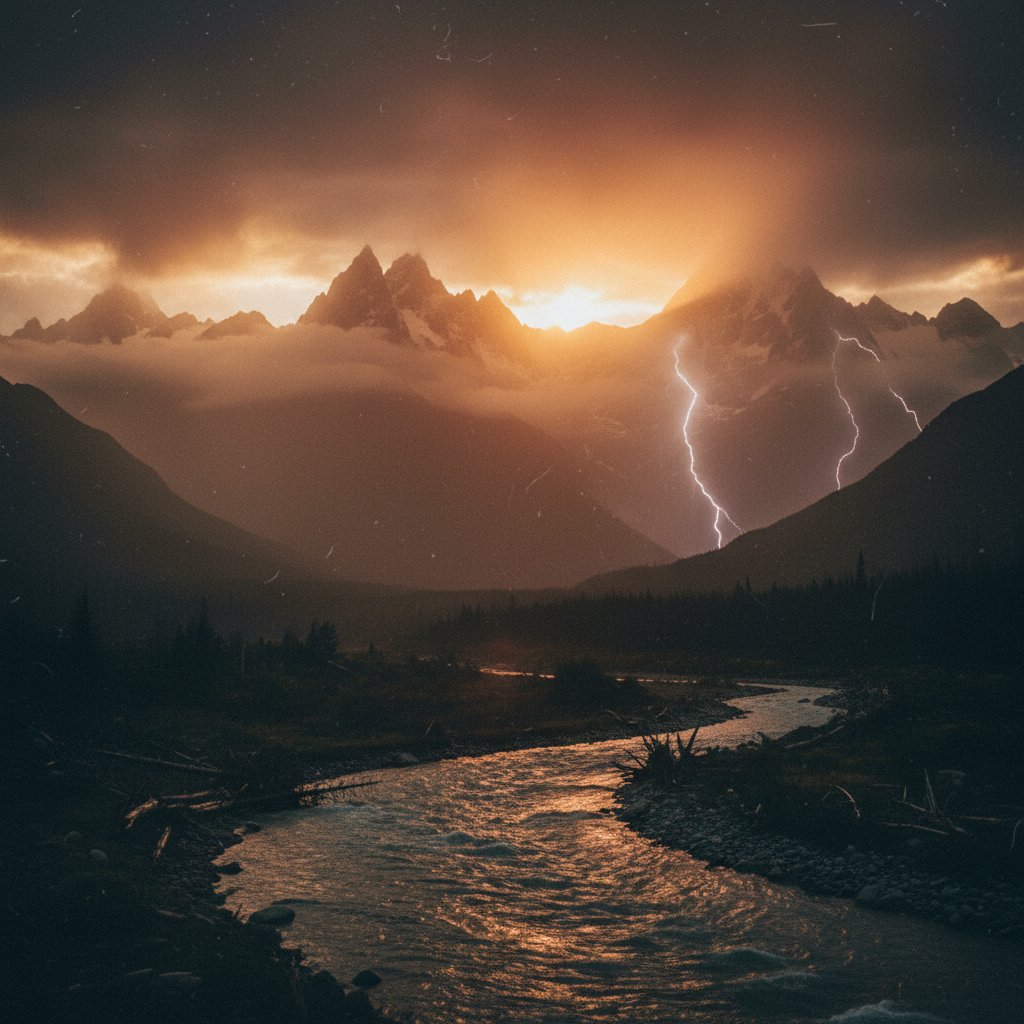
“The mountains are calling, but the sunrise colors are screaming louder than ever. We’re seeing deeper oranges and reds that paint the peaks like a Van Gogh canvas—and that’s not just beauty; it’s a warning.”
Dr. Elena Marquez, an atmospheric scientist at the University of Colorado Boulder, has spent the last decade photographing dawn over the Rockies. She’s noticed a shift—not just in her camera’s lens, but in the sky itself. The sunrises she once described as “gentle pastels” have morphed into a fierce, almost theatrical display of fire and light.
And she’s not alone. Across the US, UK, and Canada, hikers, photographers, and even casual commuters are reporting increasingly vivid mountain sunrises. But this phenomenon isn’t just a treat for the eyes. It’s a signal of deeper changes in our atmosphere—changes tied to extreme weather, shifting jet streams, and the growing frequency of wildfires.
The Science Behind the Spectacle
To understand why sunrises over mountains are intensifying, we have to look up. The colors we see at dawn and dusk are caused by Rayleigh scattering—sunlight interacting with molecules and particles in the atmosphere. When the sun sits low on the horizon, its light travels through more air, scattering shorter (blue) wavelengths and leaving longer (red and orange) wavelengths visible.
But particles can amplify the effect. “Aerosols—tiny particles like dust, smoke, and pollution—act as extra scattering agents,” explains Dr. Marquez. “When you get a concentration of these particles in the lower atmosphere, the sunset or sunrise becomes more saturated, more intense.”
And what’s pumping those particles into the air? Wildfires, for one. In the summer of 2023, smoke from Canadian wildfires drifted across the US, creating eerie orange skies over New York City—and similarly stunning sunrises over the Sierra Nevada and the Rockies. In the UK, a high-pressure system trapped Saharan dust over the Scottish Highlands, turning dawn into a blood-red show.
The result: Mountain sunrises are no longer just serene—they’re charged with meaning.
A Climate Signal Dressed in Beauty
“We need to be careful about romanticizing this,” warns James Hartfield, a veteran meteorologist and former chief of the National Weather Service’s Alert Operations. “A gorgeous sunrise can be the byproduct of a disaster unfolding hundreds of miles away. It’s a false sense of peace.”
Hartfield points to the summer of 2021, when the Bootleg Fire in Oregon pushed so much smoke into the sky that sunrises turned an apocalyptic deep red for weeks. “People were posting photos on social media praising the colors,” he recalls. “But those same particles were causing respiratory problems downwind. Nature’s beauty can be deceptive.”
Mountains, with their elevation and proximity to atmospheric layers, become perfect theaters for this deception. Cold air settling in valleys at dawn can trap smoke, haze, and moisture, creating a natural prism. Temperature inversions—where warm air sits above cooler air—lock in pollutants, intensifying the colors. As climate change drives more severe wildfires, inversions, and dust storms, the morning palette over peaks like Mount Rainier, Ben Nevis, or the Canadian Rockies will only deepen.
But it’s not all doom. Some experts argue that the increased vibrancy of mountain sunrises could serve as a powerful reminder of our connection to the environment—a call to action wrapped in awe.
The Human Impact: From Spectacle to Warning
For people living in mountain communities, the changing sunrise isn’t an abstract scientific concept—it’s a daily reality. Sarah Lindström, a mountain guide in Banff, Alberta, notices the shift every season. “I’ve been guiding sunrise hikes for 15 years,” she says. “The colors are definitely more intense during fire season. Last August, the sky was so orange it looked like a sunset at six in the morning. My clients were amazed, but I felt a knot in my stomach.”
Lindström’s experience echoes that of many outdoor professionals. They see the beauty, but they also breathe the air. In the UK, similar stories emerge from the Lake District and the Cairngorms. Steve Higgins, a photographer based in Keswick, has documented over 200 sunrises from Catbells peak. “Eight years ago, I’d get maybe five or six truly fiery sunrises a year. Now it’s more like 15 to 20,” he says. “The downside? I’m noticing more haze from European wildfires drifting over, even peat smoke from local moorland fires. The angle of the sun through that haze creates stunners, but it’s not natural.”
The question, then, is how do we appreciate this phenomenon without ignoring its roots? “We have to stop seeing the sunrise as just a pretty postcard,” says Hartfield. “Every time you see a mountain peak glowing like an ember, ask yourself: What’s in the air? Is there a fire? A drought? A storm brewing? That awareness is the first step toward adaptation.”
What This Means for You—and the Future
If you live near mountains or plan to visit them, expect to see more dramatic sunrises in the coming years. Climate models predict more frequent wildfires, drier conditions, and atmospheric instability—all ingredients for a vivid dawn. But don’t be lulled into thinking it’s simply a gift from nature.
For every jaw-dropping photo you take from a summit, there’s a firefighter somewhere fighting a blaze that’s fueling those colors. For every moment of peace at dawn, a community is bracing for the next heatwave or smoke advisory.
Still, there is a silver lining. The shared experience of a stunning mountain sunrise—especially one that’s intensified by climate signals—can galvanize people. “When you see something that beautiful, you want to protect it,” says Lindström. “I’ve had clients who started the hike talking about vacation plans and ended it asking how to reduce their carbon footprint. The beauty breaks through.”
As Dr. Marquez puts it: “We don’t have to stop enjoying the sunrise. We just have to also see the message it carries. Mountains have always been storytellers. Now, they’re telling us a story about resilience, risk, and responsibility.”
Next time you catch the first light spilling over a ridge, take a moment. Savor the colors. But also look deeper. The sunrise over mountains has become a barometer of change—and maybe, if we read it right, a compass for what comes next.