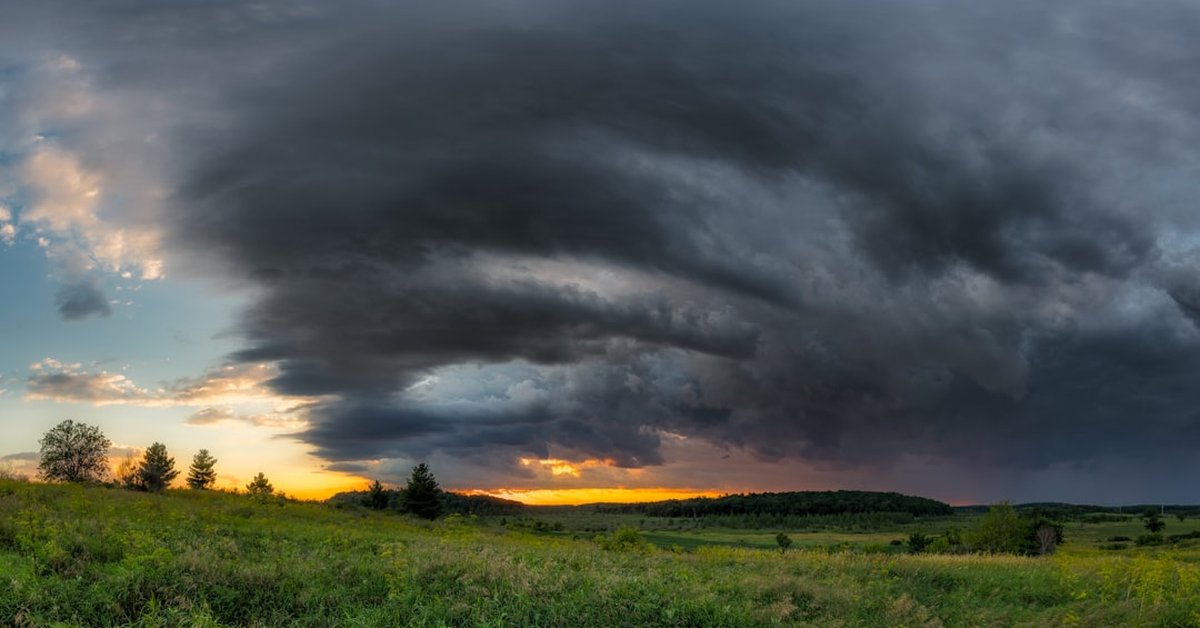






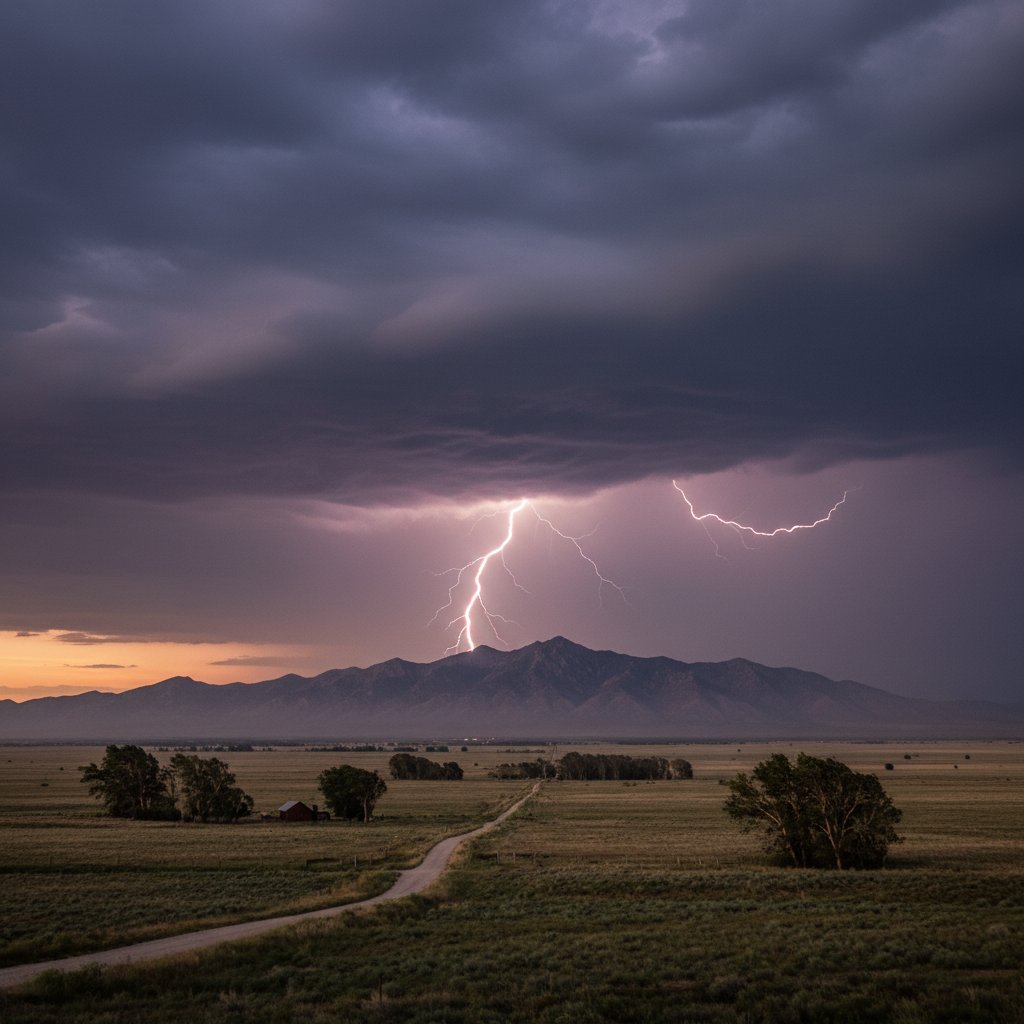
You could be standing in a clear blue sky, the sun warm on your face, and still be in mortal danger. Lightning that strikes nearly 40 miles from its parent thunderstorm—sometimes called a “bolt from the blue”—is one of the most deceptive killers in the weather world. Last week, a thunderstorm over central Kansas generated a cloud-to-ground discharge that sensors tracked nearly 40 miles away from the storm’s core, catching hikers on a ridge with no warning. No rain. No dark clouds. Just a sudden, blinding flash.
“People think that if they can’t see the storm, they are safe,” says Dr. Elena Marchetti, a lightning physicist at the University of Colorado Boulder. “But these long-range strikes can travel horizontally from the top of a thundercloud and then drop down miles away. They are the reason we say, ‘When thunder roars, go indoors’—even if it isn’t raining where you are.”
The event underscores a grim reality: lightning can reach far beyond the visible storm. For the residents of Wichita and surrounding areas, the recent 40-mile strike is a stark reminder that summer storms carry hidden reach. And as climate patterns shift, such extreme bolt distances may become more common.
The Science Behind ‘Bolts from the Blue’
A typical lightning bolt is a short spark between a cloud and the ground, usually within 5 to 10 miles of a storm’s rain core. But a bolt from the blue happens when the electrical discharge arcs out horizontally from the anvil—the flat, spreading top of a cumulonimbus cloud—and then bends downward to the ground far away. This can happen because the upper part of the cloud becomes positively charged, while the bottom is negative. The positive charge can travel laterally for tens of miles along the anvil before finding a path to Earth.
According to the National Lightning Safety Council, about 10% of all lightning deaths in the United States occur when the storm is not even directly overhead. The classic scenario: a sunny, hot afternoon with a distant thunderstorm on the horizon. People think they are safe, so they linger outside. Then, without warning, a strike hits from that “clear” sky.
“We had a case in Florida where a woman was gardening under a cloudless sky, and a lightning bolt from a storm 15 miles away killed her instantly,” recalls Dr. Marchetti. “The 40-mile range we saw in Kansas is extreme, but it aligns with what we know about positive lightning—which accounts for less than 5% of strikes but causes most fatalities.”
Positive lightning is what makes these long-distance events so dangerous. It releases far more energy than negative lightning, and because it appears to come from nowhere, victims have no time to react.
A Not-So-Rare Phenomenon
The recent Kansas strike is not an isolated oddity. Historical records show similar events across the United States. In 2015, a lightning strike killed a hiker in Montana’s Glacier National Park while the nearest storm was 25 miles away. In 2017, a golfer in Illinois was struck dead on a bright, sunny day with the closest thunderstorm 30 miles distant. Each case made local headlines, but the broader pattern is often overlooked.
Data from the National Weather Service indicates that after the main storm passes, the trailing anvil can still produce lightning 20 to 30 miles away. But 40 miles is on the upper edge of recorded distances. Researchers at the Earth Networks Total Lightning Network have documented a few strikes exceeding 50 miles from their parent storm, but those remain extremely rare. Still, the potential for such an event means that anyone near a thunderstorm—even at a perceived safe distance—should take shelter.
The Kansas strike also highlights a growing concern: as thunderstorms become more intense with a warming climate, the vertical development of storms may increase, allowing more charge to accumulate at the top of the anvil. This could boost the frequency of long-range positive lightning. “We know that convective available potential energy (CAPE) is rising,” says Dr. Mark Henderson, a meteorologist at the National Center for Atmospheric Research. “Higher CAPE means bigger storms, taller anvils, and potentially more bolts from the blue. This isn’t proven yet, but the trends are worrisome.”
What This Means for Your Safety
The practical takeaway for readers in the US, UK, and Canada is straightforward: never assume you are safe from lightning just because the storm looks distant. The National Weather Service’s mantra—“When thunder roars, go indoors”—applies even if you do not hear thunder. But how do you gauge risk when you see a thunderstorm on the horizon?
If a thunderstorm is within 30 miles of you, you are potentially in the danger zone for a bolt from the blue. Since the distance can be difficult to judge, meteorologists recommend the 30-30 rule: if the time between seeing the flash and hearing thunder is 30 seconds or less, the storm is within 6 miles—immediately dangerous. But for long-range events, you may not hear thunder at all because the strike originates at high altitude and its sound wave dissipates or is blocked by topography. In such cases, visual detection of distant lightning—even faint flashes—should prompt you to seek shelter immediately.
Outdoor activities like hiking, camping, and golf have the highest risk. The best protection is to monitor weather radar before leaving, and if a thunderstorm is forecast, delay outdoor plans. Cars with metal roofs and side windows offer good protection (convertibles do not). Once indoors, avoid using corded electronics and stay away from plumbing until 30 minutes after the last thunderclap.
Looking Ahead
The 40-mile lightning strike in Kansas is not a freak accident—it is a vivid illustration of the hidden dangers that accompany warm-season storms. As the atmosphere becomes more volatile, the margin for error narrows. Climate models project an increase in the number of days with conditions favorable for severe thunderstorms across the central United States and into Canada. That could mean more intense anvil clouds stretching farther from their cores, and more opportunities for “bolts from the blue.”
“We are only beginning to understand how warming will affect lightning distribution,” says Dr. Henderson. “But if we see more Category 5 hurricanes, we can also expect more Category 5 lightning events—extremely long range and extremely energetic.” For now, the best defense is awareness. If you spot a thunderstorm on the horizon, even if it looks small, remember that lightning can strike you from 40 miles away. That distance may feel safe, but it is not. The blue sky above you is not a guarantee of safety; it is merely the camouflage for a hidden, dangerous spark.