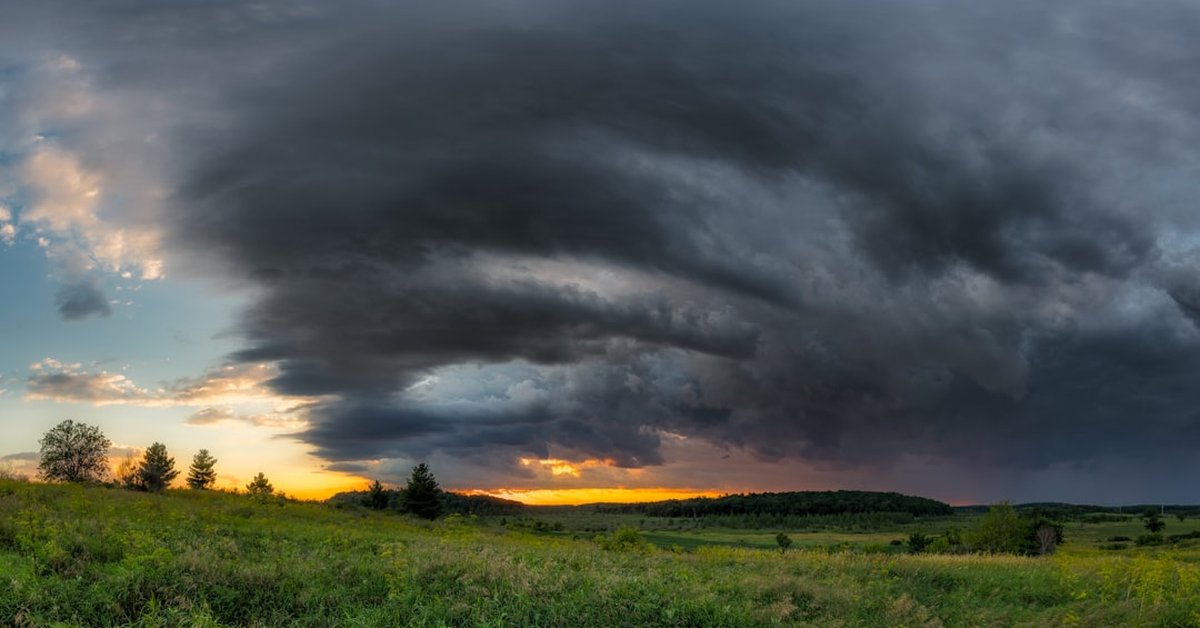


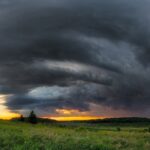


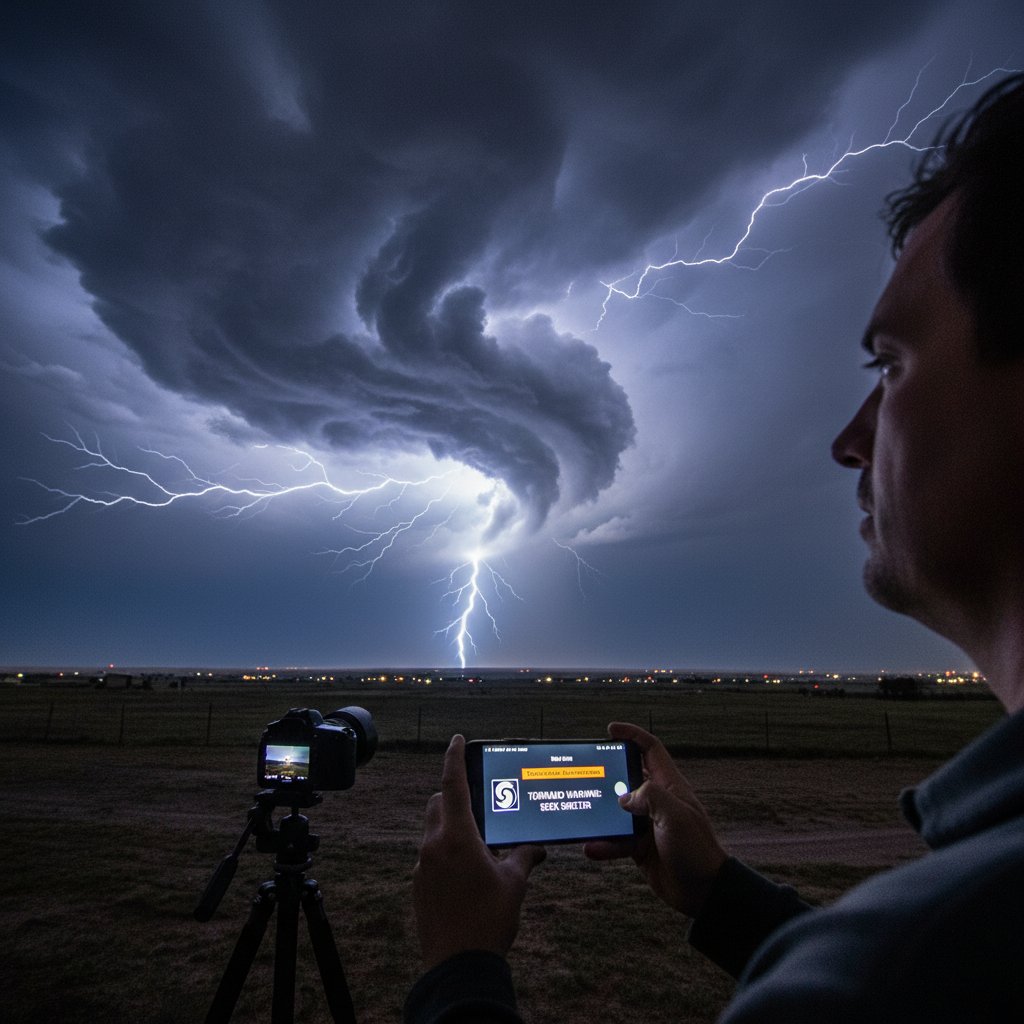
I was standing in the middle of a dirt road just east of Pueblo, Colorado, camera in hand, trying to make sense of the clouds. The lightning was dancing—bright, jagged streaks that lit up the sky in quick succession. I was focused on the structure, the way the air seemed to pulse with electricity. Then my phone buzzed. A tornado warning. Eastern Pueblo County, heading toward the Pueblo airport area. Approximately 10:30 pm. And just like that, curiosity turned into something colder.
That moment is seared into my memory—not because of the footage I didn’t get, but because of the shift in the air. The storm that had been a spectacle was now a threat. For the people living in the path, the warning wasn’t a notification. It was a countdown.
The Storm That Broke the Calm
I’d been out chasing storms for years, but there’s something about a nighttime tornado that changes the game. You can’t see it. You rely entirely on radar, on the crackle of the radio, on that stubborn little app on your phone. At 10:30 pm, the National Weather Service in Pueblo issued a warning based on rotation detected in the storm cell. The airport—a major regional hub for cargo and private aviation—was directly in the crosshairs. Ground crews scrambled. The tower issued a ground stop. And in the neighborhoods just north of the runway, people woke up to sirens.
Look, I’ve seen tornadoes before. But this one was different. It was moving fast, about 40 mph, and the lightning was making it nearly impossible to track. Every flash felt like a double-edged sword: it helped me see the clouds, but it also meant the storm was intensifying. I remember thinking, This is how people die. Not from the lightning itself, but from what it’s hiding. And that’s exactly what makes nighttime tornadoes so dangerous—they’re stealthy. The common advice is to stay away from windows, get to a basement or interior room. But when you can’t even see the funnel, your brain struggles to process the threat.
What the Experts Say About Nighttime Tornadoes
Dr. Emily Jensen, a meteorologist who specializes in severe weather at the University of Oklahoma, told me that nocturnal tornadoes are significantly more deadly per capita than daytime ones. ‘People are asleep. They don’t hear the sirens. They don’t see the clouds. And the storms themselves are often rain-wrapped, so even if you’re looking, you won’t see the funnel until it’s on top of you.’ She cited a NOAA study that found nighttime tornadoes accounted for just 27% of all tornadoes in the U.S. between 1950 and 2019, but they caused nearly half of all tornado deaths.
The irony wasn’t lost on me. I had been out there recording lightning, trying to figure out what I was looking at in the clouds—when in fact, the real danger was already forming. I’d written about the connection between lightning patterns and tornado formation before, in an article for CyclonePost called When Lightning Strikes Nearby: Watch the Lights! 👀. But knowing the science doesn’t prepare you for the sound of a phone alarm that means go now.
Pueblo’s History with Tornadoes
Colorado isn’t known for tornadoes the way Oklahoma or Kansas are, but the Southeast part of the state—especially Pueblo County—has a history with twisters. In 2013, a tornado touched down just south of Pueblo, leveling a mobile home park and injuring several people. The city’s position at the edge of the High Plains and the Rocky Mountain foothills creates a unique meteorology: dryline storms that fire up in the late afternoon and evening can produce supercells that persist well into the night.
That’s exactly what happened on my evening of lightning. The storm developed around 8 pm near the mountains, then grew as it moved east over the warm, dry plains. By 10:30, it was fully mature. ‘We’ve seen a sharp increase in the number of tornado warnings in Colorado over the past decade,’ said Mark Rangel, the emergency management director for Pueblo County. Rangel’s office coordinates alerts, evacuation plans, and post-storm damage assessments. ‘The challenge is that people get complacent. They think, “It’s just Colorado, it’s not tornado alley.” But then we get a night like this, and we have to wake up an entire neighborhood.’
He’s right. The warning that night covered a swath from the eastern edge of the city limits to the airport—an area that includes a mix of ranch-style homes, apartment complexes, and the sprawling Fountain Creek open space. The sirens blared for a solid ten minutes. I could hear them from the road where I was parked, miles away.
Lessons from the Lightning
So what do we take from a night like that? First, technology is saving lives. My phone alert was generated by the Wireless Emergency Alert system, triggered directly by the National Weather Service. That system has been credited with reducing tornado death tolls in the last decade. Second, we still need to be better prepared. Too many people in mobile homes, too many without basements, too many who don’t have a plan for what to do when the phone buzzes at 10:30 pm. The Ready.gov tornado safety guide is a good start—but it’s not enough if you don’t read it before the storm hits.
For me, that night was a wakeup call. I’ve always loved chasing storms, but I’ve never been on the receiving end of a warning like that—not one that put the airport where my wife’s cousin works in the direct path. (Thankfully, she’d already left for the night. The storm passed without a confirmed touchdown, though rotation was strong enough to flatten a few outbuildings near the airport fence.)
We’re entering a season where nighttime storms are becoming more common, especially as climate change shifts the timing and intensity of severe weather. A recent report from climate scientists at the University of Colorado Boulder found that the number of nocturnal thunderstorms in the Great Plains has increased by nearly 20% since 1980. That means more nights like this one, more alerts, more anxiety. But it also means more opportunities for us to learn—to read the clouds, to understand the lightning, to take the warnings seriously.
I’ll keep recording lightning. But next time, I’ll have a plan. And I’ll hope you do, too.
Frequently Asked Questions
What should I do if I get a tornado warning at night?
Immediately go to the lowest level of your home, away from windows. If you have a basement, use it. If not, go to a small interior room like a bathroom or closet. Put on shoes and a helmet if available. Do not try to watch for the tornado—at night, it’s virtually impossible to see. Listen for the siren or use a NOAA weather radio. Stay there until the warning expires.
Are tornadoes more dangerous at night?
Yes. According to the National Weather Service, nighttime tornadoes are more than twice as likely to cause fatalities compared to daytime tornadoes. The reasons: people are asleep, visibility is near zero, and storms often happen with heavy rain that hides the funnel. Always have multiple ways to receive warnings—including a weather radio with a tone alert.
How accurate are tornado warnings that come from phone alerts?
Phone alerts and the Wireless Emergency Alert system are triggered directly by National Weather Service warnings. They are based on radar-detected rotation or spotter reports. While false alarms can happen, the system is designed to err on the side of caution. In 2022, NWS tornado warning lead times averaged about 13 minutes nationwide. Always treat a warning as real and take cover immediately. You can verify later.