






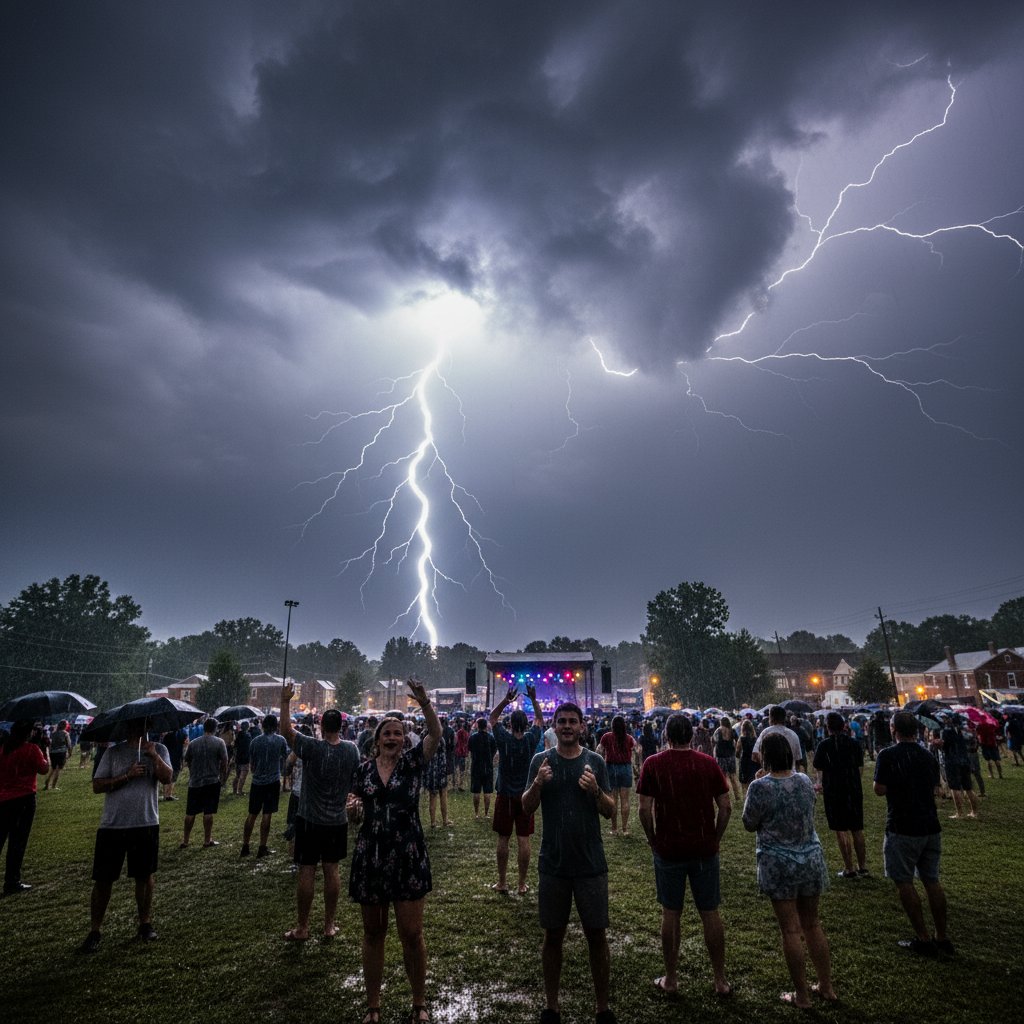
On a balmy July evening in Carterville, Georgia, what began as a neighborhood celebration turned into a nightmare when a single lightning bolt struck a tent, injuring 14 people. The so-called “Lightning Party” has become a stark reminder of nature’s unpredictability—and the silent danger that lurks in every summer thunderstorm.
The incident occurred on July 15, 2024, around 7:30 PM at a private residence on Oakwood Drive. About 40 guests had gathered for a backyard barbecue when a fast-moving storm rolled in without warning. Witnesses described a brilliant flash, a deafening crack, and then chaos.
“It was like the sky ripped open,” said Maria Torres, 34, a party attendee who suffered minor burns. “One second everyone was laughing, the next people were on the ground screaming.”
The Anatomy of a Lightning Strike
According to the National Weather Service, the bolt that hit the tent carried an estimated 300 million volts of electricity—enough to power a small town for a split second. The strike traveled through the metal poles of the canopy, then arced to anyone touching the structure or standing in wet grass nearby.
Dr. James Thorton, an emergency physician at Bartow County Medical Center who treated seven of the victims, explained the mechanism: “Lightning doesn’t just hit one person. It splashes, it jumps. The current can spread through the ground or through conductive materials like metal tent poles. In Carterville, the tent became a giant conductor.”
Three victims were admitted to the intensive care unit with cardiac arrhythmias and neurological damage. One remained in critical condition for 48 hours before stabilizing. The rest were treated for burns, hearing loss, and temporary paralysis—a common after effect known as “keraunoparalysis.”
“People think lightning is rare, but it kills an average of 20 people per year in the United States. And it doesn’t just strike golf courses and open fields—it strikes backyards.” — Dr. James Thorton
Human Impact: Survivors Speak
Among the injured was 12-year-old Ethan Patel, who was playing near the tent when the bolt hit. His mother, Priya Patel, recalled the terror of watching her son collapse. “His eyes rolled back, and he stopped breathing. I thought I lost him. Two other dads did CPR until the ambulance came.”
Ethan is now recovering at home, though he still suffers from short-term memory lapses and a stutter that doctors say may be temporary. His story echoes those of the other survivors—each carrying invisible scars from a split-second event.
The host, James Carter (no relation to the town’s name), expressed profound guilt. “I should have called everyone inside when the thunder started. But the music was loud, the rain was just beginning, and nobody wanted to leave the party.”
Carterville, a small community of about 4,000 people, has rallied around the victims. A GoFundMe page raised over $50,000 in three days to cover medical bills. Yet the emotional toll lingers. “Every time I hear thunder now, my heart races,” said Maria Torres.
When Thunder Roars, Go Indoors—But What If You Can’t?
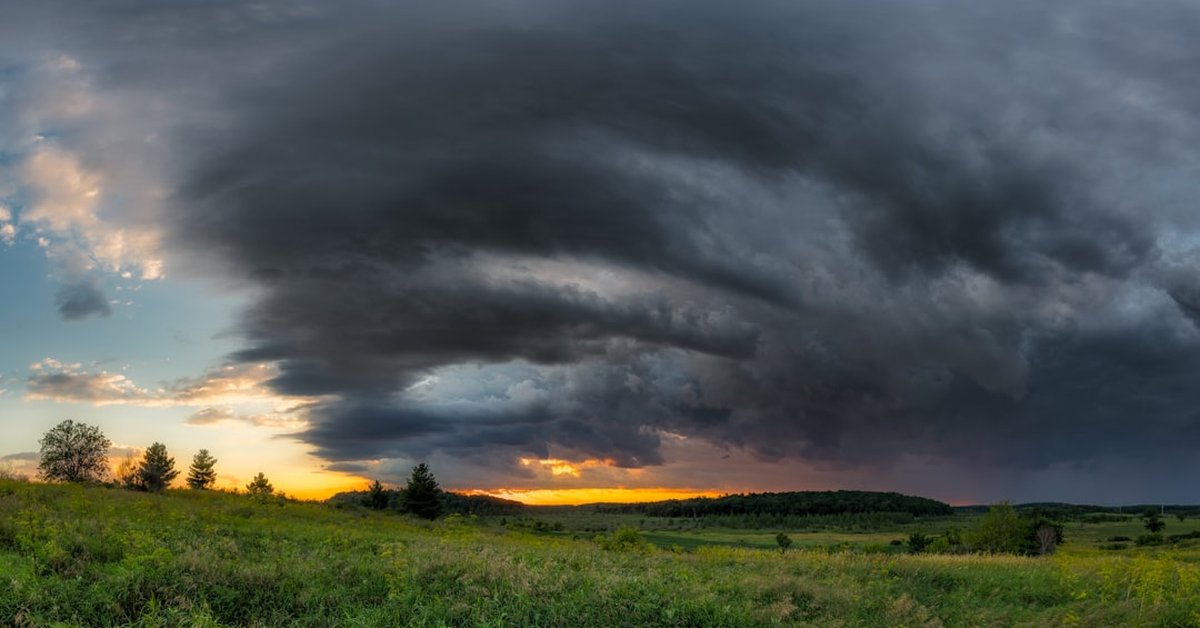
The Carterville tragedy highlights a critical gap in lightning safety education. While the National Weather Service’s mantra “When thunder roars, go indoors” is well known, many people underestimate the speed of approaching storms.
Meteorologist Sarah Chen of the National Oceanic and Atmospheric Administration notes that the storm that hit Carterville formed in just 15 minutes. “People saw a few clouds, then suddenly the sky turned dark. By the time they heard thunder, the bolt was already minutes away. The tent actually increased the risk because it attracted the strike and then spread the current.”
Chen emphasizes that no place outside is safe from lightning. “A tent, a gazebo, even a picnic shelter—they offer no protection. Your only safe refuge is a substantial building with wiring and plumbing, or a metal-roofed vehicle with the windows up. If you’re at a party, you need to have a plan before the storm arrives.”
For outdoor events, experts recommend designating a point person to monitor weather radar and have a pre-arranged signal—like a horn or a text alert—to get everyone inside at the first sign of lightning. The 30-30 rule (30 seconds between flash and thunder means go inside; stay inside 30 minutes after last thunder) remains the gold standard.
Lightning Safety: What Every Host and Attendee Should Know
In the wake of Carterville, local officials are pushing for stricter guidelines for outdoor gatherings. The Bartow County Emergency Management Agency now requires a lightning safety plan for any permitted event of 50 people or more. While private parties aren’t covered, the agency has launched a public awareness campaign.
“We cannot control the weather, but we can control our response,” said EMA Director Mark Winslow. “If you see a thunderstorm approaching, even if it’s the best party of the year, you stop everything and get inside. Nothing is worth a life.”
The lightning strike also raises questions about insurance liability. Homeowner policies typically cover lightning damage to property, but injuries can lead to lawsuits if guests are not warned. Legal expert Anita Reyes suggests that hosts post visible weather warnings and have a designated safe area. “The ‘Lightning Party’ in Carterville could have been prevented with a simple shelter plan. Instead, it has become a cautionary tale.”
Looking Ahead: A Survivor’s Legacy
Ethan Patel—the 12-year-old who stopped breathing—is determined to turn his trauma into action. With his mother’s help, he created a short video for his school’s science club about lightning safety. “I don’t want anyone else to feel what I felt,” he said in a shaky voice. “It’s not worth it to stay outside.”
The father who saved him, local firefighter Tom Brady (not the quarterback), has been nominated for a community hero award. “I just did what anyone would do,” he said. “But I hope this makes people realize: lightning doesn’t care if you’re having fun. It’s faster than anything, and it hurts.”
The Carterville Lightning Party will likely be remembered as a turning point in how small towns approach severe weather safety. As climate change fuels more intense thunderstorms, such events may become more common. But for now, the survivors are focusing on recovery—and on the hope that their story will save lives.
“We were lucky,” said Maria Torres. “Lucky that no one died. But luck isn’t a plan. Next time, we’ll have a real plan.”