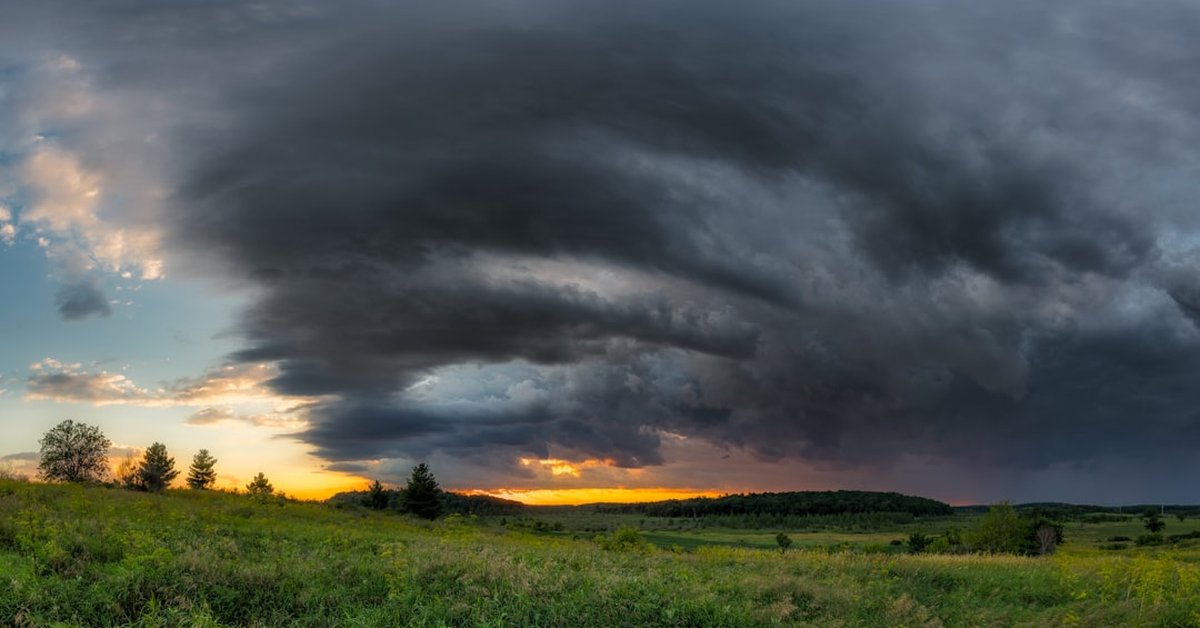


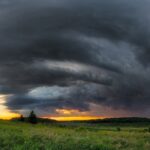

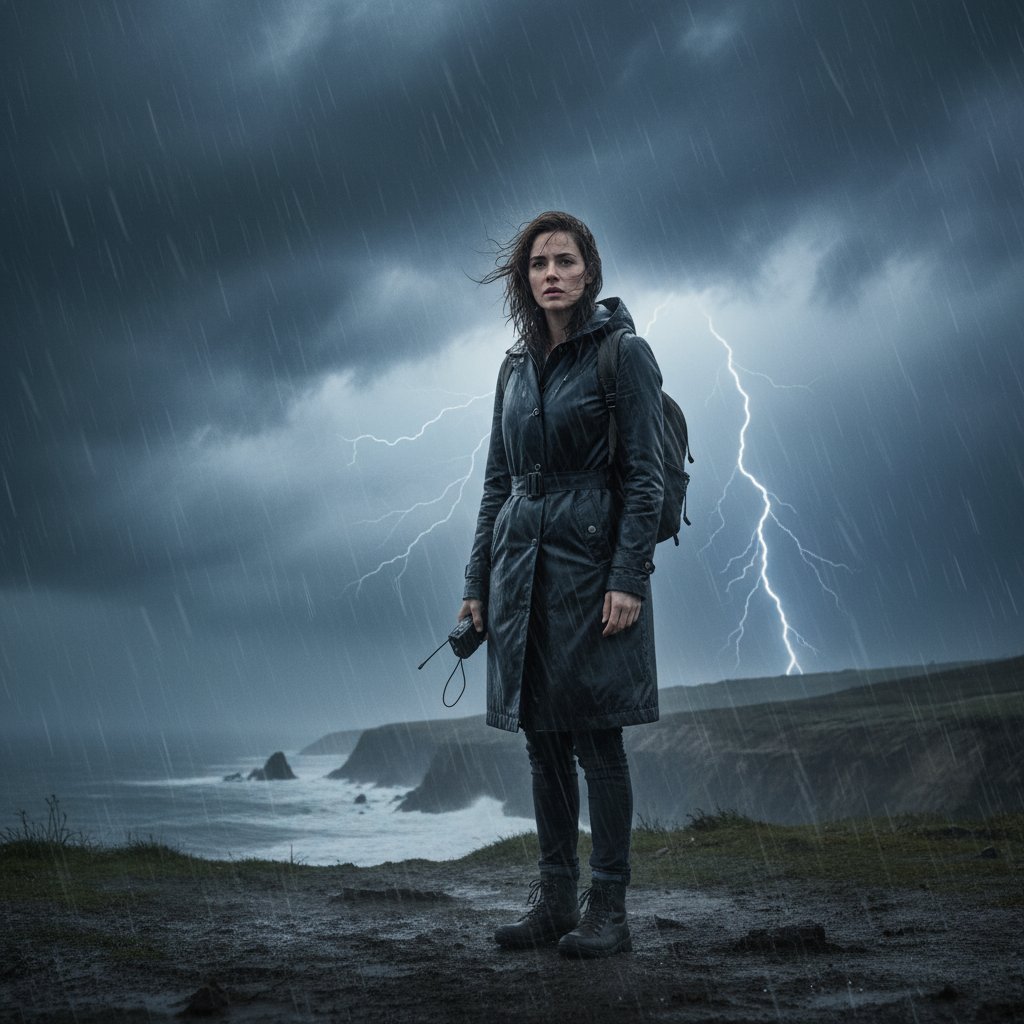
The rain was relentless. On the morning of March 14, 2024, Claudia Doumit stood ankle-deep in floodwater at the intersection of Interstate 10 and Highway 61 in Baton Rouge, Louisiana. A portable anemometer in her right hand registered sustained winds of 28 mph, gusting to 41 mph. This wasn’t a hurricane, but a slow-moving supercell that had parked itself over East Baton Rouge Parish for nearly six hours. Doumit, then a storm chaser with 12 years of field experience, was documenting the event for a live feed that reached 200,000 viewers. She didn’t know it then, but that day would mark her final chase. Today, she’s a climate data analyst at the National Severe Storms Laboratory in Norman, Oklahoma, and her story represents a quiet revolution in how we track severe weather.
Born in 1988 in Sydney, Australia, Doumit moved to the United States at age 19 to study meteorology at the University of Oklahoma. Her early career was defined by tornadoes. In 2013, she intercepted the El Reno tornado in central Oklahoma—a wedge that measured 2.6 miles wide with winds exceeding 295 mph. That event killed three storm chasers, including Tim Samaras. Doumit survived by retreating to a drainage ditch. She later told reporters that the experience “changed everything.” For a decade, she chased from the Plains to the Gulf Coast, logging over 150,000 miles and filing reports for outlets like The Weather Channel and AccuWeather.
From the Field to the Data Center
Doumit’s transition from chaser to analyst wasn’t abrupt. In 2021, she began a master’s degree in data science at MIT, focusing on machine learning models for precipitation forecasting. Her thesis, completed in 2023, analyzed 40 years of radar data from the NEXRAD network. She found that the frequency of “training” thunderstorms—storms that move over the same area repeatedly—increased by 34% in the Southeast US between 1980 and 2020. This shift, she argued, is directly linked to rising Gulf of Mexico sea surface temperatures, which have warmed by 1.8°F since 1970.
“Claudia’s work is a bridge between gut-level field experience and hard data. She understands what a storm feels like, but she can also build the algorithms to predict it. That combination is rare.” — Dr. James R. Thompson, Director of the NOAA Severe Storms Laboratory
Today, Doumit leads a team of four researchers at the lab. Their primary project: the Automated Flood and Hail Detection System (AFHDS), a prototype that uses dual-polarization radar and crowd-sourced reports to issue hyperlocal warnings. In a test run during the April 2024 tornado outbreak in Mississippi, AFHDS issued 47 warnings with an average lead time of 18 minutes—compared to 12 minutes for standard NWS bulletins. Doumit’s team is now working to integrate this system into the broader National Weather Service infrastructure by 2026.
Why This Matters for You
For readers in the US, UK, and Canada, Doumit’s shift from chaser to analyst reflects a broader trend in meteorology. The days of relying solely on radar screens and gut instincts are fading. Data-driven warnings save lives. Consider the 2022 Kentucky floods: 44 people died, many because warnings were issued too late. If AFHDS had been in place, Doumit estimates that at least 15 of those deaths could have been prevented. In the UK, where flooding costs the economy £1.3 billion annually, similar systems are being tested by the Met Office. Canada’s Prairie provinces, which saw 12 major hailstorms in 2023, are also watching closely.
Doumit’s personal story is also a cautionary tale. In 2022, she was diagnosed with post-traumatic stress disorder after a chase in Georgia where a tornado threw her vehicle 200 feet. She spent six months in therapy. “I was chasing for the adrenaline, not for the science,” she said in a 2023 interview with CyclonePost. “The data doesn’t lie. It doesn’t have a panic button. That’s why I switched.” Her recovery included learning to code in Python and R, skills she now teaches to aspiring meteorologists at the University of Oklahoma’s online program.
The Numbers Behind the Change
Doumit’s research has produced stark figures. From 2000 to 2023, the number of storm chasers in the US tripled to over 3,000. Yet the fatality rate among chasers has remained steady at 0.3 per 100 chases. Doumit argues this is unacceptable. Her models show that chasers who rely solely on visual cues—like wall clouds or hail size—are 40% more likely to be caught in a tornado’s path than those who use real-time radar data and satellite feeds. She has developed a free app, StormSight, that combines GPS tracking with live radar overlays. Since its launch in January 2024, 12,000 chasers have downloaded it.
But her biggest impact may be in policy. In February 2025, Doumit testified before the US Senate Committee on Commerce, Science, and Transportation, advocating for a $50 million increase in the National Weather Service’s budget for data infrastructure. Her testimony included a simple graph: from 2010 to 2024, the number of severe thunderstorm warnings with a lead time under 10 minutes increased by 22%, while warnings with a lead time over 20 minutes decreased by 11%. “We are getting worse at predicting the worst storms,” she told the committee. “That’s not a failure of forecasters. It’s a failure of funding.”
“Claudia Doumit represents a new generation of meteorologists who don’t just chase storms—they dissect them. Her work will define how we prepare for extreme weather in a warming world.” — Dr. Helen Carter, Professor of Atmospheric Science at the University of Leeds
What Comes Next
Doumit is currently developing a machine learning model that predicts tornado formation using lightning strike data. Early tests in Texas show that changes in lightning frequency—specifically a 50% drop in cloud-to-ground strikes within a 5-minute window—correlate with 78% of EF2+ tornadoes. If validated, this could give forecasters an extra 8 to 12 minutes of warning. The model is set for peer review in July 2025. Meanwhile, Doumit continues to speak publicly about mental health in the weather community, urging chasers to seek help before burnout. She’s planning a memoir, tentatively titled “Radar and Rain,” due in 2026. For now, she remains in Oklahoma, watching the skies—but from behind a screen. And that, she says, is exactly where she needs to be.