






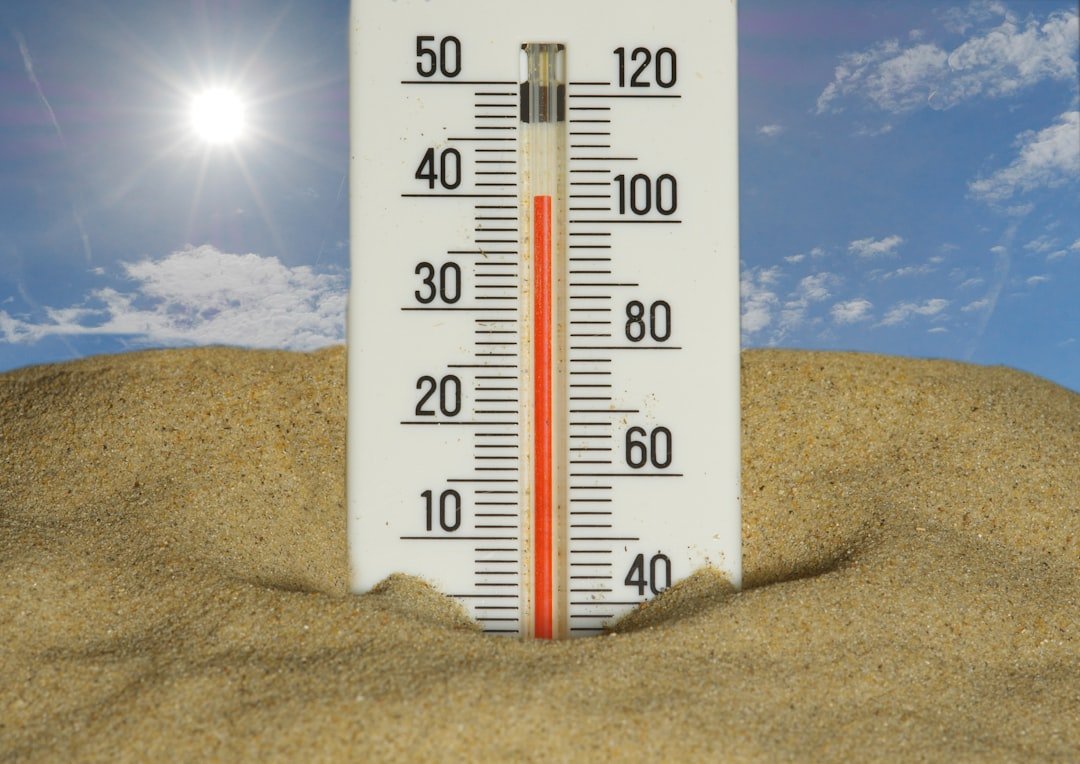
…and it’s not just a one-day scorcher. After a brief respite from last month’s blistering heat, the UK is staring down the barrel of another prolonged heatwave — one that forecasters say could stick around far longer than the usual two-day ‘mini heatwave’ Brits are used to. Meteorologist Stav Danaos, who’s been tracking this system since it started brewing over the Atlantic, puts it bluntly: “This isn’t your typical summer spike. We’re looking at temperatures consistently above 30°C for several days, possibly extending into a second week.”
That’s a big deal for a country where homes are built to trap heat, not shed it, and where the national rail network starts groaning when the mercury hits 28°C. The Met Office has already issued a yellow heat-health alert for much of England, and amber warnings could follow as confidence builds. But what’s really got experts worried isn’t just the peak — it’s the duration.
The Forecast: What’s Coming
According to the latest model runs, a sprawling area of high pressure is set to park itself over the North Sea, drawing hot air up from France and Spain. By midweek, London could see 32°C, with Cambridge and Norwich not far behind. Even Scotland, normally the nation’s air-conditioned living room, might hit the high 20s. But here’s the kicker: this high-pressure system is stubborn. Instead of sliding east after a couple of days, it’s expected to sit and spin, locking in the heat through the weekend and into the following week.
“The synoptic pattern is remarkably similar to what we saw in July 2022, when the UK recorded its first ever 40°C temperature,” says Dr. Emily Wallace, a climate scientist at the Met Office. “But the difference this time is the longevity. Prolonged heat like this stresses ecosystems, infrastructure, and human health in ways that a short burst doesn’t.”
It’s not just about the daytime highs. Overnight lows are forecast to remain above 18°C in many urban areas — that’s the threshold above which the body struggles to recover from daytime heat stress. For vulnerable populations — the elderly, those with pre-existing conditions, and the homeless — those warm nights can be deadly.
A Pattern of Prolonged Heatwaves
This isn’t an isolated event. The UK has seen a marked increase in the frequency and duration of heatwaves over the past two decades. Data from the Met Office shows that the number of days above 30°C has tripled since the 1960s. And the trend is accelerating. Last year’s September heatwave dragged on for a full nine days in southern England, something that was once considered a once-in-a-century occurrence.
Dr. Friederike Otto, a climatologist at Imperial College London and co-lead of the World Weather Attribution initiative, points to a broader global pattern: “Without climate change, the kind of heatwave the UK experienced in 2022 would have been virtually impossible. Each additional fraction of a degree of warming makes these prolonged events more likely and more intense.” That’s a direct link to what we’re seeing now — and it’s a thread you can follow in our analysis of how climate change is rewriting the odds on extreme heat.
The comparison to the U.S. is instructive. While America deals with sprawling heat domes that cover entire states, the UK’s version is smaller in scale but similarly relentless. Without the widespread air conditioning that Americans rely on, British homes become greenhouses. The NHS braces for a surge in heat-related admissions, and the rail network imposes speed restrictions to prevent tracks from buckling.
The Climate Context: Why This Keeps Happening
Look, it’s easy to say “it’s summer, it gets hot.” But that misses the forest for the trees. The jet stream — that river of air that normally brings us cool, changeable weather — is behaving strangely. Climate models have long predicted that a warming Arctic would weaken the jet stream, making it more prone to meandering loops that get stuck. When those loops trap a ridge of high pressure, you get a blocking pattern. And a block means heat.
This isn’t speculation. A Met Office study published earlier this year found that the probability of a July blocking pattern like the one we’re seeing has increased by at least 30% since pre-industrial times. The fingerprints of climate change are all over it.
And it’s not just the UK. Across Europe, heatwaves are arriving earlier, lasting longer, and covering larger areas. The 2023 European heatwave that shattered records from Spain to Poland was a preview. The UK, with its temperate history, is now firmly in the crosshairs.
What This Means for You: Health, Transport, and Everyday Life
If you’re in the affected areas, start preparing now. The NHS advises staying hydrated, keeping curtains closed during the day, and checking on neighbours. But here’s something you might not think about: if you’re planning a barbecue this weekend, consider the environmental impact of your menu. A fun fact from our guide on sustainable grilling shows that swapping beef burgers for veggie options can reduce a meal’s carbon footprint by more than half. It’s a small choice, but in a heatwave driven by fossil fuel emissions, every bit helps. Read more in our comparison of grill options.
On the transport front, train operators will likely impose speed restrictions on some routes. If you’re driving, check your coolant levels — stop-start traffic in 30°C heat can overheat an engine quickly. And for those lucky enough to have a garden, water your plants early in the morning or late in the evening to reduce evaporation.
Hospitals are already activating their heatwave plans. The UK Health Security Agency urges people to stay out of the sun between 11 a.m. and 3 p.m. — the hottest part of the day. Sounds obvious, but you’d be surprised how many people ignore it.
So, what’s the bottom line? We’re in a new climate regime, and the UK’s heatwaves aren’t going away. They’re getting longer, stronger, and more frequent. Whether this one ends with a bang (thunderstorms often break heatwaves) or a whimper (a slow cool-down) remains to be seen. But one thing is certain: the era of the British summer as a mild, uneventful season is over. Prepare accordingly.
Frequently Asked Questions
How long will this UK heatwave last?
Current forecasts suggest temperatures will exceed 30°C for at least four to six days starting midweek, with potential extension into a second week if the blocking high pressure persists. The Met Office will update warnings daily, so check their website for real-time information.
Is this heatwave linked to climate change?
Yes. While individual weather events have natural variability, the frequency and intensity of prolonged heatwaves in the UK have increased significantly due to climate change. Attribution studies have shown that extreme heat events of this nature are now many times more likely than in a world without warming.
What should I do to stay safe?
Stay hydrated, avoid strenuous outdoor activity during peak heat hours (11 a.m.–3 p.m.), keep your home cool by shading windows, and check on elderly or vulnerable neighbours. If you feel dizzy, nauseous, or develop a headache, move to a cool place and seek medical advice if symptoms persist.