







It’s not your imagination — Europe is literally heating up faster than the rest of the planet. According to the World Meteorological Organization, the continent has warmed at roughly twice the global average rate over the past four decades. That’s not a statistical fluke. It’s a collision of geography, ocean currents, and human-caused emissions that’s turning Europe into a climate change hotspot — faster than anywhere else on Earth.
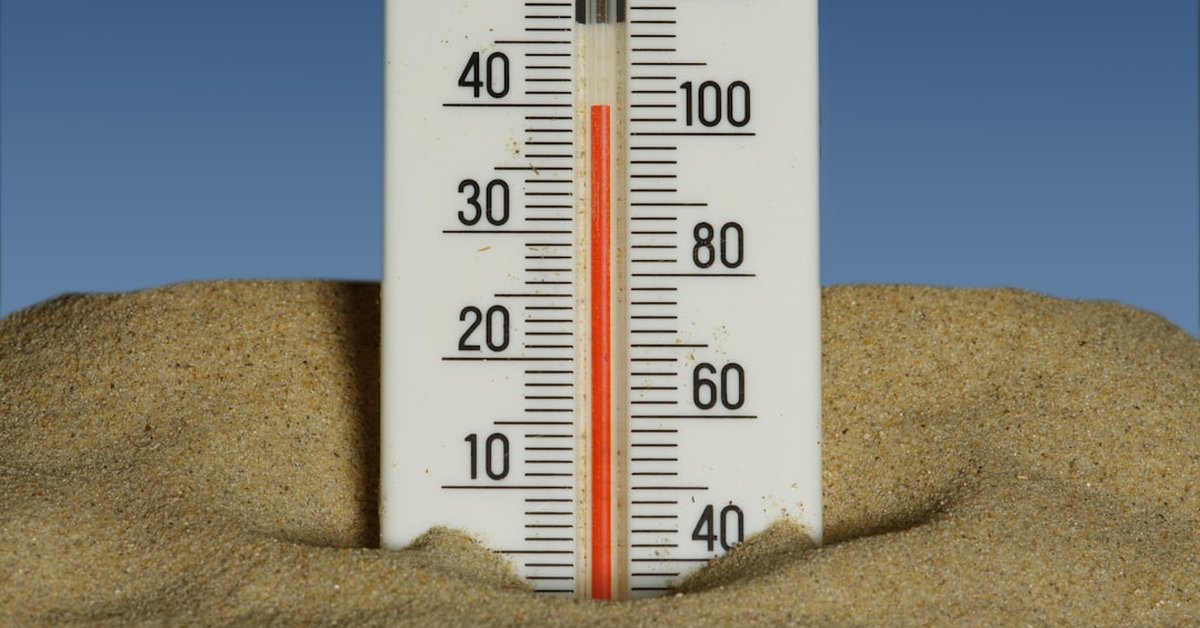
Last summer, a UK heatwave triggered a red heat warning extended as the country braced for its hottest day ever — 40.3°C in Coningsby, Lincolnshire. That record would have been almost impossible without climate change. But the question everyone’s asking now: why is Europe warming so much faster than, say, North America or Asia? The answer lies in a cascade of local factors — on land, at sea, and in the sky.
The Albedo Effect: Melting Snow Makes Everything Worse
Start with the Arctic. The Arctic is warming nearly four times faster than the global average — a phenomenon called Arctic amplification. And Europe sits right in the path of the spillover. As sea ice and snow cover shrink, darker ocean and land surfaces absorb more solar radiation instead of reflecting it. That triggers a feedback loop: more heat, more melt, less reflection, more heat.
“Europe’s geography makes it particularly vulnerable,” says Dr. Elena Schmidt, a climate scientist at the University of Oxford. “The combination of high-latitude amplification and changes in atmospheric circulation means we’re getting both hotter summers and more extreme weather events — heatwaves, flash floods, even sudden cold snaps.”
Look at the Alps. Snow cover in the Alps has been shrinking by roughly 5-10% per decade since the 1960s. Bare rock absorbs sunlight that snow used to send back into space. That warms the ground, the air above it, and the glaciers below — accelerating collapse. This isn’t just about skiing holidays disappearing. It’s about water supplies for millions of Europeans downstream.
Ocean Currents and Atmospheric Patterns: A Perfect Storm
The Atlantic Ocean plays a starring role. The Gulf Stream carries warm tropical water northward, releasing heat into the atmosphere over Europe. But as the planet warms, the Atlantic Meridional Overturning Circulation (AMOC) — the system that drives the Gulf Stream — is weakening. Paradoxically, a slowdown can actually pump more heat into Europe’s atmosphere by altering pressure systems that pull hot air up from North Africa.
It’s not a simple story. “We’re seeing a shift in the jet stream — it’s getting wavier,” explains Dr. Marco Tognetti, senior climate analyst at the European Environment Agency. “That means stalled high-pressure systems — the kind that bake Europe for weeks — are becoming more common. Think the 2003 heatwave that killed 70,000 people, or 2019, or 2022. Each one was worse than the last.”
That wavy jet stream is also tied to Arctic amplification. As the temperature difference between the Arctic and the mid-latitudes shrinks, the jet stream weakens and meanders. And when it gets stuck, you get persistent weather extremes — heat domes, drought, and wildfires. This is why Europe’s warming isn’t just steady; it’s punctuated by brutal spikes.
What This Means for Your Summer Holidays — and Your Health
For readers in the US, UK, and Canada, the implications are personal. If you’ve visited southern Europe in July, you’ve felt it: Mediterranean destinations like Greece, Spain, and Italy are seeing more days above 40°C. But the heat isn’t just uncomfortable — it’s deadly. The 2022 summer heatwaves caused an estimated 61,000 excess deaths across Europe, per a study in Nature Medicine.
Urban areas are especially brutal. Cities like Paris, London, and Berlin retain heat through the night — a phenomenon called the urban heat island effect. Combined with Europe’s aging population and relatively low air conditioning prevalence (only about 10% of European households have AC, versus over 90% in the US), the heat becomes a public health crisis. And as we reported, this heatwave feels worse — and it’s not just you. Higher humidity, more consecutive hot nights, and poor building design are compounding the misery.
The Hard Truth: Can Europe Adapt Fast Enough?
European governments know what’s coming. The EU has aggressive emissions targets — cut greenhouse gases 55% by 2030, net-zero by 2050. But those targets look shaky against current trends. Emissions fell during COVID, then rebounded. And adaptation — planting trees, painting roofs white, building green spaces — can only do so much when the underlying warming is accelerating.
Meanwhile, NOAA’s Arctic Report Card shows no sign of the Arctic amplification slowing. If anything, feedback loops are intensifying. Europe is essentially on the front line of a continent-sized experiment: how fast can a developed society reconfigure its energy, agriculture, and infrastructure to keep pace with a climate that’s changing twice as fast as the world’s?
Dr. Schmidt puts it bluntly: “Every fraction of a degree matters. At 1.5°C global warming, Europe sees maybe one in 10 summers as hot as 2019. At 2°C, it’s one in three. We’re currently on track for 2.7°C by 2100. That’s not an academic number — that’s the difference between a memorable holiday and a survival emergency.”
So the next time you glance at a forecast for Rome hitting 42°C in June, remember: this isn’t random weather. It’s the sum of a million tiny decisions — burning gas, clearing forests, designing cities without shade — amplified by the unique geography of a continent that happens to be warming the fastest. The question isn’t whether Europe can cool down. The question is whether we can stop making it worse before the feedback loops take over entirely.
Frequently Asked Questions
Why is Europe warming faster than other continents like North America or Asia?
Europe’s high latitude, proximity to the rapidly warming Arctic, and the unique behavior of the Atlantic Ocean currents — combined with a wavier jet stream and extensive urbanization — create a perfect storm for accelerated warming. The continent loses reflectivity as snow and ice melt, and the weakening Gulf Stream actually helps trap hot air over the region. These local factors amplify the global average warming rate by about a factor of two.
Which European countries are most affected by this rapid warming?
Southern and southeastern Europe — particularly Spain, Italy, Greece, and the Balkans — are most at risk for extreme heatwaves and drought. Central and Eastern Europe, including Germany, Poland, and the Baltic states, also experience faster-than-average warming due to less maritime moderation. Alpine regions face accelerated glacier melt. In contrast, northern Scandinavia and the British Isles warm more slowly due to ocean buffering, though they still see significant changes.
Can anything be done to slow down Europe’s rate of warming?
Yes — but it requires urgent cuts in greenhouse gas emissions, both in Europe and globally. The EU’s Fit for 55 package and net-zero targets are steps in the right direction. Local measures like reducing air pollution, installing cool roofs and green spaces, and protecting natural carbon sinks (forests, peatlands) can also help. But because much of the warming is already locked in by past emissions, adaptation — improving heat warning systems, retrofitting buildings, and expanding green cover — is equally critical to save lives.