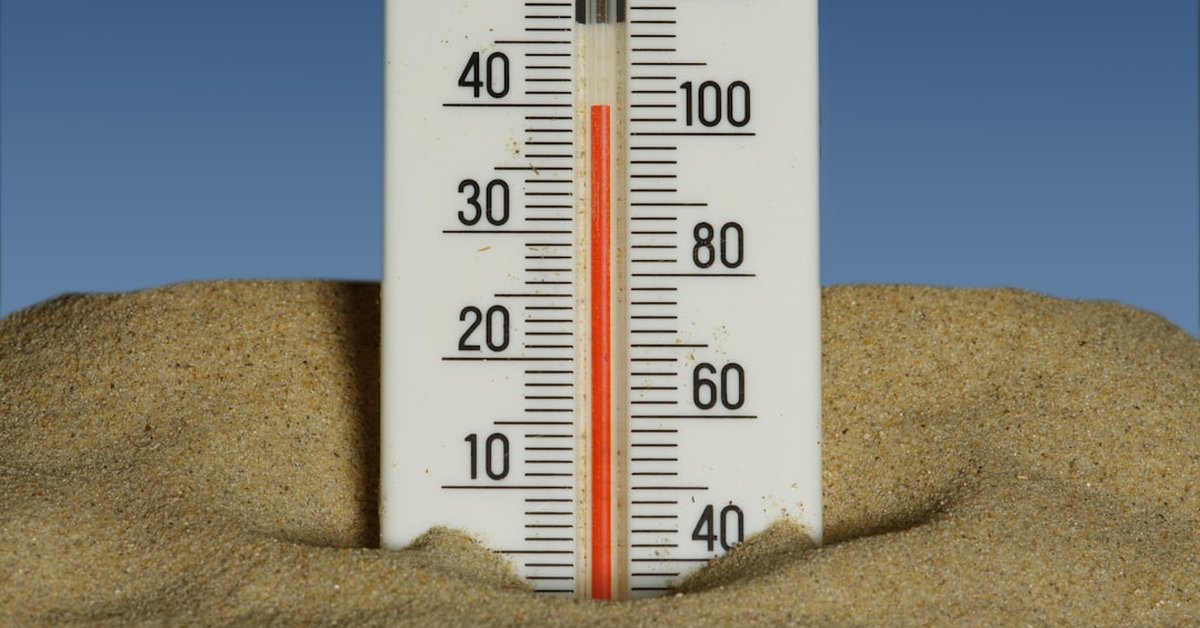






The question everyone is asking — and should be asking — is straightforward: How hot is it about to get, and what does that mean for you?
The answer, according to meteorologists tracking a sprawling heat dome building across the eastern United States, is unsettling. This isn’t just another sticky July week. This is the kind of heat event that shuts down cities, sends people to emergency rooms, and — if you’re not careful — can kill you before you realize you’re in trouble.
Ben Rich, the forecaster tracking this system, puts it bluntly: ‘We’re looking at widespread temperatures in the upper 90s, but with dew points in the mid-70s, the heat index will soar past 105°F across a huge swath of the East Coast from Washington D.C. to Boston.’ And it’s not just the daytime. Overnight lows will struggle to drop below 80°F in urban areas, meaning the body gets no chance to recover.
For a deeper dive into why humidity makes heat so dangerous, our earlier piece on the deadly truth about heat index explains why 100°F with high dew points can feel like standing in front of an oven with the door open. That’s the kind of heat coming.
The Heat Dome: A Stubborn Ridge of High Pressure
Here’s the meteorology in plain English: A massive ridge of high pressure is strengthening over the eastern half of the country, acting like a lid on a pot. This cap traps heat near the surface, prevents clouds from forming, and suppresses the afternoon thunderstorms that usually bring some relief. The result is a slow-cooking effect that intensifies day by day.
The National Weather Service has already issued excessive heat watches and warnings from the Gulf Coast up through the Mid-Atlantic and into New England. In Philadelphia, officials are opening cooling centers and extending their hours. In New York City, the mayor’s office is urging residents to check on elderly neighbors. This is the coordination that happens when models start flashing red.
Dr. Maria Torres, a climatologist at the University of Miami, explains the physics: ‘When you have a heat dome, the air sinks and compresses, which warms it further. That’s on top of the solar heating. So you get a compounding effect that pushes temperatures five to ten degrees above what you’d normally expect in mid-July.’
Why Overnight Temperatures Matter
Most people fixate on the daytime high. But many heat-related deaths occur not during the peak of the afternoon, but during the second or third night of oppressive heat. When your home doesn’t cool down, your body never fully resets. Core temperature stays elevated, heart rate remains high, and sleep becomes impossible. Over 48 to 72 hours, that erodes the body’s ability to cope.
The Centers for Disease Control and Prevention notes that heat stroke and heat exhaustion are entirely preventable — but only if you take action early. The agency’s extreme heat guide recommends staying in air-conditioned spaces, drinking plenty of water, and avoiding strenuous outdoor activity during peak hours.
But here’s the problem: not everyone has air conditioning. In cities like Boston and Providence, many older apartment buildings still rely on window units or nothing at all. And in places like rural parts of Virginia and the Carolinas, power outages during heat waves can turn a bad situation deadly. That’s why utility companies are now pre-positioning repair crews — they’re bracing for the strain on the grid as millions crank their ACs simultaneously.
Human Impact: The Forgotten Victims
I’ve covered heat waves before, and I can tell you — the numbers don’t capture the human toll. During the 1995 Chicago heat wave, over 700 people died, many of them elderly, poor, or isolated. The 2021 Pacific Northwest heat wave killed hundreds more in an area not accustomed to triple digits. The eastern U.S. is better adapted to heat, but that doesn’t mean it’s immune.
Dr. Anthony Rivera, an emergency medicine physician at Johns Hopkins, sees the pattern every summer. ‘We get the athletes who pushed too hard, the construction workers who didn’t take breaks, the elderly who thought a fan would be enough. But the most heartbreaking cases are the ones who didn’t know it was coming.’ He stresses that heat stroke can strike even young, healthy people when humidity prevents sweat from evaporating. ‘The body just stops cooling itself. That’s when core temperature spikes and organs start shutting down.’
For a closer look at how regional weather patterns differ, our article on why the Midwest gets summer storms and the Southeast gets a steam bath explains why the eastern seaboard is especially vulnerable to prolonged humidity-driven heat events.
What You Can Do Right Now
Check your local forecast. Know the heat index — not just the air temperature. The National Weather Service’s heat index calculator can help you understand what the combination of temperature and humidity actually means for your body. If you’re in a warning zone, the advice is simple: hydrate, stay inside during midday, and never leave children or pets in a parked car — even for a minute.
Prepare your home. If you don’t have AC, identify a public cooling center or a friend’s house where you can spend the hottest hours. Check on neighbors who live alone. And if you have outdoor workers or athletes in your family, make sure they know the signs of heat exhaustion: heavy sweating, cold clammy skin, nausea, dizziness. That’s the warning before the real danger — heat stroke, which is a medical emergency.
Look, this is not a drill. The models are consistent. The heat dome is building. By the time you read this, the first warnings will already be posted. The question is not whether this heat wave will hit — it’s how prepared you are when it does.
Frequently Asked Questions
How long will the heatwave last?
The heat dome is expected to persist for at least five to seven days, from midweek through early next week. The worst conditions will likely occur Thursday through Sunday, when the heat index peaks. Some relief may come by the following Tuesday or Wednesday, but that’s not guaranteed. Keep monitoring local forecasts.
Is this heatwave dangerous for healthy adults?
Yes. Even healthy adults can succumb to heat-related illness when the heat index exceeds 100°F, especially if they are active outdoors. High humidity prevents sweat from cooling the body, leading to rapid overheating. The risk is higher for those who are unacclimated, dehydrated, or have underlying conditions, but no one is immune.
What is the difference between a heat advisory and an excessive heat warning?
A heat advisory is issued when the heat index is expected to reach 100-104°F for a few hours. An excessive heat warning is issued when the heat index is forecast to hit 105°F or higher for at least two days, with nighttime lows above 75°F. A warning means the risk is life-threatening and immediate action is recommended.