





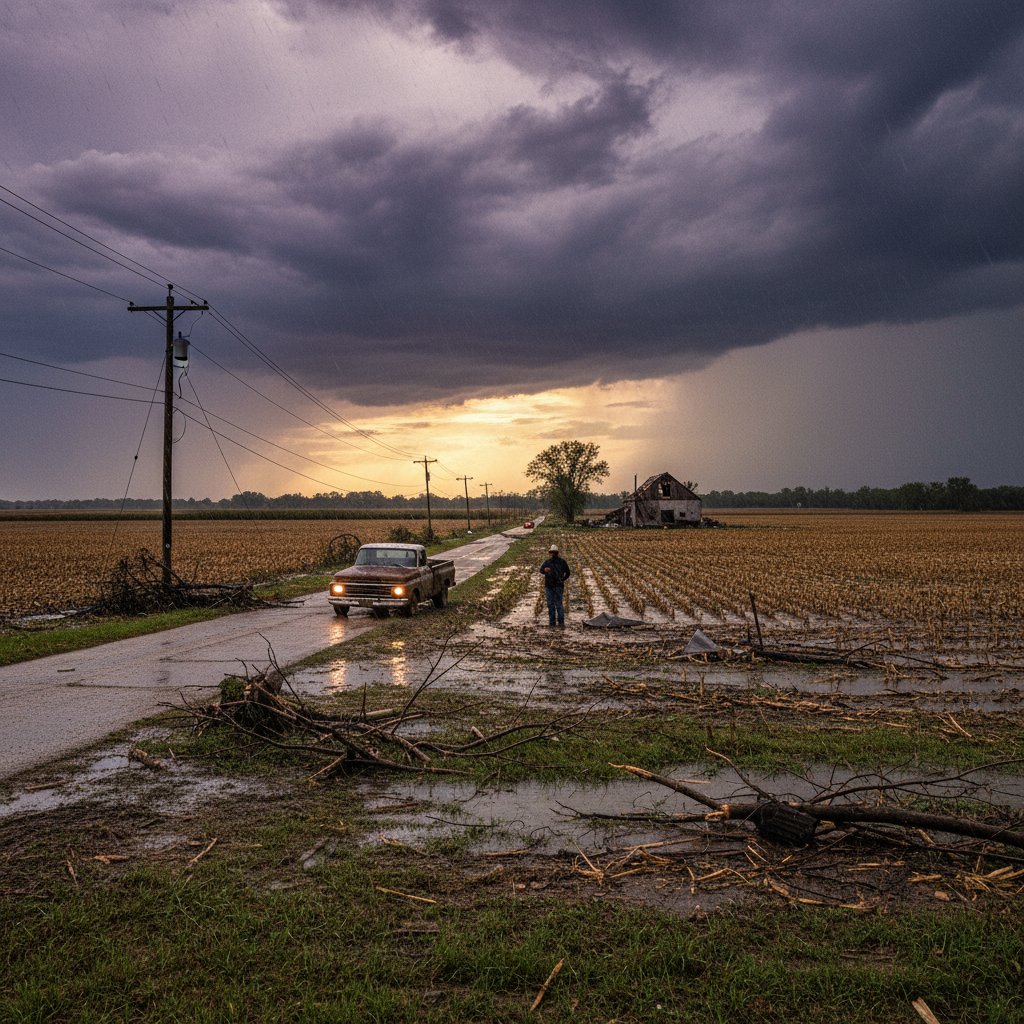
“When the sirens stopped and we crawled out of the basement, the world looked different. Not just broken—rearranged.”
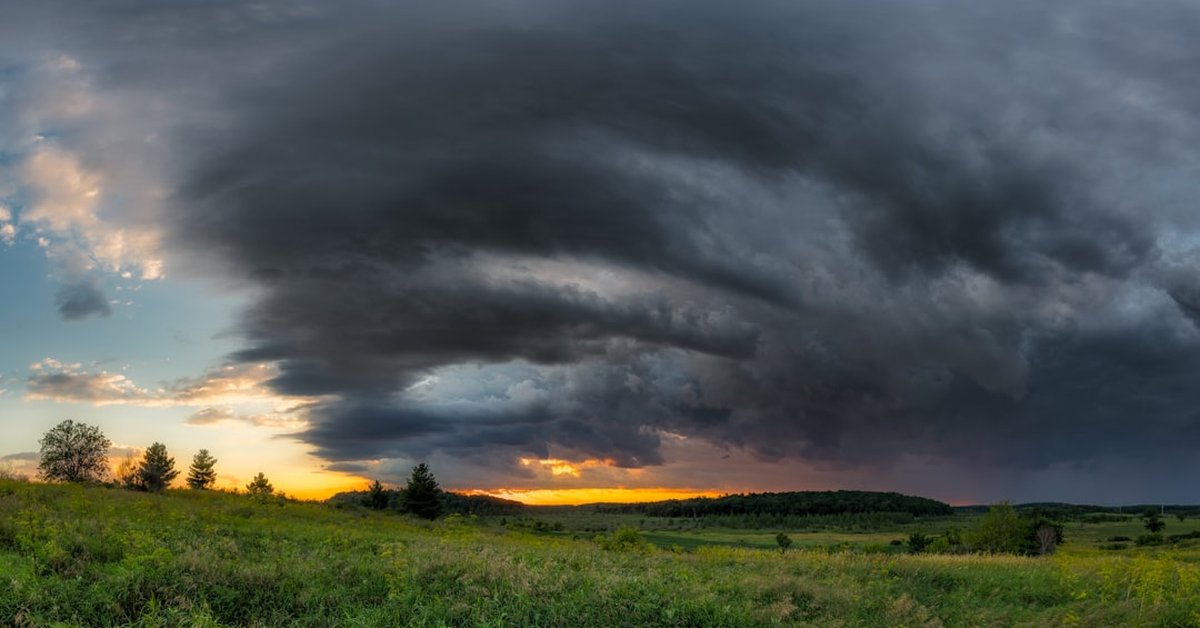
That raw observation captures what residents across central Illinois are now waking up to. A violent storm system that spawned at least four confirmed tornadoes last Tuesday carved a 90-mile scar through the region, leaving seven dead, dozens injured, and entire neighborhoods reduced to splinters. But the story of central Illinois today isn’t just about destruction. It’s about the stubborn rhythm of recovery—the sound of chainsaws at dawn, the smell of generator fuel, and the quiet resolve of communities that have weathered this before.
I spent the last 72 hours driving the back roads from Decatur to Champaign, talking to people who are now living in a landscape permanently altered. What I found was a region caught between grief and grim determination. The storms hit fast—clocked winds of 145 mph in some cells—but the aftermath is slow, grinding, and deeply personal.
From Alert to Aftermath: The Storm’s Path of Destruction
Meteorologists at the National Weather Service in Lincoln confirmed that an EF-3 tornado touched down near the small town of Assumption at 4:17 p.m. on Tuesday, tracking northeast for 38 miles before lifting near Monticello. The storm tore apart grain bins, snapped ancient oaks like toothpicks, and flattened homes that had stood for generations. In Blue Mound alone, 22 structures were destroyed. Farther north, near Rantoul, an EF-2 caused extensive damage to a mobile home park, where two residents lost their lives.
“We had about 12 minutes of warning, which saved a lot of lives, but when a tornado that size is coming at you, there’s only so much you can do,” said Dr. Linda Foster, a meteorologist at the University of Illinois Urbana-Champaign who studies severe weather preparedness. “The real challenge now is the long tail of recovery—mental health, housing, insurance battles. That can take years.”
Her point is made starkly visible in the parking lot of the Macon County Fairgrounds, now a distribution hub where volunteers hand out water, tarps, and MREs. The line of cars stretches for a quarter mile. People sit in silence, windshield wipers slapping away a cold drizzle that has turned debris into a muddy slurry.
The Weight of What’s Left Behind
For many, the immediate crisis is shelter. The American Red Cross reports that over 300 individuals have been placed in temporary housing in Decatur and Champaign. But these numbers only hint at the deeper strain. Bethany Thorne, a mother of three whose home in Argenta was ripped from its foundation, told me her family is sleeping in a church basement cots. “We had insurance. But the adjuster said it could be six months before we see a check. Six months. My kids are sharing one pair of shoes.”
The slow machinery of bureaucracy is a theme I hear again and again. FEMA has deployed assessment teams, but the region is still awaiting a major disaster declaration that would unlock federal aid. In the meantime, local nonprofits like the Central Illinois Foodbank report a 40% spike in demand. “People who never needed help before are now standing in line,” said Mark Davis, executive director of the foodbank. “It’s humbling, and it’s heartbreaking.”
But amidst the scarcity, there are defiant moments of generosity. On the outskirts of Monticello, a farmer named Harold Vance parked his tractor at the edge of the road with a sign: “Free hay for livestock. God bless.” He lost three barns in the storm, but his horses survived. “It’s what you do,” he shrugged, gesturing at a neighbor’s collapsed silo. “You help who you can, when you can.”
That ethic is resonating in neighboring counties. In Piatt County, where the tornado ripped through the town of Mansfield, volunteers have formed bucket brigades to clear debris from a damaged school. The superintendent, Rachel Crenshaw, noted that classes are canceled for at least two weeks, but staff are already planning “pop-up classrooms” in churches and community centers. “The kids need normalcy,” she said. “We’re going to give it to them, even if we have to teach in a parking lot.”
The Uneasy Calm Before the Next Season
As the immediate cleanup continues, a deeper anxiety is settling over central Illinois. This storm was part of what meteorologists are calling a “prolonged spring severe weather pattern”—a trend many experts link to shifting climate dynamics. Dr. Foster points out that the region has seen a 30% increase in the number of tornado days over the last 20 years. “The atmosphere is juicier, more unstable. We’re seeing storms that are both more intense and more erratic. Communities like these are going to have to rethink their infrastructure, their warning systems, even the way they build homes.”
Local officials are already talking about updating emergency plans. In Pana, where Margaret Hayes dug out her piano from a mountain of rubble, a town hall meeting drew 200 residents eager to discuss storm shelters. “We don’t want to just put back what was here,” said Mayor Frank Hopper. “We want to build smarter. That means more community safe rooms, stricter building codes, maybe even new siren placements.”
But money is tight. Many of these towns were already struggling with declining populations and aging infrastructure. The storms have accelerated a reckoning that goes beyond weather. “The question isn’t just how do we rebuild,” said Mark Davis of the foodbank. “It’s how do we rebuild a community that can face the next storm, and the one after that, without falling apart.”
Finding Anchor in the Debris
Late on my final day, I stopped at a small farmhouse outside Lovington. The roof was gone, but a family was sitting on overturned buckets eating sandwiches. The smell of diesel and wet wood hung in the air. The father, a man named Joe Torres, pointed to a lone wall still standing. On it, a cheap clock still ticked. “See that? That’s what we got—time. Everything else we can replace. Time, and maybe each other.”
It’s a sentiment echoed by many, but it doesn’t make the road ahead any easier. Central Illinois will heal. It always does. But this time, the scars run deeper—both in the landscape and in the psyche of a region that knows, deep down, that the next storm could be just weeks away. As the skies clear and the volunteers pack up, the real work of facing that uncertain future has just begun.