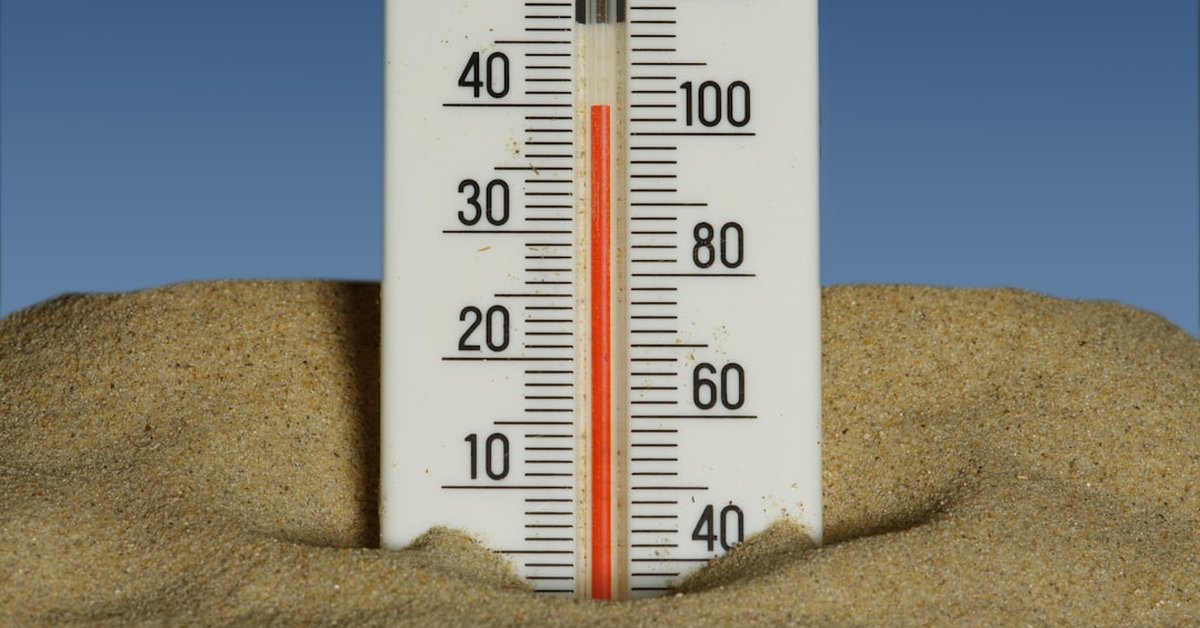








When people think of deadly weather in New Jersey, they picture nor’easters or hurricanes—storms that roar and destroy. But this summer, the killer arrived without a sound. It was oppressive heat, and officials now believe the death toll may be as high as 29. That’s more than the state’s average annual lightning fatalities over a decade. And it’s almost certainly an undercount.
Last week, emergency rooms across New York City logged the highest number of patients treated for heat-related illnesses in years. The numbers were staggering—over 1,200 visits in a single week, according to the city’s health department. Across the Hudson, New Jersey’s medical examiners are piecing together a grim picture. At least 29 deaths are suspected to be linked to the heat wave that smothered the region from mid-July through early August. But the real number? It could be higher, because many heat-related deaths are never officially flagged as such.
We’re talking about a silent killer. Heat doesn’t topple buildings or flood streets—it stops hearts, triggers strokes, and worsens chronic conditions. And the victims are often the most vulnerable: elderly, isolated, or without air conditioning. This story isn’t just about statistics. It’s about the people who didn’t make it through the summer.
The Numbers Behind the Heat
New Jersey’s Department of Health has confirmed at least 15 heat-related deaths so far this summer, but state officials acknowledge that the actual count is likely higher. The upper range of 29 comes from a preliminary analysis by the state’s Office of the Chief State Medical Examiner, which includes cases where heat was a contributing factor.
To put that in perspective: between 2010 and 2020, New Jersey averaged about 12 heat-related deaths per year, according to CDC data. This year’s suspected toll is more than double that. And it’s not just New Jersey. Across the Northeast, a heat dome parked over the region for nearly two weeks, breaking records in cities like Newark (101°F), Philadelphia (100°F), and Hartford (99°F). The National Weather Service issued excessive heat warnings that stretched from Maryland to Maine.
Dr. Mara Evans, a climate epidemiologist at Rutgers University, emphasized the hidden nature of heat deaths. “Heat-related deaths are notoriously underreported because they often present as heart attacks, respiratory failure, or other causes,” she said. “The true burden is likely several times higher than what official counts show.”
In New York City, the spike in emergency room visits tells a similar story. The city’s health department reported that from July 21 to July 27, over 1,200 people visited ERs for heat-related illnesses—the highest weekly total since the city began tracking this data in 2016. That’s more than triple the average for that period. Most cases were heat exhaustion, but dozens were heat stroke—a life-threatening condition.
Who’s Dying — and Why
Look, this isn’t random. The victims fall into predictable patterns. They’re older adults—82% of the confirmed deaths in New Jersey were people over 65. Many lived alone. Some didn’t have working air conditioners. Others chose not to turn them on due to fear of high electricity bills.
Dr. Linda Chen (no relation), a geriatrician at Cooper University Hospital in Camden, treated several patients who only came in after neighbors found them confused and dehydrated. “They were afraid to open windows because of crime, or they thought they could tough it out,” she told me. “But heat is insidious. By the time someone feels truly sick, it’s often too late.”
One case that stands out: a 72-year-old man in Trenton was found dead in his apartment on July 24. The temperature inside was 98°F. His air conditioner was broken, and he had no phone to call for help. That’s not a statistic—that’s a person, a father, a neighbor. And it’s happening over and over.
This heat wave is part of a larger pattern. The National Oceanic and Atmospheric Administration has noted that extreme heat is the deadliest weather-related hazard in the United States, killing more people than hurricanes, floods, and tornadoes combined. Yet it doesn’t get the same federal emergency response. A hurricane triggers FEMA deployments; a heat wave just gets a warning.
Climate change is cranking up the baseline. The past three years have been the hottest on record globally, and the current Super El Niño is amplifying temperatures even further. As we’ve seen in previous CyclonePost coverage, conditions like these are unprecedented in modern history. A recent analysis by climate scientists at Columbia University found that the July heat dome over the Northeast was made at least five times more likely by human-caused warming.
What’s Being Done — and What’s Not
New Jersey’s governor has activated a state-level emergency operations center for heat, something that’s usually reserved for hurricanes or floods. Cooling centers were opened, and utility companies were ordered not to shut off power for nonpayment during the heat wave. But advocates say it’s not enough.
“We need to treat heat waves like the disasters they are,” said Dr. Michael S. O’Leary, director of emergency medicine at Newark Beth Israel Medical Center. “That means funding for air conditioning in low-income housing, better outreach to the elderly, and public health campaigns that go beyond just telling people to drink water.”
He’s right. A recent AP News investigation found that many states lack comprehensive heat death reporting systems. New Jersey is one of the better ones, but even here, the official tally probably misses cases where the deceased had no close relatives or where heat was not listed as a primary cause.
Across the country, cities are beginning to experiment with solutions. Los Angeles appointed a chief heat officer. Miami-Dade County has a strategy to plant more trees and paint roofs white to reflect sunlight. But those are long-term ideas. For now, the immediate question is: how do we keep people alive through the next heat wave?
It’s a question that’s becoming more urgent. The last time Earth saw conditions like this, the planet was much warmer—and we weren’t here. The current trajectory suggests that summers like this will become the norm by the 2050s, not the exception.
What It Means for You
If you live in the Northeast, this isn’t just a news story. It’s a warning. The next heat wave could be next week, next month, or next year. And it could affect you or someone you love.
Check on elderly neighbors. If you have a relative over 65 living alone, call them. Make sure they have a working air conditioner or a place to go—a mall, a library, a cooling center. Many seniors won’t ask for help because they don’t want to be a burden. So you have to reach out.
And if you’re a younger person, don’t assume you’re immune. Heat stroke can hit anyone, especially during outdoor work or exercise. The CDC recommends staying hydrated, taking breaks in the shade, and never leaving children or pets in parked cars—even for a few minutes.
This is the new reality. The death toll in New Jersey may be 29, but it could be worse next time. We know what to do. The question is whether we’ll do it.
Frequently Asked Questions
How are heat-related deaths confirmed?
Medical examiners review cases where high body temperature or environmental heat exposure is a contributing factor. This often involves autopsy, toxicology, and scene investigation. However, many deaths are not classified as heat-related because the immediate cause may be listed as heart attack or stroke, even though heat was the trigger.
What should I do if I suspect someone is suffering from heat stroke?
Call 911 immediately. While waiting for help, move the person to a cooler place, remove excess clothing, and cool them with water or ice packs on the neck, armpits, and groin. Do not give fluids if they are unconscious or confused.
Why is New Jersey’s heat death toll possibly 29 while official count is lower?
Official counts often only include deaths where heat is the primary cause. Many deaths occur where heat is a contributing factor but not listed on the death certificate. The higher estimate of 29 comes from a broader analysis that includes deaths where heat likely played a role, even if not the primary cause.