



I remember standing in a burned-out forest in Oregon a few years back, the air still thick with the smell of ash. A forester knelt down, picked up a handful of blackened soil, and let it sift through his fingers. “This ground used to hold water like a sponge,” he said. “Now it just runs off.” That moment stuck with me — not just because of the destruction, but because of what came next. He pointed to a hillside where a few saplings had been planted. “Those trees,” he said, “are our only hope.”
But hope, it turns out, is running thin. New data shows that while the number of trees being planted globally is technically increasing, it’s nowhere near enough. Conservationists are sounding the alarm: we’re failing future generations. And the gap between what we’re doing and what we need to do? It’s widening.
The Numbers Don’t Lie — But They’re Misleading
Let’s start with the good news, because there is some. According to the UN Food and Agriculture Organization’s Global Forest Resources Assessment, tree planting efforts have risen by roughly 15% over the past decade. Countries like India, China, and Ethiopia have launched massive reforestation campaigns. India alone planted over 220 million trees in a single day back in 2019. Sounds impressive, right?
It is. But here’s the catch: we’re losing forests faster than we’re planting them. The world loses about 10 million hectares of forest every year — that’s roughly the size of Portugal. And while planting 220 million trees in a day makes headlines, many of those saplings won’t survive. A study from the University of Oxford found that survival rates for planted trees can be as low as 20% in some regions. So we’re running a race where we’re sprinting backward.
“We’re not even keeping pace with deforestation, let alone restoring what’s been lost,” says Dr. Elena Marchetti, a forest ecologist at the University of British Columbia. “If we don’t triple our current planting rates by 2030, we’re essentially signing a blank check for climate disaster.”
And that’s not hyperbole. Trees are our most efficient carbon-capture machines. A mature tree can absorb up to 48 pounds of CO2 per year. Multiply that by billions, and you start to see why forests matter. But here’s the thing — we’re not just failing on carbon. We’re failing on water, on biodiversity, on soil health. Everything connects.
Why Planting Trees Isn’t as Simple as It Sounds
Look, I’ve covered enough environmental stories to know that tree planting isn’t a silver bullet. You can’t just shove a sapling into the ground and walk away. It’s about where you plant, what you plant, and how you maintain it. And too often, governments and corporations treat tree planting as a PR stunt rather than a long-term investment.
Take the case of Turkey. In 2019, officials proudly announced they’d planted 11 million trees in a single day — a world record. But within months, local reports showed that most of the saplings had died. Why? They were planted in the wrong season, in the wrong soil, with no follow-up care. It was a photo op, not a restoration project.
“Planting a tree is the easy part,” says James Okonkwo, a reforestation specialist with the World Resources Institute. “Keeping it alive for five years — that’s the real challenge. And that requires funding, community engagement, and political will. Right now, we’re short on all three.”
Meanwhile, the climate crisis is making things harder. Droughts, wildfires, and pests are killing trees faster than ever. In California, the devastating wildfires of recent years have destroyed millions of acres of forest. And in Europe, as scorching heat shifts east, forests from France to Poland are struggling to survive. It’s a vicious cycle: less forest means more carbon in the air, which means more heat, which means more forest loss.
What This Means for Your Kids (and Their Kids)
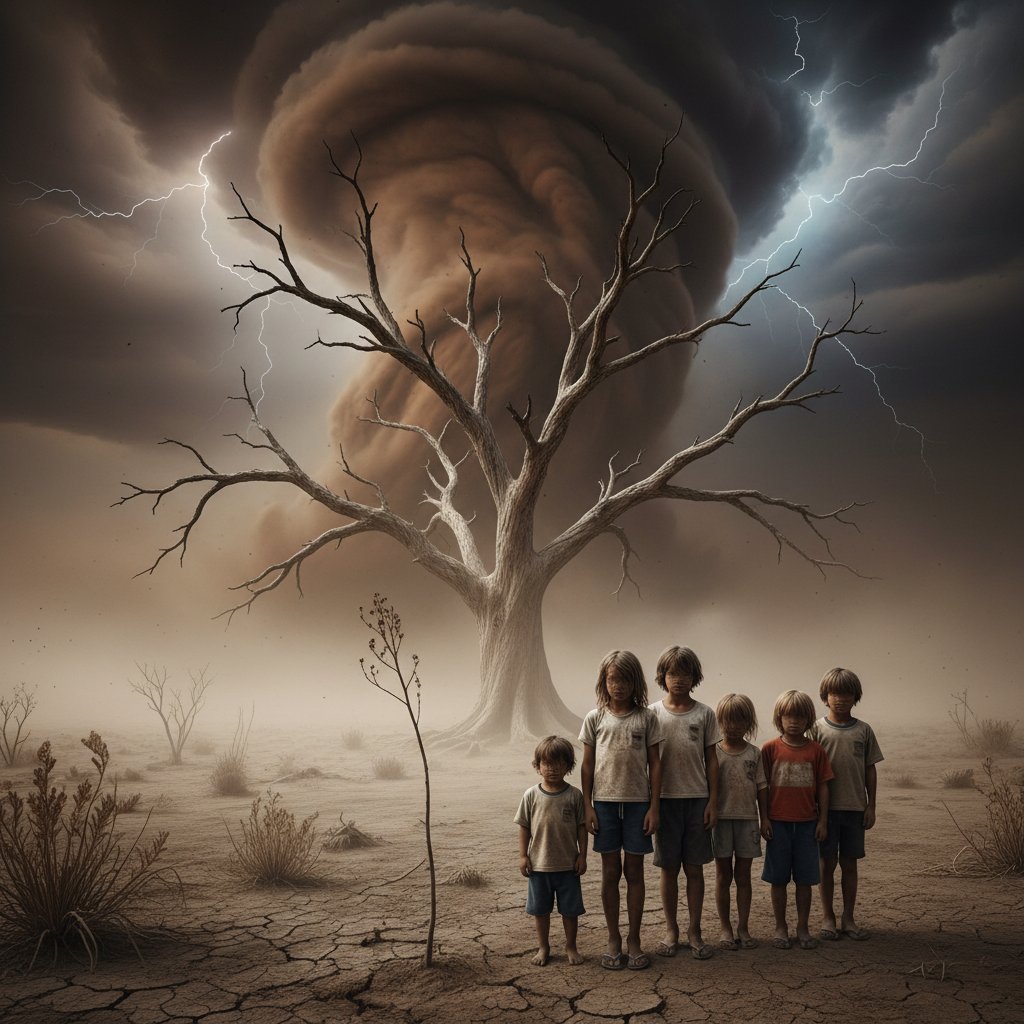
I’ve got a niece who’s seven. She loves drawing pictures of trees — big, green, full of birds. And I wonder: what kind of world will she inherit? If we don’t get serious about reforestation, the answer is grim. By 2050, global temperatures could rise by 2°C or more. That means more extreme weather, more food shortages, more displacement. And forests — our best natural defense — will be smaller, weaker, and less able to help.
But here’s the thing: it’s not too late. Not yet. Studies show that restoring 350 million hectares of degraded land could remove up to 1.7 gigatons of CO2 per year. That’s roughly 5% of global emissions. It won’t solve everything, but it’s a start. And it’s something we can actually do.
“We have the science, we have the technology, we have the seeds,” says Dr. Marchetti. “What we don’t have is the urgency. We’re treating this like a long-term project when it’s actually an emergency.”
And that’s the core of the problem. Governments set targets — plant a billion trees by 2030, restore 200 million hectares by 2040 — but they treat them as aspirations, not deadlines. Meanwhile, the clock is ticking. The IPCC’s latest report makes it clear: every fraction of a degree matters. Every tree matters.
So what can you do? Plant a tree in your backyard. Support organizations that focus on native species and long-term care. Push your local politicians to fund reforestation projects. And don’t let the perfect be the enemy of the good. Yes, some tree-planting efforts fail. But that doesn’t mean we should stop trying.
I think back to that forester in Oregon. He wasn’t optimistic — he was realistic. “We’re not going to fix this in my lifetime,” he said. “But if we don’t start now, my grandkids won’t have a chance.”
He’s right. And neither will yours.
Frequently Asked Questions
Why isn’t planting more trees enough to solve climate change?
While trees are excellent at absorbing CO2, they can’t do it fast enough to offset current emission levels. We also need to reduce fossil fuel use, protect existing forests, and ensure planted trees survive long-term. Planting alone is not a substitute for cutting emissions.
What’s the difference between reforestation and afforestation?
Reforestation means replanting trees in areas where forests were recently cut or burned. Afforestation means planting trees in areas that haven’t been forested for a long time, like grasslands or former farmland. Both have benefits, but reforestation is generally more ecologically sound because it restores existing ecosystems.
How can I make sure my tree-planting efforts actually help?
Choose native species suited to your local climate. Plant during the right season, water regularly for the first few years, and protect saplings from animals and weeds. Better yet, donate to reputable reforestation organizations that monitor survival rates and work with local communities.