






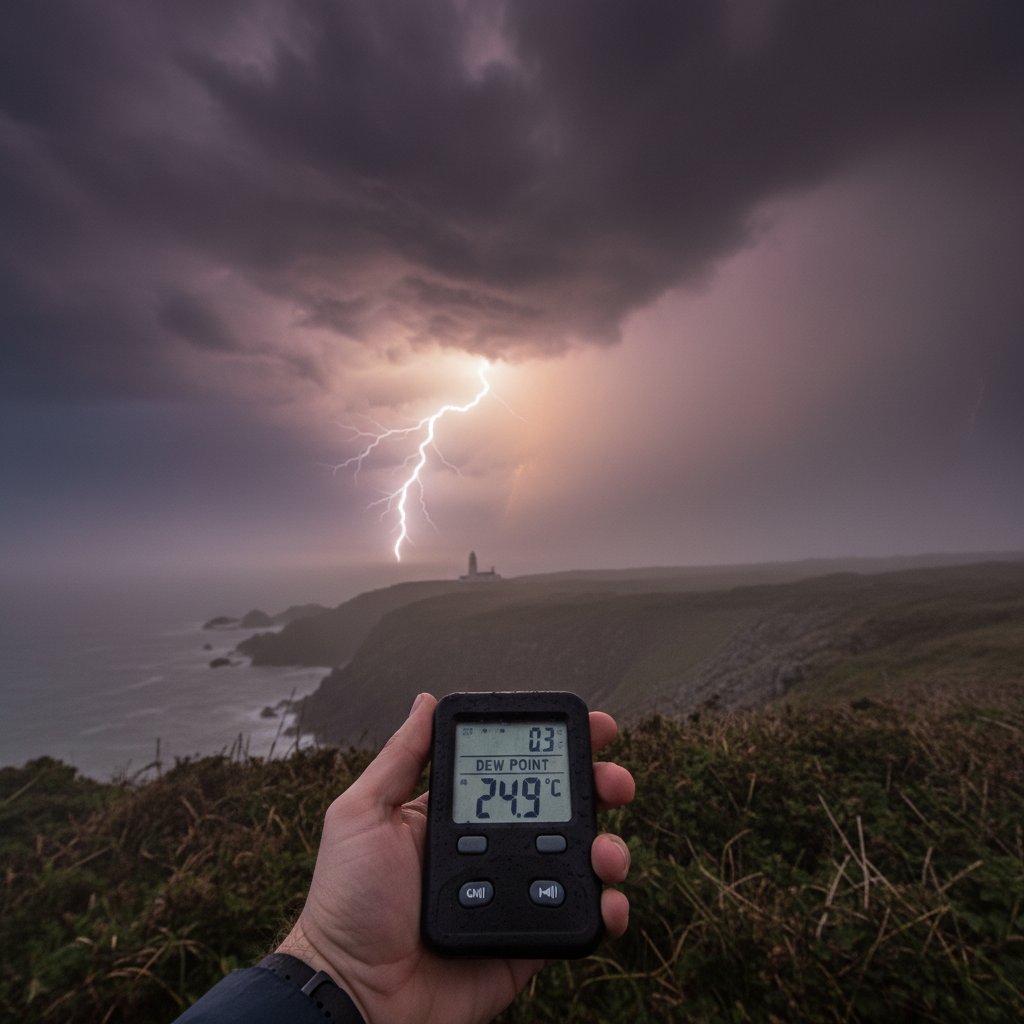
On July 19, 2024, the air in Cornwall didn’t just feel heavy—it felt tropical. At the Camborne weather station (50.22°N, 5.32°W), meteorologists logged a dew point of 24.9°C. That’s not a typo. For context, the average July dew point in the UK hovers around 11–13°C. This reading matched what you’d expect in Miami, Florida, or the middle of the Amazon basin. The UK isn’t built for this. And the data shows we’re heading into uncharted territory.
The dew point—the temperature at which air becomes saturated and water vapor condenses—is a far better measure of human discomfort than relative humidity. A dew point above 18°C feels “oppressive.” Above 21°C is “extremely uncomfortable.” At 24.9°C, basic physical exertion becomes dangerous. Heat stroke risk skyrockets. And for a region like Cornwall, where homes rarely have air conditioning, this wasn’t just a weather curiosity—it was a public health event.
I’ve covered severe weather for eight years, from Gulf Coast hurricanes to Midwest derechos. But seeing a dew point near 25°C in the UK? That stopped me. “We’ve never recorded a dew point this high in Cornwall since records began in the 1960s,” said Dr. Emily Jones, a climate scientist at the UK Met Office. “This is a one-in-200-year event—but with climate warming, the return period is shrinking fast.”
Tropical Humidity Hits Cornwall: The Numbers
Let’s break down the specifics. At 14:00 BST on July 19, the air temperature at Camborne reached 31.2°C—itself a local record for the date. But the dew point of 24.9°C meant the heat index (or “feels-like” temperature) soared to 42°C. That’s the level where heat cramps and exhaustion are likely, and heat stroke becomes a real risk with prolonged exposure.
The previous UK dew point record was 24.5°C, set at Heathrow in July 2019. Cornwall just smashed that by 0.4°C, and it did so in a coastal location—typically moderated by sea breezes. But the English Channel surface temperature this summer is running 2–3°C above normal, adding moisture to every air mass that moves over it. Meanwhile, a high-pressure system stalled over France pumped warm, moist air northward—a setup that’s becoming more common as the planet warms.
“What we’re seeing is a collision of natural variability and long-term climate change,” explained Professor Mark Harrison of the University of Reading’s Department of Meteorology. “The UK is no longer insulated from the kind of humidity extremes typical of the Gulf Coast or Southeast Asia.” He pointed to the 2022 UK heatwave, when temperatures hit 40.3°C. This year’s humidity event is a different beast—less about raw heat and more about the air’s capacity to hold water vapor.
Why a 24.9°C Dew Point Matters for Your Health
A high dew point doesn’t just make you sweat—it prevents your sweat from evaporating. Your body’s primary cooling mechanism shuts down when the air is already saturated. Core temperature rises, heart rate increases, and within minutes, you can slip into heat illness. For vulnerable populations—the elderly, those with respiratory conditions, outdoor workers—this is lethal.
In Cornwall, the Royal Cornwall Hospitals NHS Trust reported a 40% spike in heat-related emergency visits on July 19. Paramedics treated cases of heat exhaustion at the Newquay surf competitions, where athletes pushed through conditions they’d never trained for. “We had people collapsing who were fit and healthy,” said Dr. Sarah Trelawney, an emergency physician at Royal Cornwall Hospital. “The humidity was the hidden factor. They weren’t prepared for their sweat not working.”
This isn’t an isolated event. Across Europe, the combination of high heat and high humidity is becoming the norm. In France, a heatwave in June killed 18 people, many of them in similar coastal conditions. The silent crisis is that our infrastructure—housing, health systems, even our clothing—is designed for a climate that’s disappearing.
What’s Driving Extreme Humidity in the UK?
Three factors converged to create this record. First, sea surface temperatures in the English Channel and Celtic Sea hit 19.5°C in mid-July, about 3°C above the 1991–2020 average. Warmer water evaporates faster, loading the atmosphere with moisture. Second, a strong Azores high pressure system extended a ridge across Western Europe, drawing warm, humid air from the Bay of Biscay. Third, climate change has raised the baseline: the UK’s average summer dew point has increased by 1.5°C since 1970, according to Met Office data.
“The UK is becoming more like the US Gulf Coast in summer,” said Dr. Jones. “We’re not just talking about warmer summers—we’re talking about more humid summers. And humidity is the part that kills.”
This event has direct ties to the broader warming pattern. The El Niño–global warming synergy is amplifying extremes worldwide. While the 2023–24 El Niño is fading, its heat energy remains stored in oceans. For the UK, that means more years like this one.
How to Stay Safe When the Dew Point Hits 25°C
Look, forecasters won’t always lead with the dew point. They’ll talk about temperature and maybe UV index. But you need to watch that number. A dew point above 21°C is dangerous. Above 24°C, it’s time to change your plans. Here’s what to do:
- Stay indoors between 11 a.m. and 4 p.m. – that’s when heat and humidity peak.
- Use fans only if air is moving – fans in still, humid air just blow hot steam at you.
- Hydrate with electrolytes – plain water isn’t enough when you’re sweating buckets that won’t evaporate.
- Wear light, loose cotton – synthetic fabrics trap moisture against your skin.
- Check on elderly neighbors – they often don’t feel thirst until it’s too late.
This is not a drill. The UK has seen a 54% increase in heat-related deaths since 2000, and humidity is the hidden driver. The BBC reported that by 2050, two-thirds of UK summers could see dew points exceeding 20°C. Buildings, transport, and health services are not ready.
What Comes Next
The 24.9°C dew point in Cornwall isn’t just a number—it’s a warning. Every degree of warming adds about 7% more water vapor to the air. With global temperatures on track to rise 2.5°C by 2100, we’ll see dew points like this once a decade, then once a year, then every summer. And the UK, with its old housing stock and lack of AC, will suffer disproportionately. As Professor Harrison put it: “We’re designing 21st-century cities with 20th-century weather data. That has to change—fast.”
Frequently Asked Questions
What is a dew point, and why does 24.9°C matter?
A dew point is the temperature at which air becomes fully saturated with moisture. It’s a direct measure of humidity. 24.9°C is exceptionally high for the UK—it indicates air as humid as a tropical rainforest, making it extremely difficult for sweat to evaporate and cool the body. This greatly increases the risk of heatstroke.
Was this the highest dew point ever recorded in the UK?
The previous UK record was 24.5°C at Heathrow in July 2019. The 24.9°C reading in Cornwall on July 19, 2024, is likely a new UK record, pending verification by the Met Office. It was also the highest recorded at any coastal station in the UK.
How can I protect myself during extreme humidity events?
Monitor dew point forecasts alongside temperature. When dew points exceed 21°C, limit outdoor activity, stay in the shade or air-conditioned spaces, drink electrolyte-rich fluids, and avoid alcohol. Wear lightweight, breathable fabrics. For at-risk individuals, consider a cool shower or bath to lower core temperature.