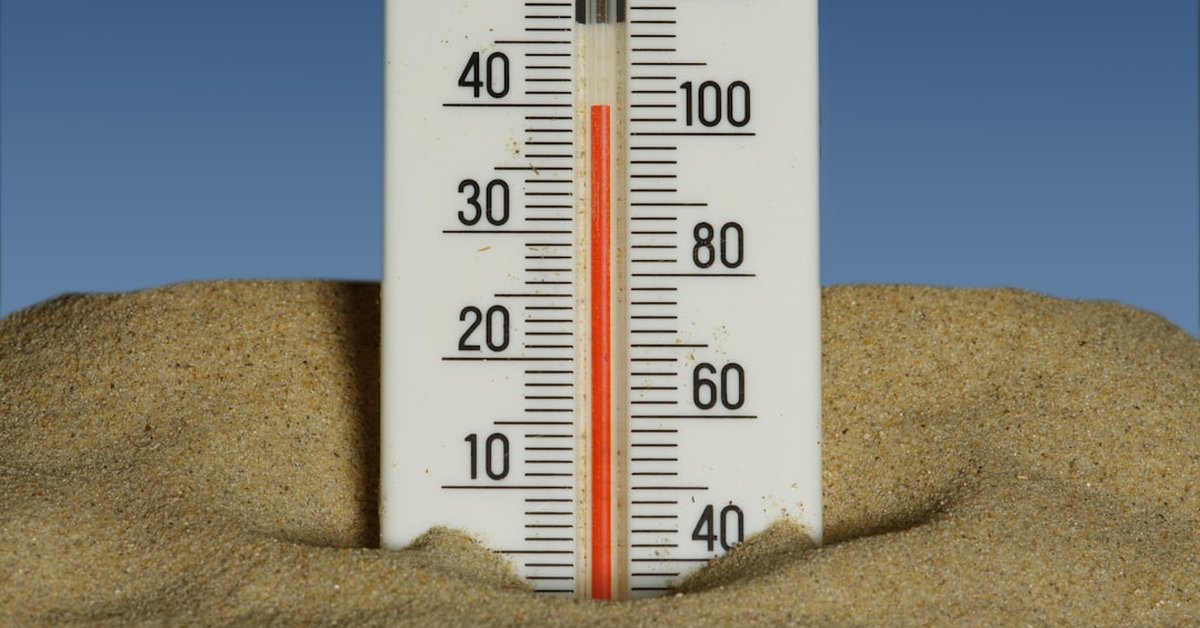








The summer of 2022 was supposed to be a freak event. A one-off. The kind of thing that happens once in a lifetime, if that. On July 19, 2022, the mercury at London’s Heathrow Airport hit 40.2°C (104.4°F). It was the first time the UK had ever recorded a temperature above 40 degrees. Train tracks buckled. Runways at Luton and RAF Brize Norton melted. Fires ripped through parched fields in Suffolk and London. The London Fire Brigade had its busiest day since World War II — taking more than 2,600 calls in a single shift.
But here’s the uncomfortable part: scientists say this wasn’t a freak event at all. It was a preview.
And not a preview for 2050 or 2100. A preview for soon. According to the UK Met Office, under current emissions scenarios, parts of southern England could see 40°C summers every three to four years by the 2040s. That’s not a distant dystopia — that’s within the lifespan of a mortgage. That’s before today’s toddlers graduate college.
So let me ask you directly: Is the UK ready for this? Not just the government, not just the rail companies, but you — in your home, in your commute, in your daily life?
The Heat Is Already Here — And It’s Not Going Back
The trend lines are unmistakable. The UK’s ten warmest years on record have all occurred since 2002. The summer of 2023 wasn’t as dramatic as 2022, but it still ranked among the top five hottest on record for many parts of the country. And 2024? The Met Office’s early outlook suggests another above-average summer is likely.
What’s happening is a shift in the very character of British summers. The country has always been known for its mild, wet summers — the kind where you pack a sweater for a picnic in August. That’s changing. Fast. The jet stream is wobbling. High-pressure systems are parking themselves over the UK for longer periods, trapping heat. And the North Sea, once a cooling influence, is warming up too.
“What we’re seeing is not a series of disconnected hot spells — it’s a fundamental reshaping of our climate,” says Dr. Emily Wallace, a climate attribution scientist at the UK Met Office. “The likelihood of reaching 40°C in the UK is now about ten times higher than it was in the pre-industrial era. And that multiplier will keep increasing.”
Look, this isn’t just about uncomfortable afternoons. This is about infrastructure built for a climate that no longer exists. Britain’s housing stock is among the worst in Europe for heat retention — and I don’t mean that in a good way. Most homes in the UK are designed to trap heat, not shed it. They’re brick boxes with small windows, built for the damp cold. When the outside hits 38°C, the inside can hit 42. That’s not just uncomfortable — it’s deadly. Heat-related deaths in England averaged around 2,000 per year between 2016 and 2023, according to the UK Health Security Agency.
And the problem compounds. The more we install air conditioning — which the UK has in painfully limited supply — the more energy we use, the more carbon we burn, the hotter it gets. It’s a vicious feedback loop.
Infrastructure Under the Sun — And It’s Cracking
Let’s talk about the stuff that keeps the country running. The railways, for starters. Network Rail says that when temperatures hit the high 30s, tracks can exceed 50°C on the surface. Steel expands. Tracks buckle. And when they buckle, trains stop. In July 2022, services on the East Coast Mainline and Great Western Railway were severely disrupted. Some routes didn’t run at all.
But it’s not just trains. Roads are softening. The asphalt that works fine at 20°C turns into something resembling taffy at 40°C. The NHS is seeing a surge in heatstroke and dehydration cases during every heatwave, putting additional strain on an already overburdened system. And hospitals themselves? Many were not designed with cooling systems that can handle sustained periods of extreme heat. In 2022, some had to cancel surgeries because operating theatres became too hot.
This isn’t a hypothetical future problem — it’s happening right now. For a deeper look at how heatwaves are overwhelming systems across Europe, check out our coverage of Europe Swelters in Record Heat: France Hits All-Time High Amid Deadly Wave.
And speaking of systems under pressure — the power grid. The UK’s National Grid has so far managed to keep the lights on during heatwaves, but the margin for error is shrinking. When millions of people simultaneously crank up fans and portable AC units, demand spikes. And if a heatwave coincides with a period of low wind — which often happens during high-pressure heat domes — the grid gets very, very nervous.
How Prepared Are We? Let’s Be Honest
So, the government has seen the data. The UK’s Climate Change Committee (CCC) has been warning about heat risks for years. The third National Adaptation Programme, published in 2023, includes measures to improve heat resilience — but critics say it’s too slow, too vague, and too underfunded.
“The UK has made genuine progress in some areas — flood defense, for example — but heat adaptation remains the poor cousin,” says Prof. Hannah Cloke, a natural hazards researcher at the University of Reading. “We still don’t have mandatory overheating standards for new homes. We still don’t have a national cooling strategy. We’re essentially hoping that next year won’t be as bad.”
And that’s the thing — hope is not a strategy. The UK’s heat-health alert system, which was upgraded in 2021, now has four levels. But the highest level — Level 4, which triggers a national emergency response — was only activated for the first time in July 2022. And even then, many local authorities said they were caught off guard.
There are some bright spots. The London Underground, notorious for being an underground sauna in summer, has started trialing cooling systems on a few lines. Some local councils are planting more trees and installing green roofs to reduce the urban heat island effect. And the NHS is rolling out heat awareness training for care home staff. But these are baby steps when what’s needed is a marathon.
What You Can Do — And What Needs to Change
On an individual level, there are practical steps. Keep curtains closed during the day. Use fans strategically — place a bowl of ice in front of one for a DIY cooling effect. Stay hydrated. Check on elderly neighbors. But let’s be real: personal adaptation won’t solve a systemic problem. You can’t fan yourself out of a 40°C day in a poorly insulated top-floor flat.
What needs to change is building standards. The UK should mandate passive cooling measures — reflective roofs, external shutters, better insulation that works both ways — in all new homes. Existing homes need retrofit programs, prioritized for the most vulnerable. The government should also accelerate the transition to renewable energy, which doesn’t just help the climate — it also reduces the risk of blackouts during heatwaves.
And we need to talk about the unspoken truth: that heatwaves disproportionately affect the poor, the elderly, and people with chronic health conditions. The rich can install AC and solar panels. The rich can move to cooler areas. Everyone else… sweats it out.
For a broader view on how the climate data itself is being preserved and communicated, see how Former NOAA Staffers Revive Climate.gov After Admin Shutdown — a reminder that tracking this crisis is a battle in itself.
The bottom line? The UK is not ready for a future where 40°C is normal. Not even close. But we have a window — a narrow one, maybe a decade — to make our homes, our cities, and our infrastructure more resilient. The question is whether we’ll use it, or whether we’ll wait for the next 40°C day to remind us that the future is already here.
Frequently Asked Questions
How often will the UK see 40°C temperatures in the coming decades?
According to the UK Met Office, under current emissions scenarios, parts of southern England could experience 40°C days every three to four years by the 2040s. In a high-emissions scenario, such temperatures could occur every year or two by the 2060s.
What is the UK government doing to prepare for hotter summers?
The UK has a National Adaptation Programme and a heat-health alert system, but critics say implementation is too slow. The Climate Change Committee has called for mandatory overheating standards for new homes, a national cooling strategy, and accelerated tree-planting in urban areas. Local authorities are increasingly developing heat action plans, but funding remains a major constraint.
Are UK homes designed to cope with extreme heat?
Generally, no. The majority of UK housing stock was designed to retain heat, not shed it. Poor insulation, small windows, and lack of shading make many homes dangerously hot during heatwaves. New building regulations introduced in 2022 require some overheating mitigation, but existing homes — which make up the vast majority — have no such requirements.