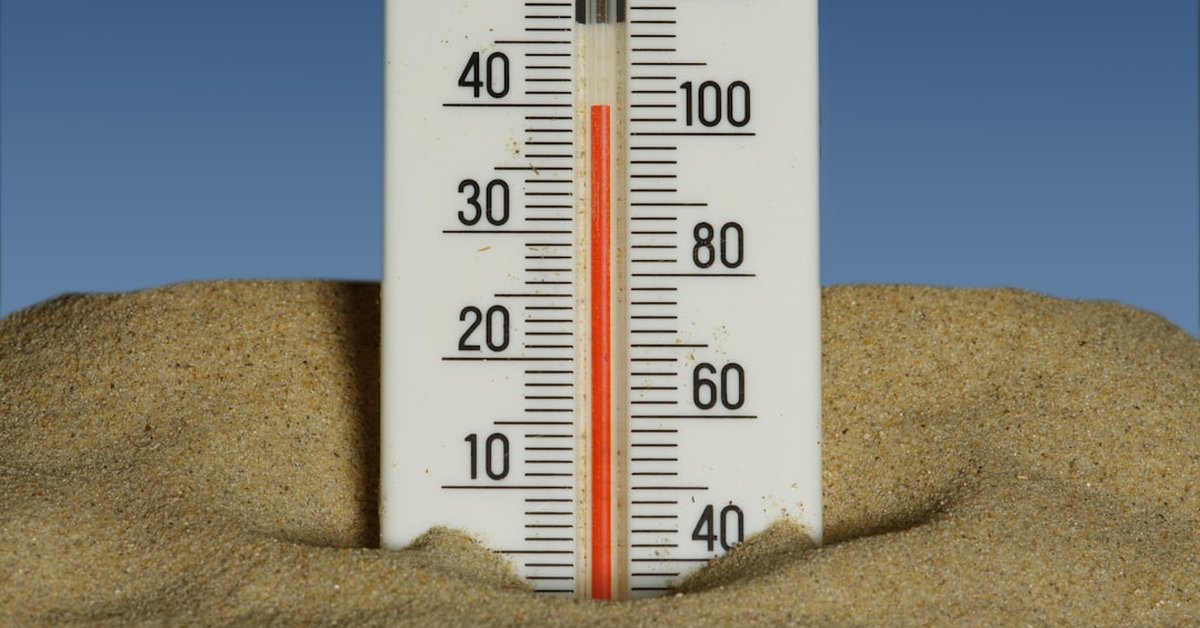








France’s average temperature on Tuesday was its hottest ever recorded, the country’s national weather agency Météo-France confirmed. The mercury soared to a staggering 42.6°C (108.7°F) in parts of the Rhône Valley, shattering previous records and triggering top-level red heat warnings across multiple nations. Europe, once again, is burning. And this time, the heat is rewriting history.
This isn’t just another summer scorcher. It’s a brutal, sustained assault of extreme heat that has already claimed lives, paralyzed infrastructure, and forced governments to scramble. From Paris to Rome to Madrid, the continent is in the grip of a heat dome that shows no signs of relenting.
The Numbers Behind the Blaze
On Tuesday, July 18, 2023, France experienced its highest average temperature since records began in 1947. The national average hit 31.4°C (88.5°F) — a number that might sound mild until you realize it includes cooler mountain regions. In urban centers, the feel was apocalyptic. Lyon hit 42°C. Bordeaux touched 43°C. And in the village of Verargues, near Montpellier, thermometers read 45.9°C (114.6°F).
But France wasn’t alone. Spain’s meteorological agency, AEMET, issued its own red alert for the northeastern regions of Catalonia and Aragon, where temperatures exceeded 44°C. Italy placed 16 cities under red warnings, including Rome, Florence, and Bologna. Greece, after a week of 41°C highs, warned tourists visiting the Acropolis to carry water bottles — a simple directive that masks a life-threatening reality.
According to the Reuters report on the European heat wave, this event is being driven by a high-pressure system pulling hot air from North Africa, a pattern that’s becoming alarmingly common. Of course, when the media focuses on heat, other critical disasters sometimes slip under the radar. It’s worth remembering that while humans wilt in these temperatures, other threats emerge — like Iran’s Jellyfish Drones, which pose a new kind of danger when disaster strikes, as we covered in our analysis of Iran’s jellyfish drones.
Lives Disrupted, Lives Lost
Heat waves are silent killers. They don’t come with roaring winds or floodwaters, but they claim more lives annually in Europe than any other natural hazard. The 2003 heat wave killed over 70,000 people across the continent. This one isn’t quite at that level — yet — but the signs are ominous.
In Italy, hospitals reported a 20% spike in emergency room visits for heatstroke and dehydration. In Spain, a 47-year-old road worker collapsed and died on the job in Madrid as temperatures hit 40°C. In Greece, wildfires forced the evacuation of 1,200 tourists from the island of Rhodes, with flames jumping roads and devouring pine forests at terrifying speed.
“We’re seeing a classic compound event — extreme heat feeding wildfires, which then choke the air with smoke, making the heat even more dangerous for vulnerable populations,” said Dr. Elena Garcia, a climatologist at the University of Barcelona. “It’s a cascade of crises that our emergency systems weren’t built to handle.”
The heat hasn’t just hurt people — it’s broken things. Train tracks buckled in the UK’s East Midlands, causing delays and cancellations. In France, nuclear power plants along the Rhône River were forced to reduce output because the water used for cooling was too warm. Think about that: a nuclear reactor, America’s technological marvel, hamstrung by hot river water.
What’s Driving This Extreme Heat?
Look, scientists have been warning about this for decades. Climate change is loading the dice, making heat waves more frequent, more intense, and longer-lasting. A rapid attribution study from the World Weather Attribution network found that the July 2023 heat wave was made at least 2°C hotter due to human-caused warming.
But there’s another factor at play here: the jet stream. That ribbon of high-altitude wind that normally keeps weather systems moving has been behaving strangely. It’s stalling, creating what meteorologists call “blocking patterns.” This allows heat domes to park over regions for days or weeks.
“The jet stream is becoming more wavy, more erratic,” explained Dr. Markus Keller, a senior researcher at the Potsdam Institute for Climate Impact Research. “Think of it like a garden hose with a kink — the water stops flowing. That kink is sitting right over Europe, trapping hot air underneath.”
Some forecasters are drawing comparisons to the 2019 European heat wave that broke records in France, Germany, and the Netherlands. But this one is broader in geographic scale and more persistent. The UK Met Office issued an amber warning for extreme heat — the first time it’s done so in July since the system was introduced. That’s not hyperbole; it’s a warning you should heed.
Speaking of warnings, the Pacific is also seeing its own share of extreme weather, as highlighted by the work of meteorologist Micah Nori, who decodes the Pacific’s fury — you can read about him in our profile on Micah Nori.
What This Means for You
If you’re reading this in the US or UK, don’t assume you’re safe. Heat waves in Europe often precede similar patterns in North America. The same stalled jet stream that’s cooking Europe can shift, bringing extreme heat to the eastern US or Canada within weeks. In fact, parts of the southern US are already experiencing a parallel heat wave.
For travelers, this is a practical nightmare. If you’re planning a trip to southern Europe — especially Italy, Spain, France, or Greece — check the heat warnings daily. Stay indoors during peak hours (11 a.m. to 5 p.m.), hydrate aggressively, and never leave children or pets in parked cars. It sounds obvious, but emergency rooms see it every summer.
Governments are slowly adapting. Paris has opened 200 “cool rooms” in public buildings. Barcelona set up misting stations in parks. But these are Band-Aids on a bullet wound. What’s needed is systemic change: more green spaces, reflective roofs, and a rapid shift away from fossil fuels. Until then, we’re going to see more summers like this one.
In a strange twist, the heat wave has revived interest in climate data — something that became visible when former NOAA staffers resurrected a crucial climate data site after a government shutdown, as we reported in our piece on NOAA’s data resurrection.
This heat wave will pass. But the next one is already gathering. The question isn’t if we’ll face another — it’s how ready we’ll be.
Frequently Asked Questions
A: Forecasters predict the heat dome will persist through at least the end of the current week, with a slow breakdown expected by early next week. However, residual heat may linger, especially in southern Europe, where nighttime temperatures remain dangerously high.
A: France, Spain, Italy, Greece, and the United Kingdom have seen the most severe impacts. France recorded its highest ever average temperature. Spain and Italy have multiple cities under red heat warnings, while the UK issued its first July amber warning for extreme heat.
A: Yes. While heat waves have always occurred, climate change — driven by greenhouse gas emissions — has made this one hotter and more likely. Attribution studies show that human-caused warming added at least 2°C to the event, amplifying its intensity and duration.