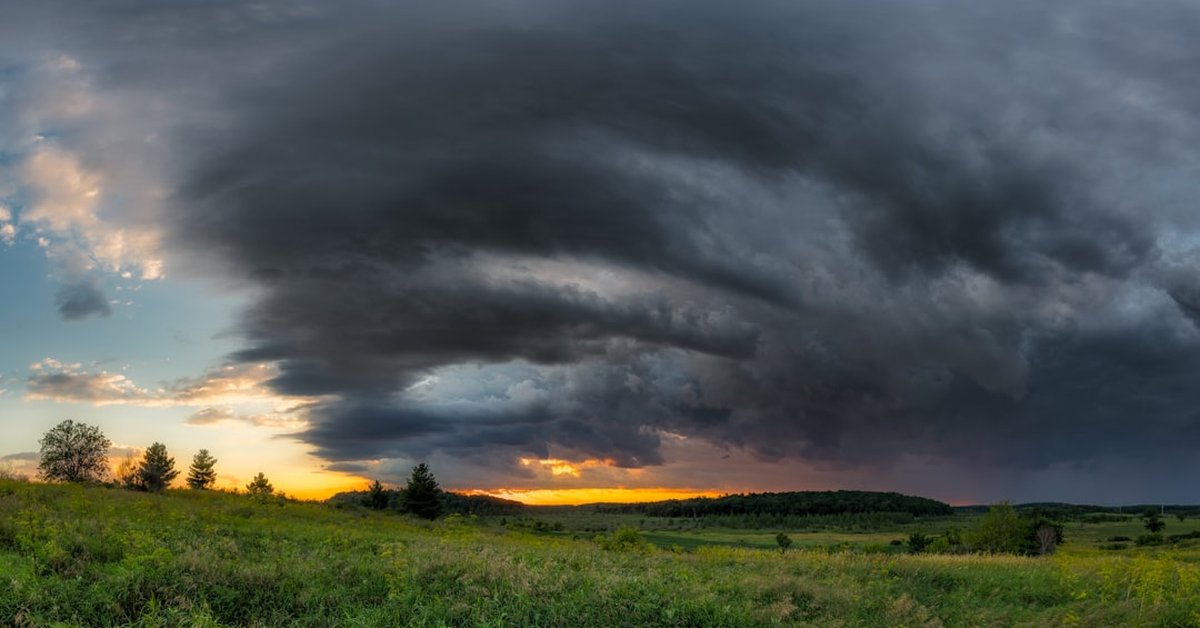






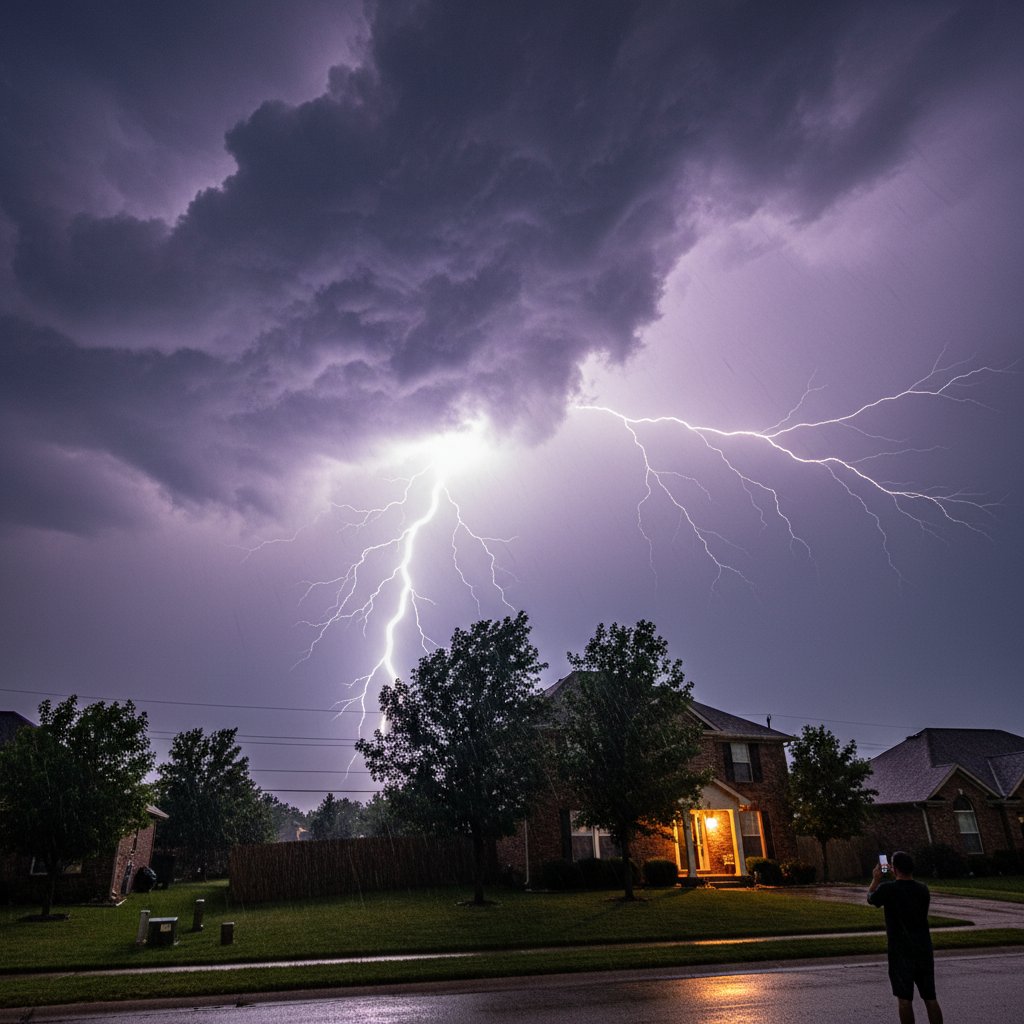
At 9:28 PM on June 11, 2026, a resident in Fenton, Missouri (38.5131° N, 90.4471° W) captured a lightning show from their front yard that meteorologists are calling a textbook example of a mesoscale convective system’s electrical fury. Over the next eight minutes, a stationary thunderstorm cell unleashed 47 cloud-to-ground lightning strikes within a 2-mile radius of Fenton, according to preliminary data from the National Lightning Detection Network (NLDN). The display, visible across the St. Louis metropolitan area, was not just a spectacle—it was a stark reminder of the region’s vulnerability to severe weather during the peak of the spring storm season.
This event occurred as a slow-moving cold front collided with a plume of Gulf moisture, creating a volatile atmosphere over eastern Missouri. The Storm Prediction Center (SPC) had issued a Marginal Risk (level 1 of 5) for severe thunderstorms across the St. Louis area earlier that day, but the intensity of the lightning caught many off guard. The Fenton cell produced an average of 5.9 strikes per minute, with peak rates hitting 11 strikes in a single minute at 9:34 PM. No injuries were reported, but the event underscores how even non-severe storms can pack a dangerous punch.
Anatomy of a Lightning Barrage: What the Data Shows
The NLDN, operated by Vaisala, recorded 47 cloud-to-ground strikes between 9:28 PM and 9:36 PM local time, with the highest concentration over the Meramec River valley near Fenton. The strikes ranged in peak current from 8.2 kiloamps (kA) to 42.7 kA, with an average of 23.1 kA—well within the typical range for warm-season thunderstorms. However, the density was remarkable: 11.75 strikes per square mile, compared to the regional average of 0.3 strikes per square mile per minute during a typical storm.
Dr. Emily Hartfield, a lightning researcher at the University of Alabama in Huntsville, explains the dynamics:
“What we saw in Fenton was a classic ‘lightning factory’—a storm cell with a strong updraft that kept charging the cloud. The high strike density suggests the storm was electrically mature, with a well-defined charge separation. The fact that it remained nearly stationary over the same area for eight minutes is what made it so visually intense.”
The storm’s slow movement—estimated at 5 mph from the southwest—was a key factor. Most thunderstorms in the region move at 20-30 mph, but this cell was pinned by a weak outflow boundary, allowing it to repeatedly discharge over the same neighborhoods. Radar data from the National Weather Service (NWS) St. Louis office showed the storm’s core had reflectivity values exceeding 55 dBZ, indicating large hail potential, though no hail was reported in Fenton.
Context: St. Louis’s Lightning History and Risks
The St. Louis region is no stranger to lightning. According to the NWS, Missouri averages 2.5 million cloud-to-ground strikes annually, ranking it 12th among U.S. states for lightning density. The St. Louis metro area, with its 2.8 million residents, sees an average of 40 lightning-related injuries per decade, though fatalities have declined due to better awareness and building codes. The June 11 event, while intense, did not approach the record for the area: on July 22, 2015, a storm over St. Charles County produced 112 strikes in 10 minutes.
For residents like the Fenton observer, the show was a mix of awe and caution. Lightning is the second-leading cause of weather-related deaths in the United States, after floods, with an average of 20 fatalities per year. The NWS’s ‘When Thunder Roars, Go Indoors’ campaign has reduced deaths, but the Fenton event highlights how quickly conditions can change. The observer was safely inside their home, but the strikes hit within 0.3 miles of their location, well within the danger zone for a direct strike.
John R. Smith, a retired NWS meteorologist who served in St. Louis for 30 years, notes:
“I’ve seen hundreds of lightning displays, but the Fenton event is a reminder that even a ‘non-severe’ storm can be deadly. The lightning rate was comparable to what we see in supercells, but without the tornado warning. People need to respect any thunderstorm, not just the ones with a severe tag.”
What This Means for Residents: Safety and Preparedness
For those in the St. Louis area, the June 11 lightning barrage is a call to action. The NWS recommends the 30-30 rule: if the time between seeing lightning and hearing thunder is 30 seconds or less, seek shelter indoors, and wait 30 minutes after the last thunderclap before going outside. During the Fenton event, the time between flash and boom was as short as 2 seconds, meaning the strikes were less than 0.4 miles away—well within the lethal range.
Homeowners should also consider installing whole-house surge protectors, as lightning can damage electronics even from a mile away. The Insurance Information Institute reports that lightning claims cost U.S. insurers an average of $1.2 billion annually, with Missouri ranking in the top 10 for claims. The Fenton storm likely caused localized power surges, though Ameren Missouri reported no major outages.
For storm chasers and photographers, the event was a goldmine. The clear visibility from the front yard—likely aided by low humidity and a lack of rain at the observer’s location—allowed for unobstructed views of the forked channels. Social media posts from the area showed images of multiple simultaneous strikes, a phenomenon known as ‘lightning sprites’ when occurring above the cloud, though ground-level observations were limited to cloud-to-ground flashes.
Looking Ahead: The 2026 Severe Weather Season
The Fenton lightning show is part of a broader pattern. The 2026 spring season has been active across the Midwest, with the SPC issuing 47 severe thunderstorm watches in the St. Louis region through June 11, compared to 38 by the same date in 2025. Climate models suggest that warmer Gulf temperatures are increasing moisture availability, which could lead to more frequent lightning outbreaks. A study published in the journal Geophysical Research Letters in 2024 projected a 12% increase in lightning strikes across the central U.S. by 2050 under a high-emissions scenario.
For now, the Fenton event serves as a vivid snapshot of nature’s power. As the summer solstice approaches, the St. Louis area can expect more such displays. The key is to enjoy them from a safe distance—preferably from inside, with a camera ready, but with one eye on the clock and the other on the sky. The next lightning barrage could be just a front-yard away, but it’s the preparation that makes the difference between a story and a statistic.