



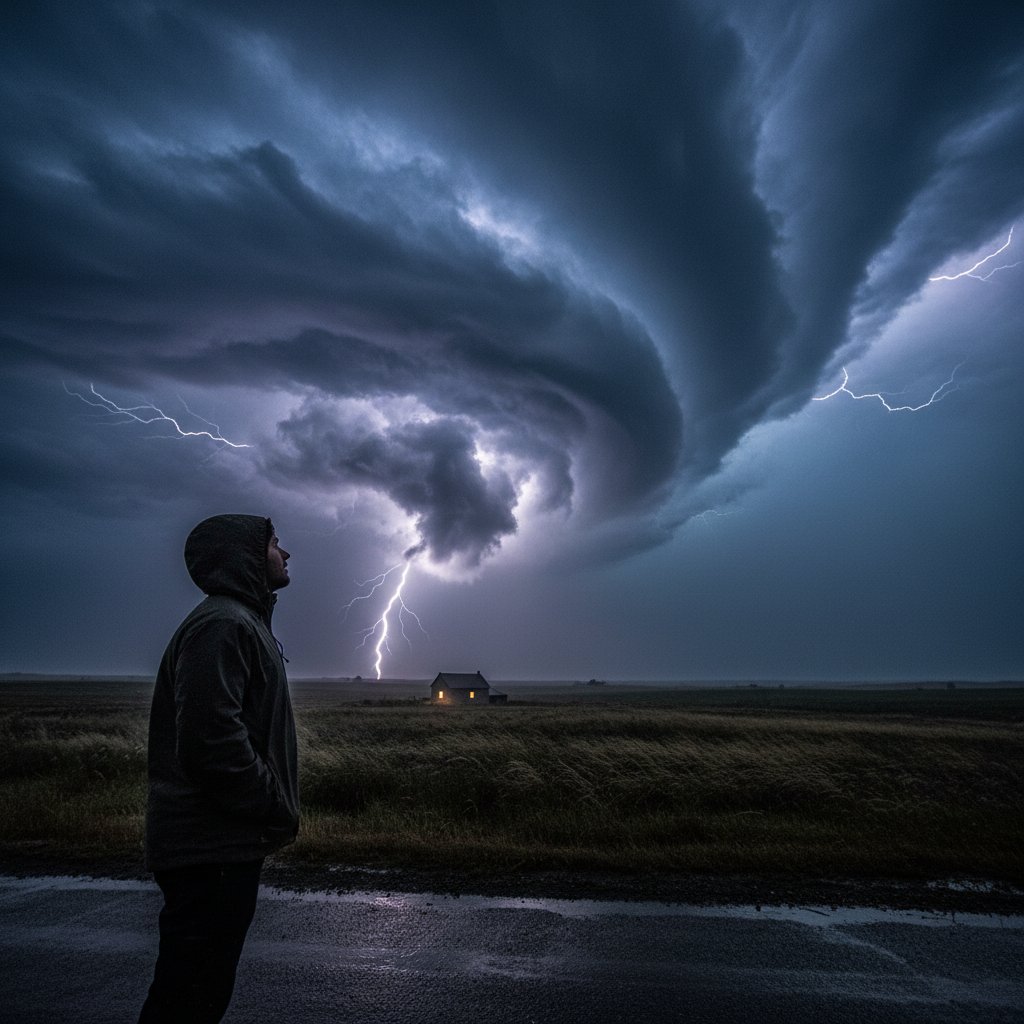
In 2023 alone, over 1.7 million severe weather warnings were issued across the United States. Behind each warning, an unknown number of people lay awake, refreshing social media feeds, jumping between radar apps, and posting on multiple pages searching for answers. They are the new breed of storm watchers—not professional meteorologists, but ordinary citizens caught in a cycle of anxiety and information overload.
This phenomenon is not merely a nocturnal curiosity. It reflects a fundamental shift in how the public consumes weather information. With real-time data at their fingertips, many have turned into amateur forecasters. But the quest for certainty often leads to more questions—and more sleepless nights.
We spoke with experts, analyzed social media traffic, and looked at the numbers behind this growing trend.
The Nightly Vigil: A Growing Phenomenon
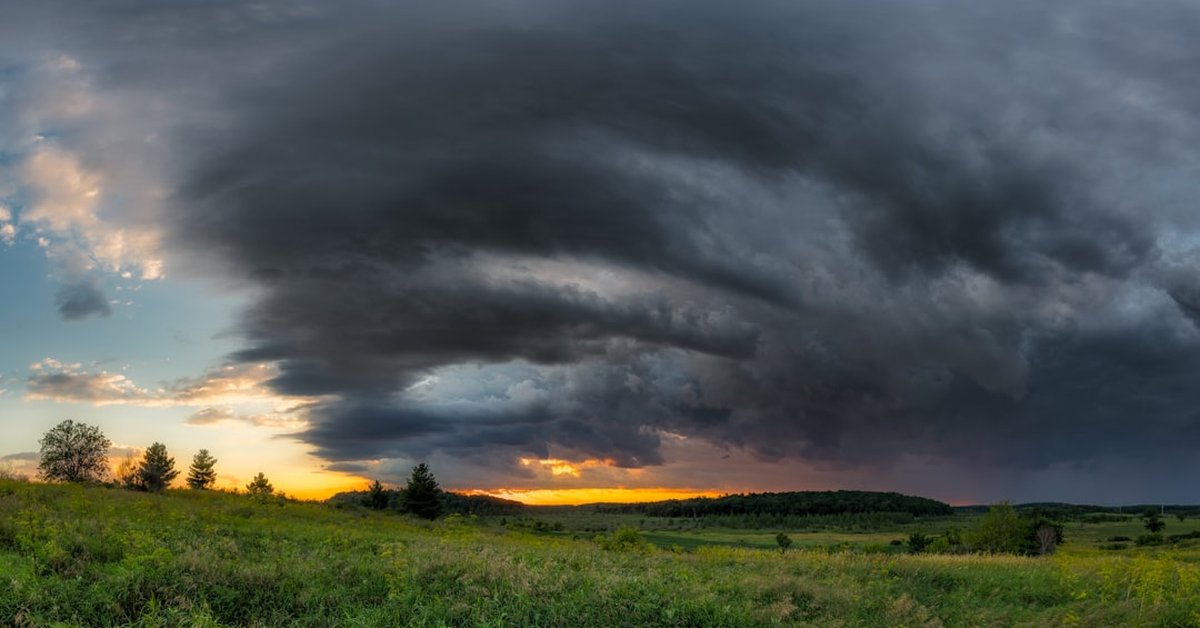
Across storm-prone regions—from Tornado Alley (roughly 35°N to 40°N, 95°W to 100°W) to the Dixie Alley of the Southeast—countless individuals spend hours tracking storms that may or may not hit. Reddit threads on r/tornado and r/weather fill with users posting: “Staying up all night again… anyone else?” or “Posted in multiple pages just looking for an answer as I find myself waiting up for storms.”
One user in Oklahoma wrote on a storm forum: “I have five radar apps open, three social media tabs, and the local news on mute. I know I should sleep, but I need to know if that supercell will turn.” Such posts garner hundreds of replies, often with conflicting advice and raw model data being shared.
This behavior isn’t limited to the US. In the UK, where severe thunderstorms and flash floods are becoming more common, similar communities have emerged. A 2022 study by the UK Met Office found that 34% of respondents reported checking weather updates at least once an hour during unsettled periods, with 12% admitting to losing sleep.
“We’re seeing a cultural shift where people feel they must be their own meteorologists because they don’t trust the standard warnings to be timely enough,” says Dr. Emily Carter, a psychologist at the University of Colorado who studies weather-related anxiety. “The uncertainty of severe weather triggers a hypervigilance response, and the constant checking provides a false sense of control.”
By the Numbers: Social Media Storm Tracking
The data behind this behavior is staggering. During a single severe weather outbreak on April 15, 2024, over 500,000 storm-related posts appeared on X (formerly Twitter) within a 12-hour window, according to data from Brandwatch. Facebook groups dedicated to storm chasing have membership counts in the millions. The subreddit r/tornado grew by 45% in 2023 alone.
Meanwhile, radar app downloads spike dramatically ahead of any major event. The popular app RadarScope saw a 200% increase in downloads during the first week of May 2023—the most active tornado week in three years. But the flood of information often leads to contradictions. Different models (HRRR, NAM, GFS) may show different outcomes for the same location, and users scramble to reconcile them.
This fragmentation is compounded by algorithmic amplification. Social media platforms prioritize dramatic content: photos of giant hail, videos of wedge tornadoes, shaky livestreams from chasers. The result is a firehose of anxiety-provoking material, even for storms that never materialize.
“People are seeing high-resolution model runs that are updated every hour, but they lack the training to interpret the ensemble spread,” explains Jason Williams, a severe weather meteorologist with the National Weather Service in Norman, Oklahoma. “They see a red blob over their county and assume the worst, even if the probability is only 5%.”
Williams points out that the NWS issues warnings with specific polygons and lead times, but the DIY forecasters are often chasing model “initializations” rather than official guidance. “We urge people to trust the experts who are monitoring the situation 24/7, not random posts from unknown accounts,” he adds.
The Psychology of Storm Anxiety
For many, waiting up for storms is not a hobby—it’s a compulsion. The anticipation of severe weather activates the same neural pathways as fear of an impending threat. Dr. Carter notes that the phenomenon shares traits with health anxiety, where individuals constantly check their symptoms.
“The weather is unpredictable by nature, and that unpredictability is hard for the human brain to tolerate,” she says. “When you’re waiting for a storm, you’re trying to reduce the uncertainty by gathering more information. But information without expertise often increases anxiety instead of alleviating it.”
The pattern is particularly acute among people who have been through a traumatic weather event. Surveys conducted after the 2011 Joplin tornado and the 2021 western Kentucky tornado outbreak found that a significant portion of survivors experienced hypervigilance for years afterward, including disrupted sleep during any storm threat.
One survivor from Mayfield, Kentucky, told researchers: “Every time I hear thunder, I’m back in that hallway. I have to know exactly what the storm is doing, even if it means staying up all night.”
This behavior can have real physical and mental health costs. Chronic sleep deprivation weakens the immune system, impairs decision-making, and exacerbates anxiety disorders. For those living in tornado-prone areas, it becomes a seasonal struggle—March through June becomes a period of chronic stress.
What Meteorologists Say: Getting Reliable Answers
So how can someone find the answer without losing sleep or falling into the rabbit hole of unverified data? Meteorologists recommend a few clear strategies.
First, limit your sources. Stick to official warnings from the National Weather Service, Environment Canada, or the UK Met Office. Avoid model spaghetti plots unless you understand the ensemble spread. Second, use the “cone of uncertainty” concept—even the best forecasts have a margin of error. A storm predicted for 2 AM might arrive at 1 AM or not at all.
“Turn off notifications from independent storm chasers who may be live-streaming a severe thunderstorm 200 miles away,” advises Williams. “Focus on your local office’s updates. They are the ones issuing the warnings for your area.”
Third, create a action plan beforehand so you don’t need to make decisions at 3 AM in a panic. If you know where to shelter, you can afford to set your phone to a critical alert only and try to sleep.
“We need to educate the public that ‘waiting up’ is not an effective safety strategy,” says Dr. Carter. “You can’t outrun a tornado by refreshing a radar app. Have a plan, trust the watch and warning system, and protect your sleep for the sake of your long-term health.”
Yet the pull of the late-night storm watch remains strong. Social media has created a culture where it’s normal to share the anxiety, and many find comfort in the virtual company of others who are also awake and watching.
The challenge for weather communicators going forward is to provide clear, consolidated answers that can be consumed quickly—before bedtime. Some local NWS offices are experimenting with evening briefing videos tailored to the “worried well.” Others are partnering with mental health experts to address the stress that severe weather triggers.
Looking Ahead
As climate change intensifies the frequency and severity of storms, more people will find themselves caught in the night vigil. The answer to “waiting up for storms” likely lies not in more data, but in better human connection with trusted sources—and a collective effort to reduce the psychological burden that severe weather places on the public.
The next time you see a post reading “Posted in multiple pages just looking for an answer,” the best answer may be: Put down the phone, check your emergency kit, trust the system, and try to sleep. The storm will come or it won’t—but your safety depends on calm, informed preparation, not a stream of exhausting uncertainty.