





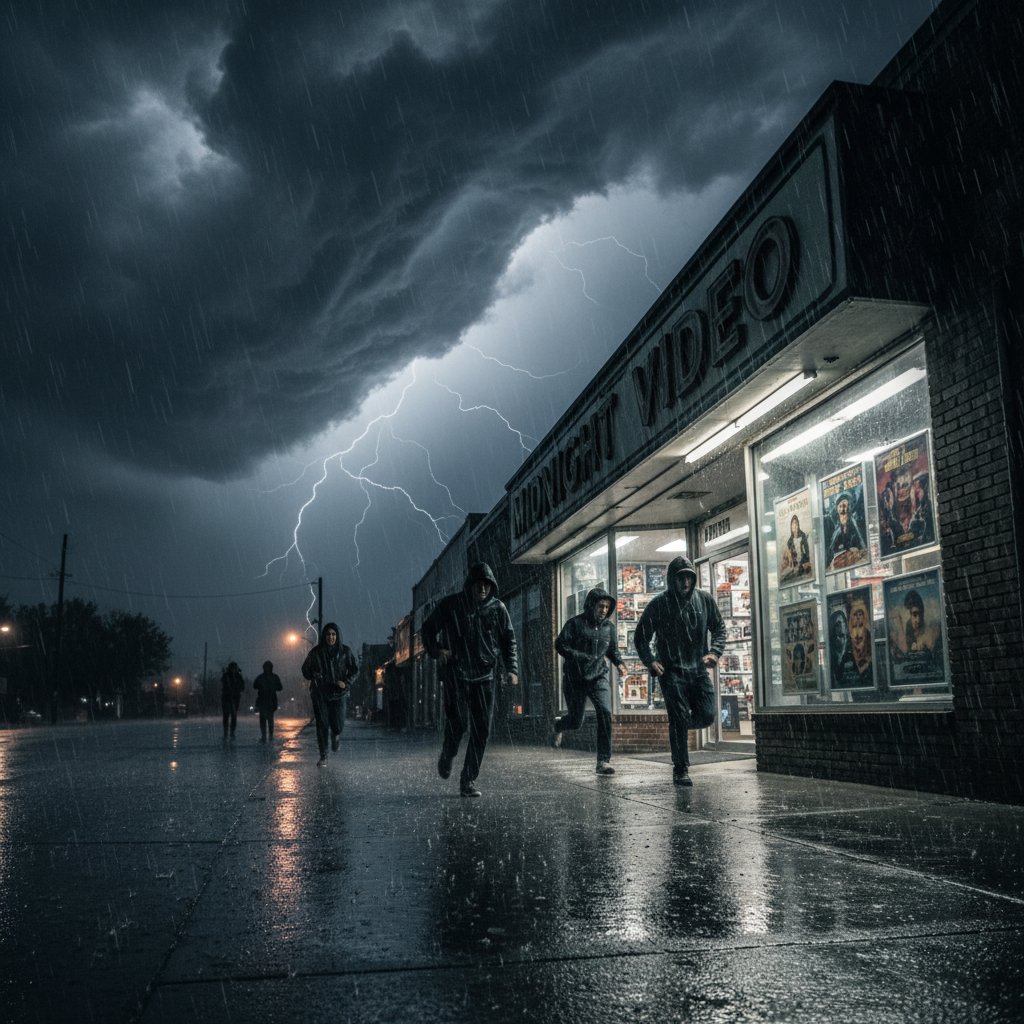
If you were scrolling social media around midnight on June 8, you probably saw it: a wall of cloud-to-ground lightning turning the horizon into a strobe light for nearly 90 seconds. The video, posted by Kansas storm chaser Jake Morrison, has already racked up 4.2 million views on X. But beyond the spectacle, this event carries a critical warning for anyone who sleeps through severe weather warnings.
The storm that produced the show was a derecho complex racing across south-central Kansas at 65 mph. At its peak, lightning flash rates reached 1,200 per minute, according to data from the Earth Networks Total Lightning Network. That’s three times the average rate for a severe thunderstorm.
The Viral Moment
Morrison captured the footage from a rural pull-off near 38.0°N, 97.6°W, about 30 miles north of Wichita. “I knew it was going to be a big night when the lightning started hitting every two seconds,” he told CyclonePost. “But even I wasn’t prepared for that constant flicker. It was like daylight at midnight.”
The video shows multiple ground strikes hitting within a 500-meter radius, including a transformer explosion that lit up the sky blue-white. Meteorologists call this a “lightning barrage” – a phenomenon typically associated with the most intense updrafts in a supercell. In this case, the derecho’s powerful inflow was feeding a very deep, moist atmosphere with precipitable water values of 2.1 inches, well above the 90th percentile for that region in June.
“What people don’t realize is that each of those strokes is a potential fire starter. With conditions as dry as they’ve been in central Kansas – drought index values at D2 moderate drought – that many strikes in a short window is a recipe for multiple simultaneous ignitions.”
— Dr. Emily Torres, Atmospheric Scientist, National Severe Storms Laboratory
Indeed, the Kansas Forest Service reported 14 new fire starts in the 12 hours following the storm, eight of which were attributed to lightning. Most were contained quickly, but one near Cheney Reservoir burned 340 acres before crews got it under control.
Data Behind the Display
Ground strike density for that cell reached 18 strikes per square kilometer per hour, compared to a typical severe storm average of 4 to 6. The National Weather Service in Wichita issued a Severe Thunderstorm Warning at 11:47 p.m. CDT, with a polygon covering 1,200 square miles. Watchboxes were already in effect, but many residents admitted later they were asleep.
This is the core problem. A 2023 study published in Weather and Forecasting found that only 12% of people who were asleep during a nocturnal warning took protective action within the first 15 minutes. Daytime response rates are around 60%. “Our brains are wired to ignore threats during sleep cycles,” says Mark Henderson, Warning Coordination Meteorologist at NWS Topeka. “The sound of thunder might not be enough to wake someone, especially if they live alone or have no working weather radio.”
Henderson recommends a simple fix: “Set your phone’s emergency alerts to critical only, and place it on a nightstand within arm’s reach. The alerts are designed to override Do Not Disturb for life-threatening events.”
Why Midnight Storms Are More Dangerous
Nocturnal thunderstorms carry unique risks beyond sleeplessness. First, visibility is essentially zero – drivers on highways cannot see flash flooding or debris on the road. That night, the Kansas Turnpike near mile marker 50 reported three separate hydroplaning incidents despite only 0.8 inches of rain in 20 minutes. Second, lightning at night is often the only visual cue, leading to complacency: “Oh, it’s just lightning” – but that lightning can indicate a storm producing 70 mph winds and quarter-size hail.
The derecho that spawned the lightning barrage also generated measured wind gusts of 84 mph at the Hutchinson Municipal Airport, and hail stones up to 1.75 inches in diameter in Reno County. “The lightning was the show, but the real danger was the wind and hail,” said Henderson. “And if you’re asleep, you don’t know that a tree is about to fall through your roof.”
Damage surveys conducted by the Kansas Division of Emergency Management tallied 112 structures with significant roof or window damage, and over 200 downed power lines. At one point, 34,000 customers lost power across 10 counties. Restoration took up to 72 hours for some rural co-ops.
What This Means for You
If you live in an area prone to nocturnal severe weather – the Central Plains, mid-South, or Ohio Valley – now is the time to harden your nighttime safety plan. Do not rely solely on outdoor sirens; they are designed for people who are outside, not for sleepers. Invest in a NOAA Weather Radio with a tone-alert feature, or enable Wireless Emergency Alerts on your smartphone with a distinct ringtone designated for warnings.
Also, consider keeping a flashlight, helmet, and shoes next to your bed. If a warning sounds in the middle of the night, you may have only seconds to seek shelter. The viral midnight video that mesmerized millions is a reminder that storms do not respect our sleep schedules. “We got lucky this time,” Dr. Torres said. “But with climate change increasing the frequency of nocturnal convective systems, we need to adapt our preparedness for the hours between midnight and dawn.”
Morrison’s footage will continue to circulate, but the real legacy should be a behavioral shift. Check your phone tonight before you go to bed – do you have alerts on? Is your weather radio activated? If the answer is no, tomorrow’s story might not be a viral video but a recovery effort.