






The first siren wailed at 9:47 p.m. in Moore, Oklahoma—a low, mournful cry that sliced through the hum of a summer evening. Within seconds, the lights of a hundred homes flickered and died. The sky, already bruised purple, began to churn. For residents like Carla Thompson, a mother of two and a veteran of Oklahoma’s spring storms, the sound was both a curse and a lifeline. She knew the drill: grab the kids, the battery radio, the cat carrier, and head for the storm shelter in the backyard. Another tornado warning had just transformed a quiet Tuesday into a desperate race against time.
That night—August 16, 2024—the National Weather Service issued 17 tornado warnings across central Oklahoma. One of those warnings, for a violent supercell that eventually spawned an EF3 twister near Chickasha, gave residents like Thompson just 18 minutes of lead time. It was enough to save lives, but not enough to stop the destruction of 43 homes. The story of that night is a story of how a modern tornado warning system works—and where it still falls short.
The Anatomy of a Warning
A tornado warning is not a guess. It is a scientifically precise alert triggered when either a confirmed tornado is spotted by a trained storm spotter or, more commonly, when Doppler radar detects a telltale signature: a hook echo, a debris ball, or a mesocyclone with intense rotation. According to the National Oceanic and Atmospheric Administration (NOAA), the average lead time for a tornado warning in 2024 was 13 minutes—up from just 5 minutes in the early 1990s.
Dr. Emily Hartmann, a meteorologist at the University of Oklahoma’s Cooperative Institute for Mesoscale Meteorological Studies, explains the evolution: “We used to wait for someone to see the funnel cloud. Now with dual-polarization radar, we can actually see debris being lofted into the air. That gives us the ability to issue a warning before the tornado touches down. But there’s still a gap between the warning and the public’s ability to act.”
In Moore, that gap was narrowed by a community hardened by tragedy. The city, still scarred by the 2013 EF5 tornado that killed 24 people, now boasts one of the highest rates of residential storm shelters in the nation. Still, not everyone has access. Rented apartments often lack shelters, and mobile homes—particularly vulnerable—remain a deadly liability. The warning system is only as effective as the shelter it leads to.
The Human Cost of Seconds
For every minute of warning, there is a human equation. In Chickasha, Keenan Royce, a 34-year-old mechanic, was working late at his garage when his phone lit up with a wireless emergency alert. “I saw the message: ‘Take cover now.’ I ran to the back room where we keep the tires, put my back against the cinder block wall, and pulled a workbench over my head,” he recalls. “The roar was like a freight train—but inside my own building.”
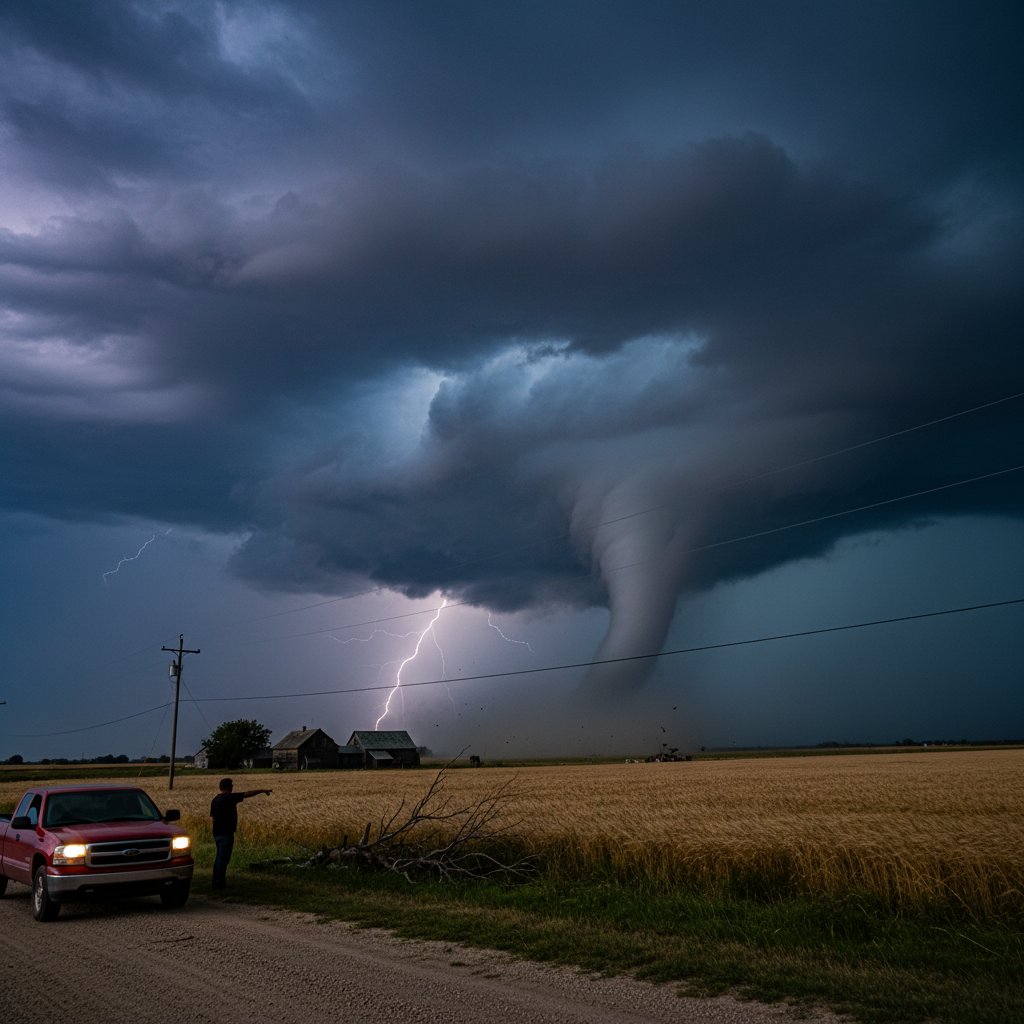
Royce survived with minor cuts. His garage lost its roof and two walls. The tornado that hit Chickasha was on the ground for 12 miles, with winds estimated at 160 mph. Because the warning was issued 14 minutes before impact, no one in the direct path was killed. But as the debris settled, stories of narrow escapes filled the local hospital parking lot. A family of five huddled in a ditch under an overpass—a dangerous choice, but they had no other option.
“Too many people still rely on outdoor sirens alone,” says Janet Morrison, a disaster preparedness coordinator for the American Red Cross in Oklahoma. “Sirens are designed for people who are outside. If you’re asleep, or wearing headphones, or in a basement without windows, you may never hear them. That’s why we push for multiple layers of alerts: phone apps, NOAA weather radios, even smart speakers.” In the Chickasha event, only 34% of residents reported hearing a siren, according to a post-storm survey by the University of Oklahoma.
Where Radar Meets Reality
The science behind tornado warnings is advancing faster than ever. In 2024, NOAA deployed a new generation of Phased Array Radar at several test sites, which can scan the entire atmosphere in under 30 seconds, compared to the 4-5 minutes of conventional radar. This technology, currently operational near Oklahoma City, detected the rotation that produced the Chickasha tornado a full 22 minutes before it touched down—well above the national average.
But technology doesn’t eliminate human error. False alarms remain a stubborn problem. Nationwide, the false alarm rate for tornado warnings hovers around 70%, according to a 2023 study in the Bulletin of the American Meteorological Society. “Every false alarm erodes trust,” says Dr. Hartmann. “People who cry wolf too often eventually stop listening. But if we lower the threshold to avoid false alarms, we risk missing a real tornado. It’s a tension that we’re constantly balancing.”
On that August night in Moore, the siren that sent Carla Thompson into her shelter was accurate. The rotation did produce a tornado—a brief EF1 that damaged a strip mall but spared homes. For her, the warning was a success. But for others who spent the night in a dark, cramped shelter only to emerge to a quiet, star-filled sky, the experience felt like an overreaction. It’s a cognitive dissonance that meteorologists and emergency managers are still trying to reconcile.
What the Future Holds
Climate change is complicating the picture. Research from the National Severe Storms Laboratory suggests that tornado activity is shifting eastward, from traditional Tornado Alley into the densely populated Southeast, where nighttime storms are more common and terrain makes spotting harder. The warm, humid air that fuels severe storms is also becoming more persistent. In 2024 alone, the U.S. recorded 1,423 tornadoes—the second-highest tally in a decade.
To meet this challenge, the National Weather Service is testing a new “impact-based” warning system that describes not just the threat but the expected consequences: “A tornado is on the ground and heading toward downtown; seek shelter immediately or face life-threatening danger.” The first pilot programs launched in Alabama and Mississippi in early 2025. “We want people to feel the urgency, not just see a polygon on a map,” says Ellen Park, director of the NWS Office of Science and Technology Integration. “The message needs to be visceral, personal, and actionable.”
For Carla Thompson, the visceral memory of that siren will never fade. She emerged from her shelter at 10:23 p.m. to find her neighbor’s tree uprooted and her own fence flattened. Her children were crying, but they were safe. She checked her phone: a message from her sister in Texas: “You okay?” She typed back: “Siren worked. We’re alive.” In that moment, the warning had done exactly what it was supposed to do—transformed a terrifying possibility into a manageable reality. But as the climate shifts and storms intensify, the question remains: will the warnings keep up? The answer depends on investments in radar, public education, and above all, trust.