






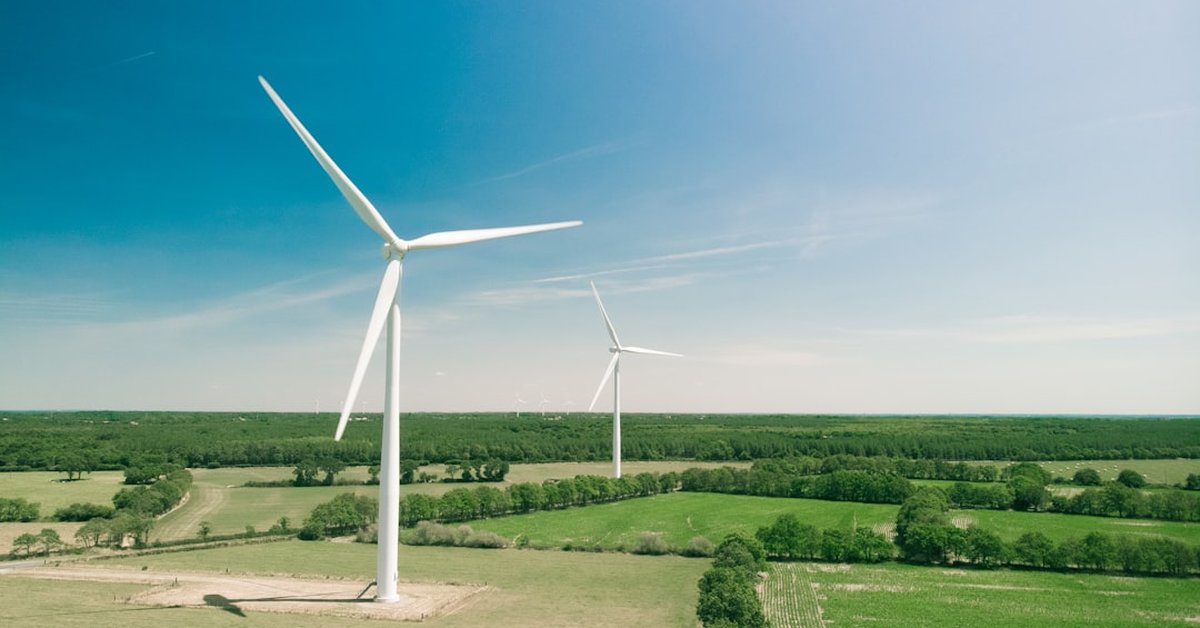
When you picture a wind farm, you probably imagine rows of white turbines spinning gracefully on a hillside. What you probably don’t picture is them being dismantled and replaced – especially not the UK’s largest onshore wind farm, Whitelee, which has been a landmark near Glasgow for nearly two decades. But that’s exactly what’s happening. ScottishPower Renewables has announced plans to repower Whitelee, replacing its 215 turbines with fewer than 100 much larger, more efficient ones. And this isn’t just a maintenance upgrade – it’s a signal that the UK’s aging wind fleet is entering a new phase, one that could reshape how we think about renewable energy infrastructure.
The assumption that once a wind farm is built, it’s there forever is wrong. Turbines have a lifespan of about 20-25 years, and Whitelee, commissioned in 2009, is approaching that milestone. The repowering project, still in planning stages, would see the site’s capacity jump from 539 MW to potentially over 1 GW – a near doubling of output – while using fewer machines. That’s a dramatic efficiency gain, and it’s part of a broader trend across Europe and North America.
The End of an Era – and the Beginning of Another
Whitelee Windfarm sits on a stretch of moorland near Eaglesham, about 30 minutes south of Glasgow. When it opened, it was a marvel: 215 turbines, each around 80 meters tall, generating enough electricity for roughly 300,000 homes. But technology has moved fast. Modern turbines are twice as tall, with blades that sweep a larger area, capturing more wind even at lower speeds. The new ones planned for Whitelee could be up to 200 meters tall – that’s taller than the London Eye.
Repowering isn’t just about swapping out old parts. It’s a full rebuild: foundations, roads, grid connections, and turbines. The older turbines will be recycled, with blades often ground into cement or used in composite materials. The benefit? More power from the same land, with less visual impact – because fewer turbines means less clutter on the horizon. And for locals who’ve lived with the view for 20 years, that’s a mixed blessing. Some will miss the familiar sight; others will welcome the change.
Of course, there’s a catch. The new turbines are enormous, and their construction will require heavy machinery, temporary road closures, and months of disruption. But the long-term payoff is clear: a wind farm that could generate enough electricity for 600,000 homes – nearly double its original capacity – without needing to expand the site’s footprint.
Why Fewer Turbines Makes More Sense
Here’s the counterintuitive part: installing fewer turbines actually makes the economics of wind power better. Larger turbines have a lower cost per megawatt-hour because they produce more energy per unit of land, labour, and maintenance. According to the UK’s Renewable Energy Association, repowering can reduce the cost of onshore wind by up to 30% compared to building a new site from scratch. That’s a huge deal, especially in a country where planning permission for new wind farms is notoriously difficult to get.
And it’s not just about cost. The UK’s grid is under increasing strain, with demand expected to rise as heat pumps and electric vehicles become mainstream. Repowering existing sites is a faster, cheaper way to add capacity than building new ones. It’s also less controversial: communities that already host a wind farm are often more accepting of a modernised version than a brand-new one in a different location.
But there’s a broader lesson here. The energy transition isn’t just about building new stuff – it’s about upgrading what we already have. Think of it like replacing a clunky old desktop computer with a sleek laptop: same desk, more power. The same principle applies to wind farms, solar arrays, and even hydroelectric dams. And as the debate over North Sea oil and gas heats up, the importance of getting the most out of existing renewable assets becomes even more urgent.
What This Means for the Grid – and Your Energy Bills
For the average consumer in the UK, the repowering of Whitelee won’t be front-page news. But it will have a real impact. More cheap wind power means lower wholesale electricity prices, which in turn can reduce household bills – though that depends on how the market is structured. The UK’s electricity market is complex, with prices often set by the marginal cost of gas-fired power plants. But every megawatt-hour of cheap wind that displaces gas puts downward pressure on prices.
There’s also a reliability angle. Wind power is variable, but larger turbines can operate in a wider range of wind speeds, smoothing out some of the intermittency. And with better forecasting and battery storage (which is also being built at scale), the grid can handle more wind without breaking a sweat. This is especially important during extreme weather events – like the kind of storms that have been battering the UK in recent years. In fact, the repowering of Whitelee could be a model for how to make infrastructure more resilient. Just as flood defences need upgrading to cope with heavier rainfall, our energy infrastructure also needs to adapt to a changing climate.
And let’s not forget the jobs. Repowering a wind farm of this scale requires hundreds of skilled workers – engineers, crane operators, electricians, and project managers – for several years. That’s a shot in the arm for local economies, particularly in rural areas like East Renfrewshire. The UK’s wind industry already employs tens of thousands of people, and repowering will only add to that number.
The Bigger Picture: Repowering Across the UK
Whitelee isn’t alone. Across the UK, dozens of onshore wind farms built in the early 2000s are approaching the end of their life. According to industry group RenewableUK, over 1,000 turbines could be repowered in the next decade, potentially adding over 5 GW of capacity without building on new land. That’s equivalent to a couple of nuclear power stations, but without the decades-long wait or the controversy over radioactive waste.
Of course, there are hurdles. Planning rules for onshore wind in England were relaxed in 2022, but they’re still stricter than in Scotland. Some local councils are wary of the larger turbines, fearing they’ll be more visible or noisier (though modern designs are actually quieter). And there’s the question of who pays. Repowering is expensive – Whitelee’s overhaul could cost hundreds of millions of pounds – but the returns are attractive enough that investors are lining up.
Look, the bottom line is this: the UK’s wind fleet is getting a mid-life upgrade, and Whitelee is the poster child. It’s a story of efficiency, adaptation, and the quiet revolution happening in the energy sector. While politicians argue about net zero deadlines and carbon taxes, engineers are out there swapping out old turbines for new ones, quietly doubling the power output from the same patch of moorland. That’s not just progress – it’s the kind of practical, no-drama progress that doesn’t make headlines, but makes the whole system work.
What happens next? If Whitelee’s repowering goes smoothly, it could set a template for dozens of other sites. The UK’s onshore wind capacity could double without a single new site being approved. That’s a huge win for the climate, for energy security, and for bills. But it’ll require planning authorities to say yes, and communities to be on board. Given the alternatives – more gas imports, more nuclear delays – it’s hard to see a better option.
Frequently Asked Questions
Will the new turbines at Whitelee be taller?
Yes, significantly. The current turbines are about 80 meters tall. The new ones could reach up to 200 meters, making them more than twice as tall. This allows them to capture stronger, more consistent winds at higher altitudes, increasing energy output per turbine.
Why don’t they just add more turbines instead of replacing them?
Adding more turbines would require more land and new planning permissions, which are hard to get. Repowering with fewer, larger turbines increases capacity without expanding the site’s footprint. It’s also more cost-effective because larger turbines produce cheaper electricity per unit.
How long will the repowering project take?
The project is still in the planning stage, but if approved, construction could take 2-3 years. ScottishPower Renewables expects to begin around 2026-2027. The existing turbines will continue operating until the new ones are ready to take over, ensuring no gap in electricity generation.