



“What we’re seeing is not just a geological event, but a test of systems we thought were airtight,” says Dr. Kiyoshi Kurokawa, former chairman of Japan’s Nuclear Regulation Authority, reflecting on the magnitude 7.6 earthquake that struck the Noto Peninsula on January 1, 2024. The quake, which triggered tsunami warnings and left 241 people dead, has reignited a debate many hoped was settled: can Japan’s nuclear plants truly withstand the earth’s fury? For residents along the Sea of Japan coast, the answer isn’t just academic—it’s personal. This isn’t a rehash of the 2011 disaster, but a quieter, more insidious crisis of confidence, one that pits the promise of clean energy against the primal fear of the ground shaking beneath your feet.
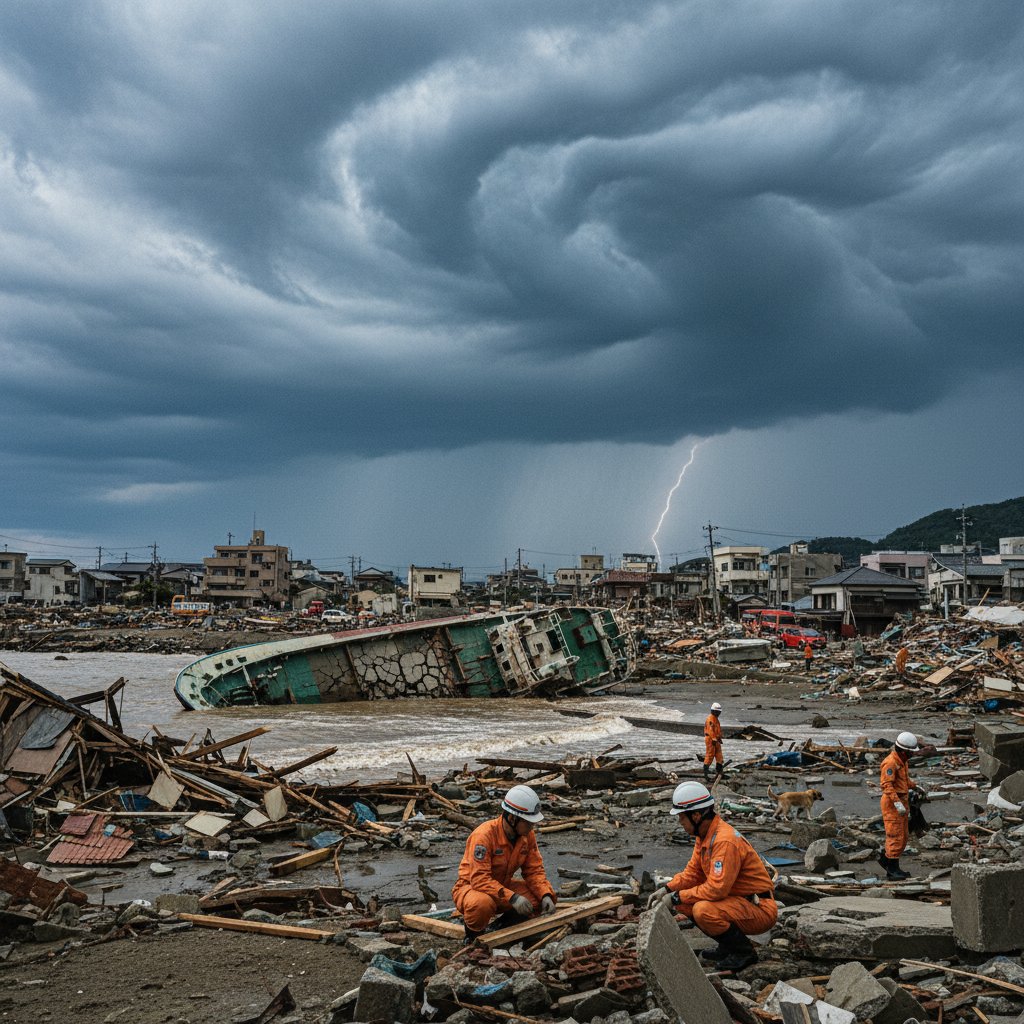
The immediate aftermath was chaos. Homes collapsed in Wajima City, fires swept through Suzu, and roads buckled like ribbon. But as the dust settled—literally—the focus shifted to what lies beneath: seven nuclear reactors within 100 kilometers of the epicenter, including the Shika Nuclear Power Plant, which sits just 50 kilometers away. According to the Japan Meteorological Agency, aftershocks exceeding magnitude 5 have continued for weeks, and the country’s seismic experts warn of a 10-20% chance of another major quake in the region within the next month. For the 30,000 evacuees still in shelters, that statistic is a slow-burning dread.
The Nuclear Shadow That Won’t Fade
After Fukushima, Japan overhauled its nuclear safety standards. New reactors require tsunami walls, backup power systems, and seismic upgrades that cost billions. Shika’s operator, Hokuriku Electric Power Company, reported no abnormalities in the January 1 quake. But a deeper look reveals cracks—literally. A January 5 inspection found damage to the plant’s external power cables, and a separate report from the Japan Atomic Energy Agency noted that the quake’s peak ground acceleration exceeded the plant’s original design basis in some areas. “The safety margin isn’t as wide as advertised,” warns a former IAEA inspector who spoke on condition of anonymity. “This is a wake-up call that restarting a nuclear power plant is harder than anyone expected.”
The timing is brutal. Japan has been pushing to restart its idle nuclear fleet to reduce reliance on imported fossil fuels—a goal driven by both energy security and climate targets. The government had approved the restart of the Shika plant’s reactor No. 2 by 2025. Now, that timeline is in doubt. The quake forced the suspension of restart preparations, and local opposition is surging. In Ishikawa Prefecture, where the quake struck hardest, a January 15 survey by the local newspaper Hokkoku Shimbun found that 68% of residents now oppose nuclear restart plans, up from 41% before the quake. “We can’t live with this uncertainty,” says Sato Yumi, a mother of two from Anamizu, whose home was destroyed. “Every tremor feels like the end.”
What This Means for You
For readers outside Japan—especially in the US, UK, and Canada—this isn’t a distant tragedy. It’s a case study in how complex infrastructure fails under compounding stress. Consider this: the 2024 Noto quake was a “crustal earthquake,” not a subduction zone event like 2011. But it still produced tsunami waves of 1.2 meters in some ports. “The lesson is that even ‘moderate’ earthquakes can cripple lifelines,” says Dr. Emily So, a disaster risk engineer at the University of Cambridge. “Power outages, water loss, and road blockages cascade in ways that models don’t fully capture.” For anyone living near a fault line—from California to British Columbia to the UK’s small seismic zones—the implications are direct. The same vulnerabilities in Japan’s nuclear plants exist elsewhere, including in aging reactors in the US that were designed to older standards.
And there’s a human-cost angle that gets lost in the technical debates. The quake displaced 30,000 people, but as of early February, 8,000 remain in temporary shelters. Winter temperatures in Noto have dipped below freezing, and at least a dozen hypothermia deaths have been reported. “The government’s response has been fast, but the geography is brutal,” notes a Red Cross coordinator in Kanazawa. “The Noto Peninsula is a narrow spit of land—supply routes are easily cut.” This mirrors the challenges seen in other disasters, like the Bordeaux wildfires, where evacuees were caught between dread and hope, waiting for aid that seemed to crawl.
Aftershocks and the Second-Order Crisis
The economic toll is staggering. The quake caused an estimated $15 billion in damage, according to a preliminary analysis by the Asian Development Bank. But the hidden costs are worse. Insurance claims are piling up, but many homeowners in rural Ishikawa lacked coverage for earthquake damage—a common gap in policies. “This will widen the inequality gap,” says Ryoji Sakai, a disaster economist at the University of Tokyo. “Rich families can rebuild; poor ones relocate to cities, losing their community.” That’s a pattern seen after the 1995 Kobe earthquake, which hollowed out rural areas for a generation.
Meanwhile, the psychological toll is mounting. A study by the National Institute of Mental Health found that 34% of survivors in the quake zone show symptoms of PTSD, a rate comparable to Fukushima evacuees a decade ago. Children are particularly affected. In Nanao, a local school principal told me that attendance has dropped by 20% since January. “They’re afraid to leave their mothers,” she said. “Even the ground feels like it’s lying.”
The Road Ahead
Japan’s government has pledged $3.2 billion in recovery funds, but rebuilding will take years. The Nuclear Regulation Authority is conducting a special review of all reactors within 200 kilometers of the epicenter, a process that could delay restarts nationwide. For the energy industry, this is a pivotal moment. If Japan backtracks on nuclear, it will have to ramp up LNG imports from Qatar and Australia—costing billions and increasing carbon emissions. But if it pushes forward, it risks a crisis of legitimacy. “Trust is the most fragile thing in a disaster,” says Kurokawa. “Once broken, it can’t be welded back.”
For the rest of us, the takeaway is sobering: our most advanced systems are only as strong as their weakest link. And sometimes, that link is the ground beneath us.
Frequently Asked Questions
Was the January 1, 2024 Japan earthquake related to the 2011 Tohoku earthquake?
No, they were different types of earthquakes. The 2011 Tohoku earthquake was a megathrust subduction zone event (magnitude 9.0) off the Pacific coast. The January 1, 2024 Noto Peninsula quake was a magnitude 7.6 crustal earthquake caused by a fault line within the Earth’s crust, not at a plate boundary. However, both triggered tsunamis and exposed vulnerabilities in Japan’s infrastructure.
Are Japan’s nuclear power plants safe after this earthquake?
According to Japan’s Nuclear Regulation Authority, all reactors in the affected region shut down safely, and no radiation leaks were detected. However, inspections found that the Shika plant experienced ground shaking beyond its original design limits, and external power cables were damaged. A special review is underway, but the incident has raised questions about whether safety margins are sufficient for future quakes.
How can people in earthquake-prone areas prepare for similar risks?
Experts recommend securing heavy furniture, having a go-bag with water, food, and medications, and knowing evacuation routes. For those near nuclear plants, staying informed about local emergency plans is critical. The US Federal Emergency Management Agency (FEMA) advises having a family communication plan and considering earthquake insurance, as standard policies often exclude seismic damage.