




Nobody is talking about the real accelerant behind Europe’s exploding wildfire seasons. It’s not just the heat or the drought — though those are bad enough. The continent’s countryside is emptying out. Young people leave for cities. Small farms get abandoned. Fields that were once grazed or plowed turn into uninterrupted scrubland. And when a fire starts there, nothing stops it. That’s the story we’re missing.
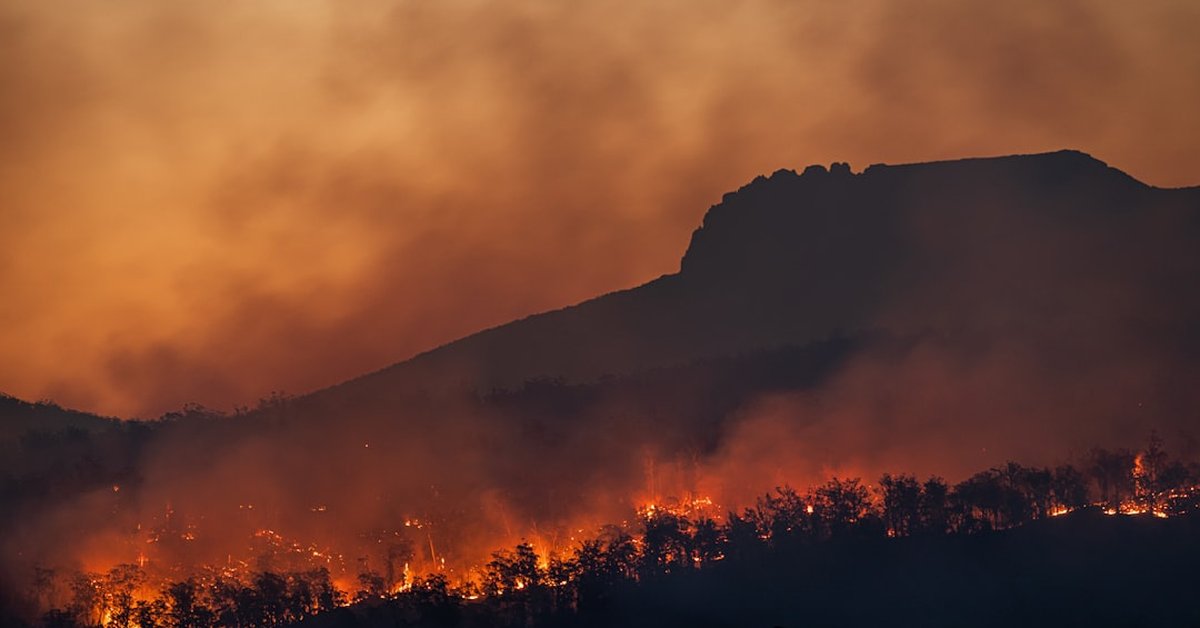
I’ve been watching this pattern for years, from the Mediterranean to the Balkans. The numbers are stark. According to the European Commission’s Joint Research Centre, the area burned in the EU has exceeded 500,000 hectares in several recent years — 2022 alone saw over 800,000 hectares go up in smoke. That’s larger than the country of Luxembourg. And the trend is climbing. But the real driver isn’t just a warming planet. It’s a sociological shift that’s leaving the land unmanaged.
The Emptying Countryside: A Fire Risk We Ignored
Europe’s rural population has been in steady decline for decades. The EU’s rural areas lost over 5 million people between 2000 and 2020, according to Eurostat. Farms are consolidating or closing. In Spain, nearly 40% of agricultural land is considered at high risk of abandonment. In Portugal, the number of farms dropped by 20% between 2009 and 2016. The result? Land that was once a mosaic of crops, pastures, and forests becomes a uniform carpet of dry vegetation.
This matters because the traditional agricultural landscape acted as a natural firebreak. Small fields, stone walls, grazing animals — they all broke up the fuel continuity. Remove that, and you get what we saw in 2017 in Portugal: 500 people dead in a single fire season, much of it in areas where terraced hillsides had been abandoned for decades. This is not a climate problem that can be solved by emissions cuts alone. It’s a land management crisis.
And here’s the irony: we know how to fix it. But we’re not doing it. The European Commission’s 2021 forest fire report explicitly states that “we must learn to coexist with them” — referring to wildfires. That’s a polite way of saying: we can’t prevent all fires, so we need to manage the landscape to reduce their intensity. That means bringing back grazing, clearing undergrowth, and — most importantly — keeping people on the land.
Data: How Abandoned Farmland Fuels Fire Spread
Let me give you some specific numbers. In a 2023 study published in the journal Science of the Total Environment, researchers mapped fire risk across the EU and found that regions with the highest rates of agricultural abandonment also had the highest fire severity. The correlation was stronger than the correlation with temperature. In Greece, the region of Evia — which lost 30% of its agricultural land between 1990 and 2020 — saw its largest fire on record in 2021, burning over 50,000 hectares.
Meanwhile, areas where traditional farming persists — like the Swiss Alps or the Austrian Tyrol — have far fewer large fires. They still have hot summers. But the fuel is patchy. A fire can’t run for kilometers because it hits a hayfield, a cow pasture, a managed forest. It’s not rocket science. It’s just that we’ve allowed the rocket to launch without a control system.
Compare this to the Wisconsin tornado that destroyed homes despite warnings — the lesson there was that you can’t rely on luck. You need preparation. Same with fire. You can’t rely on a lucky rainstorm. You need to manage the fuel.
What This Means for Europe’s Future
So what’s the takeaway? The EU’s Common Agricultural Policy (CAP) spends about €58 billion a year, much of it on subsidies to farmers. But those subsidies are often tied to production, not to fire prevention. We need to shift that money toward land management that reduces fire risk — paying farmers to graze marginal land, to clear brush, to maintain firebreaks. Some countries are trying: Portugal’s “Programa de Transformação da Paisagem” aims to reconfigure 100,000 hectares into a fire-resilient patchwork. But it’s small compared to the scale of the problem.
And then there’s the nuclear question. When a fire threatens an area, it doesn’t just endanger homes. In 2022, a wildfire in Spain came within 5 kilometers of the Garoña nuclear power plant. The plant was safely shut down, but the incident raised alarms. Restarting a nuclear plant after a fire threat is complicated — and that’s a second-order risk we rarely consider. The point is: wildfires now threaten infrastructure we assumed was safe.
My read is that the next decade will see a painful reckoning. Southern Europe — Portugal, Spain, Greece, Italy — will face fires that challenge their emergency services. Northern Europe, once thought safe, will see more fires in boreal forests as the climate warms. Sweden had record fires in 2018. Germany had large fires in 2022. Nobody is immune.
Coexistence Is Not a Strategy — It’s a Necessity
The report that said “we must learn to coexist with them” — that came from the European Environment Agency’s 2023 briefing on wildfire risk. It’s a sobering document. It recommends prescribed burns, grazing, and creating fire-adapted communities. But implementation is patchy. Greece has a new fire service, but it’s still reactive. Portugal has made progress, but the land abandonment continues.
I’ve chased storms across the Great Plains. I’ve seen how a change in land use — plowing up prairie for corn — can amplify a tornado’s path. But in Europe, the change is the opposite: leaving the land alone. That’s making fires worse. And the irony is that the people who could manage the land — farmers and shepherds — are disappearing. We’re paying them to leave through the CAP, then spending billions on firefighting. It’s a vicious cycle.
What’s the solution? It’s not simple. It requires reversing rural depopulation, which is a generational challenge. But we can start by paying farmers for fire prevention, not just food production. We can support agroforestry and silvopasture — systems that integrate trees with grazing. And we can acknowledge that in a warming world, the only way to prevent megafires is to manage the land. That’s not a policy choice. It’s a survival strategy.
Looking ahead, I expect to see more European countries adopting “fire-smart” land use policies. France’s forest fire plan for the southern regions includes mandatory clearing of vegetation around homes. Spain is experimenting with goat herds to clear undergrowth. But these are pilot projects. The scale of the problem is continental. The next big fire season — which could come as early as summer 2025 — will test whether Europe has learned its lesson. I’m not optimistic.