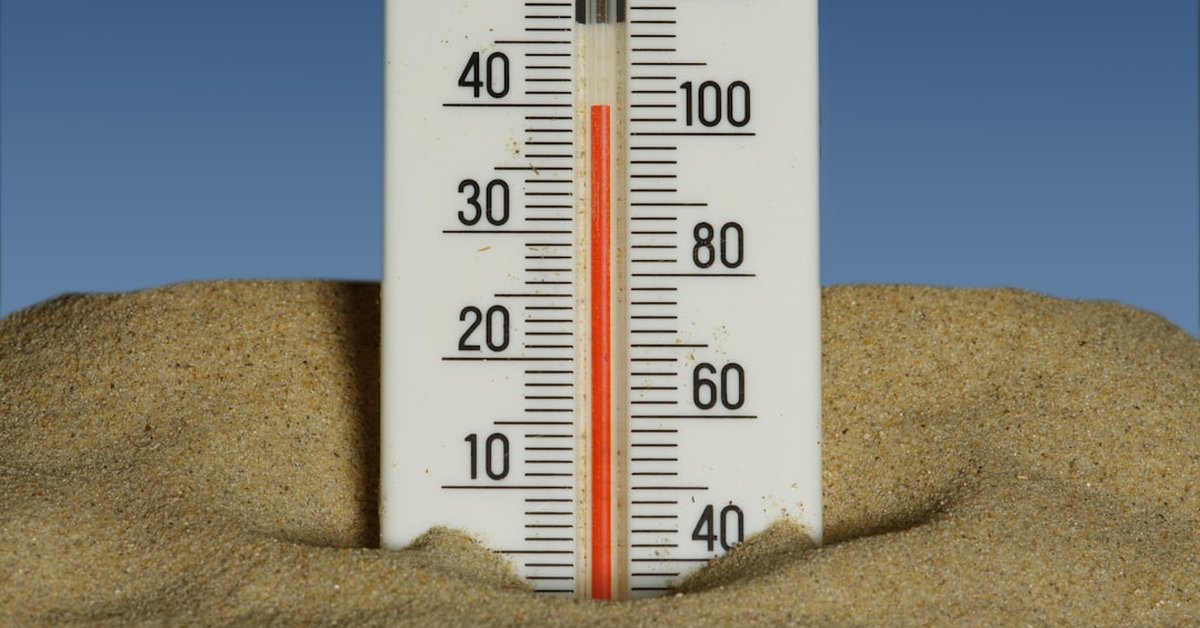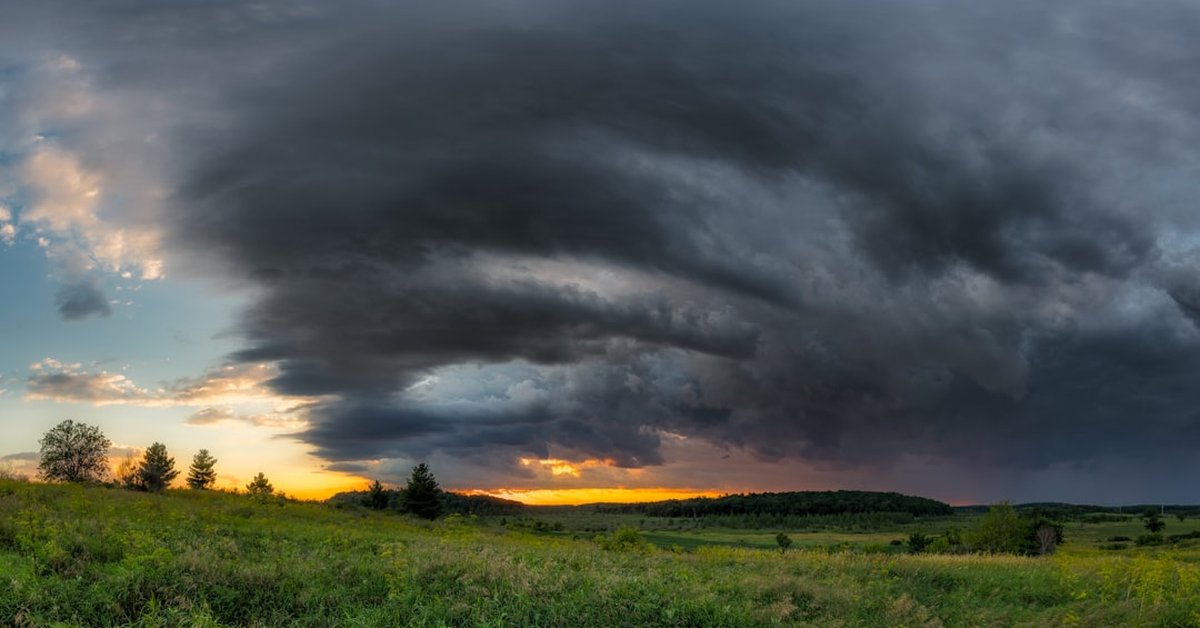


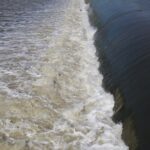



On July 4, 2024, residents of northern Illinois woke to a scene that felt apocalyptic. Cars submerged in parking lots. Highways turned into rivers. The National Weather Service reported that some areas near Chicago received over 10 inches of rain in just 48 hours—a deluge that shattered records dating back to the 1870s. But this wasn’t an isolated freak event. Three weeks earlier, a super typhoon packing 290 km/h winds slammed the tiny island of Rota in the western Pacific, flattening homes and tearing up centuries-old trees. Two weeks before that, temperatures in Death Valley hit 130°F (54.4°C) for the fifth time in recorded history—and the first time since 2021.
We’re living through a period of weather that feels like nothing we’ve ever seen. And the question is no longer academic: when was the last time Earth experienced conditions like these? The answer, according to paleoclimatologists, might surprise you. It’s not the 1930s Dust Bowl. It’s not even the Medieval Warm Period. We have to go back at least 125,000 years—to the last interglacial period, when sea levels were 20 to 30 feet higher and hippos roamed the Thames.
But here’s the thing: that wasn’t our world. That was a world without 8 billion people, without coastal megacities, without the global food system we now depend on. So when we ask when Earth last saw conditions like this, we’re really asking: how long has it been since the planet was this unstable?
The Oceans Are Running a Fever
Start with the oceans. They cover 70% of the planet and they’re absolutely cooking. In March 2024, the average global sea surface temperature hit 21.1°C (70°F)—a record that smashed the previous mark by a staggering 0.1°C. That may not sound like much, but in the ocean world, that’s a thermonuclear bomb. The North Atlantic specifically has been off the charts for over a year straight. Hurricanes are tapping into this fuel. That’s why we’re seeing storms like Super Typhoon Bavi—a Category 5 equivalent that spun up in waters that were 2°C warmer than normal.
Dr. Emily Osborne, a climate scientist at the National Oceanic and Atmospheric Administration, puts it bluntly: “The last time global ocean temperatures were this high, sea levels were 6 to 9 meters higher than today. That was during the last interglacial, roughly 125,000 years ago. But the rate of warming now is much faster—we’re compressing millennia of change into decades.” A NASA analysis of sea surface temperature data confirms that the current warmth is unprecedented in both magnitude and speed.
And it’s not just the surface. Deep ocean heat content—the total amount of heat stored in the ocean—has been rising relentlessly since the 1950s. That heat doesn’t just disappear. It melts ice, expands seawater, and intensifies the water cycle. When you see headlines about record rainfall, like the Northern Illinois floods that dumped 10+ inches in a weekend, you’re seeing the ocean’s fever manifest as atmospheric chaos.
A World of Fire and Water
We’ve all heard the phrase “new normal.” But this isn’t just a shift in averages. It’s a shift in extremes. Consider the fire season of 2023 in Canada: 18 million hectares burned—an area larger than Florida. That’s double the previous record. The smoke turned New York City’s sky orange and grounded flights in Washington, D.C. Or consider the 2023–24 winter in the Sierra Nevada, where snowpack hit 237% of average, followed by a rapid melt that flooded the Central Valley. Then there’s the ongoing drought in the Amazon—the worst in at least 45 years—which is drying up rivers and killing dolphins.
These events aren’t random. They’re linked by a common driver: a warmer atmosphere holds 7% more water vapor for every degree Celsius of warming. That means more moisture for storms, but also more evaporation from soils, leading to flash droughts. Dr. Kevin Trenberth, a distinguished climate scientist formerly at the National Center for Atmospheric Research, explains: “We’re seeing a more energetic hydrological cycle. The same weather patterns that used to bring moderate rain now bring extreme floods; the same patterns that brought dry spells now bring severe droughts. It’s not just that the thermostat is turned up—the whole system is more volatile.”
And that volatility is exactly what paleoclimate records show for periods of rapid warming in Earth’s history. The Paleocene-Eocene Thermal Maximum (PETM), 56 million years ago, saw a 5–8°C spike in global temperatures over a few thousand years. The oceans acidified. Coral reefs collapsed. Mammals shrunk in size. But even that event—cataclysmic as it was—took millennia to unfold. We’re outpacing it by a factor of ten.
What About the Last 2,000 Years?
If you look at climate reconstructions from tree rings, ice cores, and historical records, you’ll see that the last 2,000 years were remarkably stable. The Roman Warm Period, the Medieval Warm Period, the Little Ice Age—these were regional shifts of maybe 0.5°C to 1°C. The global average didn’t move much. Then came the Industrial Revolution. Since 1850, global temperatures have risen by about 1.3°C. That’s roughly 10 times faster than the warming that ended the Ice Age. And it’s still accelerating.
So when was the last time Earth saw conditions like this? Never. Not in human history. Not in the history of agriculture. Not in the history of our species, which emerged about 300,000 years ago. The last time carbon dioxide levels were as high as they are today (425 ppm and climbing) was 3 million years ago, during the Pliocene, when the Arctic was ice-free in summer and sea levels were 50 feet higher.
Look, I’m not saying we’re about to return to the Pliocene overnight. But we are building toward it. The IPCC’s Sixth Assessment Report makes clear that every increment of warming brings more extreme events. The question we should be asking isn’t just “when was the last time”—it’s “how fast can we stop this trajectory?”
Because the answer to the first question is: we have no recent analog. We are in uncharted territory. And the decisions we make in the next decade will determine whether future generations ever experience a stable climate again.
Frequently Asked Questions
Was the planet this warm during the time of the dinosaurs?
Yes, dinosaurs lived during the Mesozoic Era, when CO₂ levels were 2–5 times higher than today and global temperatures were much warmer. But humans didn’t exist then. The current rate of warming is far faster than any natural warming event in the last 66 million years, making it more dangerous for modern civilization.
Are we in a “new little ice age” or global warming?
Global warming is unequivocally happening. The term “little ice age” is sometimes used to describe a temporary cooling period in the 17th–19th centuries, but solar activity and volcanic eruptions caused that. Today, greenhouse gases are overwhelming any natural cooling factors. The planet is warming, not cooling.
How do scientists know what Earth’s climate was like 125,000 years ago?
They use indirect evidence called “proxy data”: ice cores from Antarctica and Greenland that trap ancient air bubbles, ocean sediment cores that contain fossilized shells with oxygen isotopes, and stalagmites from caves. These records allow scientists to reconstruct temperature, CO₂ levels, and sea level with remarkable precision.