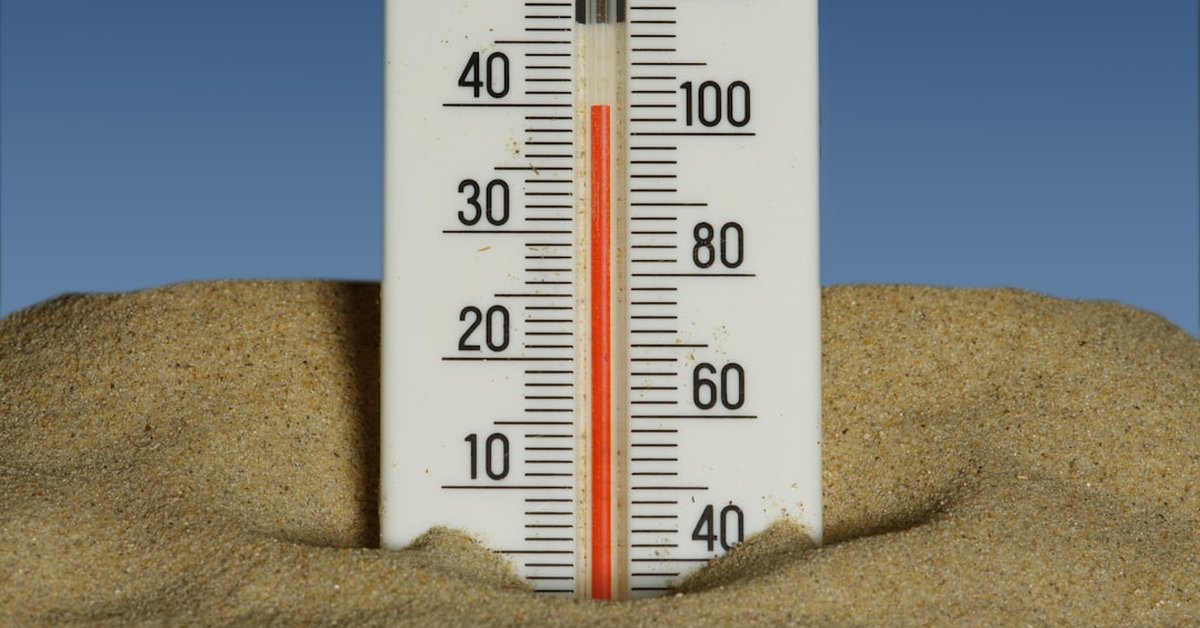







The heat arrives like a door slamming shut. You step outside and the air feels solid, heavy. In London last July, the thermometer hit 40.3°C — a number that seemed impossible just a decade ago. Across Europe, from Seville to Stockholm, temperature records aren’t just being broken. They’re being obliterated. And the seven charts published this week by the Copernicus Climate Change Service tell a story that’s hard to ignore: Europe is warming faster than any other continent, and the pace is accelerating.
For everyday people, this isn’t an abstract graph. It’s the reason your elderly neighbor ended up in the hospital during last summer’s heatwave. It’s why your electricity bill spiked as air conditioners ran nonstop. It’s why the French government now paints roofs white and plants trees in schoolyards — desperate efforts to cool a continent that’s literally cooking. Without climate change, a heat wave like Europe’s 2023 event would have been ‘virtually impossible’ — a reality that’s settling in fast.
The Numbers Are Staggering
Let’s talk data. According to Copernicus, the average temperature in Europe over the past five years is roughly 2.3°C above pre-industrial levels. That’s more than double the global average. The seven charts — which track surface air temperature, sea surface temperature, glacier mass balance, and extreme heat days — show a relentless upward march. Summers that used to be “unusually hot” are now normal. The old normal is gone.
Consider this: In 2022, Europe experienced its hottest summer on record. One year later, 2023 broke that record. Heatwaves now last longer and cover larger areas. The UK Met Office confirmed that the chance of seeing 40°C in Britain has increased tenfold since pre-industrial times. Tenfold. That’s not a weather fluctuation. That’s a regime shift.
“Europe is a heatwave hotspot,” says Dr. Friederike Otto, senior lecturer in climate science at Imperial College London. “What we’re seeing is exactly what climate models predicted — except it’s happening faster. The charts don’t lie. The frequency and intensity of extreme heat are directly linked to human-caused climate change.”
Why This Is Different
Past heatwaves were once-in-a-century events. Now they’re hitting every few years. And the charts reveal something deeper: it’s not just air temperatures. Sea surface temperatures in the Mediterranean hit record highs in 2023, fueling marine heatwaves that bleach coral and kill fish. Glaciers in the Alps lost an astonishing 5.7% of their remaining ice volume in just two years. Permafrost in Scandinavia is thawing faster than scientists expected.
The result? A cascading set of consequences. Hotter air holds more moisture, so when it rains, it pours — flash floods ravaged Germany and Belgium in 2021, killing over 200 people. Warmer oceans supercharge storms. Drier soil bakes into drought, as seen in Spain and Italy, where olive oil production collapsed. Everything is connected, and everything is speeding up.
Look at the chart on extreme heat days—days where the temperature surpasses the 95th percentile of the historic range. In the 1960s, most European cities experienced fewer than 10 such days per year. Now? Many see 30, 40, even 50. For vulnerable populations — the elderly, the homeless, outdoor workers — this is a public health emergency. As America grapples with its own compounding crises, Europe’s story offers a stark warning: adaptation is no longer optional.
What It Means for Your Life
So what does a 2.3°C hotter Europe actually feel like? It means more sleepless nights — nighttime temperatures in cities often stay above 20°C, offering no relief. It means higher pollen counts and worse air quality, because heat bakes pollutants into smog. It means your travel plans get disrupted: trains buckle on hot rails, runways melt, flights are grounded. The economic toll is staggering — lost productivity, damaged infrastructure, higher insurance premiums.
For residents in the UK and Canada — our primary readers — this hits home. The heatwave that broke London’s record in 2022 also caused fires that destroyed 41 homes in the village of Wennington. In Quebec, heatwaves are now frequent enough that Montreal opened cooling centers for the first time. This isn’t a problem for “somewhere else.” It’s here.
“From a health perspective, the biggest risk is that people don’t take heat seriously enough,” says Dr. Liz Hanna, honorary professor at the Australian National University and former chair of the World Health Organization’s working group on climate change and health. “Heat kills more people than hurricanes, floods, or tornadoes combined — but we don’t see it because it’s silent. The charts from Europe are a red alert for every country.”
The Road Ahead
Can we adapt? Partially. Cities are planting trees, installing green roofs, and paving streets with reflective materials. Early warning systems for heatwaves are expanding. But the charts show that adaptation alone won’t keep up if emissions don’t drop. The Copernicus data projects that under a high-emissions scenario, Europe could see 60 to 90 extreme heat days per year by the end of the century. That’s nearly the entire summer.
The Copernicus Climate Change Service continues to update these seven charts annually, and each year the trend becomes more undeniable. The question is no longer whether Europe is getting hotter. It’s how hot are we willing to let it get — and how quickly we can change course before the door slams shut for good.
Frequently Asked Questions
How much has Europe warmed compared to the rest of the world?
Europe has warmed about 2.3°C above pre-industrial levels, roughly double the global average. This is due to its geographic location, land cover changes, and feedback loops like melting snow that reduces reflectivity. The warming is most pronounced in winter and spring, but summer heat extremes are the most dangerous.
Are these heatwaves the “new normal”?
Unfortunately, yes, unless emissions are rapidly reduced. What was once a rare 1-in-500-year event is now expected every 10-20 years in many regions. Climate scientists say that even if we stop all emissions today, warming already locked in will continue for decades. Adaptation measures are essential.
What can individuals do to stay safe during extreme heat?
Stay hydrated, avoid outdoor activity during peak heat (11 a.m. to 4 p.m.), check on elderly neighbors, use public cooling centers, and never leave children or pets in cars. At home, close curtains during the day and open windows at night if safe. For long-term action, support policies that reduce emissions and improve urban green spaces.