






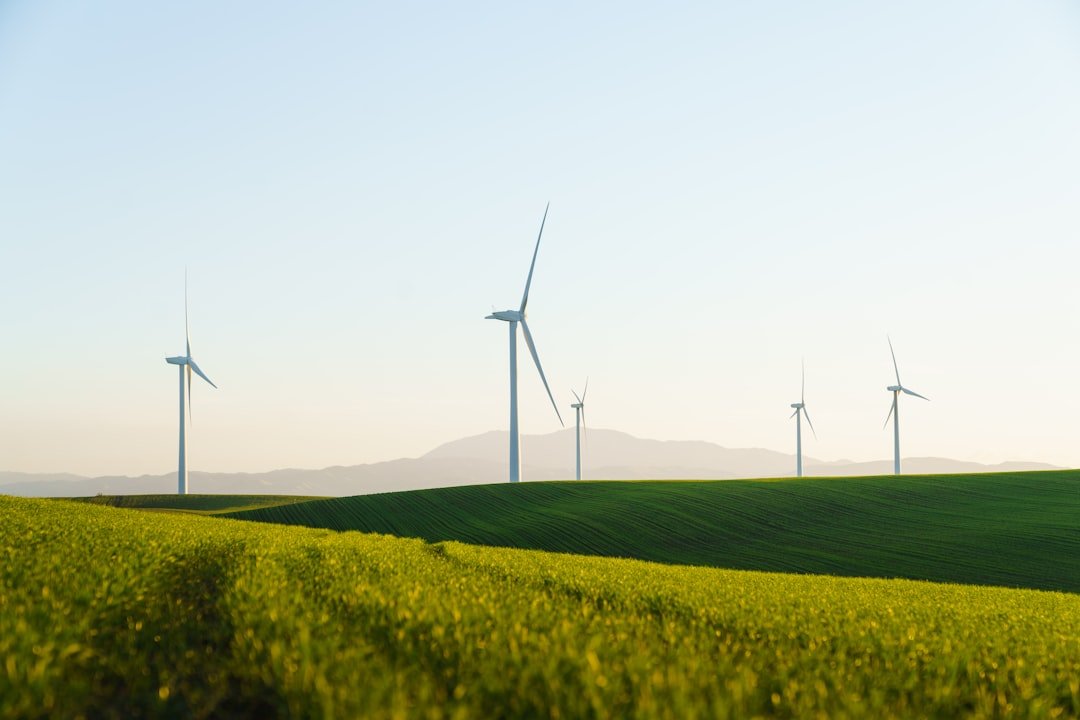
More than 8,000 wind turbine blades will reach the end of their operational lives in the United States each year by 2050 — and most are destined for landfills. That’s a lot of fiberglass and epoxy, the tough composite that makes blades light and strong but nearly impossible to recycle. The very technology helping us fight climate change is creating a waste problem of its own.
But here’s the thing: innovators are starting to turn that problem into an opportunity. From cement kilns to park benches, old blades are getting second lives. And the race is on to make new blades that can be fully recycled from the start.
The Blade Waste Crisis
Wind turbines have a lifespan of about 20 to 25 years. The blades, which can stretch longer than a football field, are built to withstand hurricane-force winds and decades of fatigue. That durability comes from glass or carbon fiber embedded in a resin matrix — materials that don’t melt down easily. Shredding them creates dust that’s hazardous. Burning them releases toxic fumes. So for now, most blades end up in open pits, cut into pieces and buried.
“We’re essentially taking a product designed to last 20 years and treating it as disposable. That’s not sustainable for an industry that’s supposed to be green,” said Dr. Lisa Chen, a materials scientist at the National Renewable Energy Laboratory (NREL).
Globally, the wind industry expects to decommission about 50,000 tonnes of blade material annually by 2030. In the U.S., the figure could hit 2.2 million tonnes by 2050, according to a U.S. Department of Energy report. Without a recycling solution, those numbers will pile up in landfills — a bitter irony given wind’s role in reducing carbon emissions.
And it’s not just a future problem. The first generation of large-scale wind farms — built in the early 2000s — are now hitting retirement age. Landfills in Wyoming, Iowa, and Texas are already accepting blade debris.
Turning Trash into Treasure
Several companies are proving that blades don’t have to be waste. One promising avenue is using shredded blade material as a substitute for sand and clay in cement manufacturing. Denmark-based Siemens Gamesa has partnered with a cement company to grind blades into a powder that replaces raw materials in the kiln. The process also reduces CO₂ emissions from cement production — a double win.
Another approach: slicing blades into sections and turning them into infrastructure. Canvus, a U.S. company, creates park benches, planters, and even picnic tables from retired blades. The company cuts blades into curved, colorful sections and mounts them on concrete bases. It’s a visible symbol of circular economy thinking. “We’re not just recycling — we’re upcycling,” said Canvus CEO James Andersen. “Each bench tells a story about renewable energy.”
Meanwhile, startups are exploring chemical recycling — using solvents or heat to break down the resin and recover the glass fibers for reuse. NREL is developing a new type of blade made from a thermoplastic resin that can be melted and remolded. Early tests show promising results, with prototypes matching the strength of traditional blades.
“The goal is to design blades that are 100% recyclable from day one,” Chen explained. “We’re not there yet, but we’re getting close.”
It’s a shift that requires the entire wind supply chain to rethink manufacturing. And it’s happening just as the U.S. ramps up offshore wind — a sector that will deploy even larger blades.
Why It Matters for the Energy Transition
Wind energy is essential for meeting net-zero targets. But public support can erode when communities see mountains of blade waste. Just as the plastic straw backlash changed consumer behavior, wind turbine landfill issues could tarnish the industry’s image. That’s why companies are investing in recycling now, before the problem gets political.
Look at it this way: a wind farm that powers 50,000 homes for 20 years is a massive climate win. But if its blades sit in a landfill for centuries, the narrative shifts. Solving blade waste isn’t just an engineering challenge — it’s a communication and trust challenge too.
Other industries are watching closely. The automotive sector faces similar composite waste from electric vehicle batteries and body panels. And the heat wave that made headlines last month — one that scientists said was ‘virtually impossible’ without climate change — underscores why we need both clean energy and clean waste solutions.
Meanwhile, researchers are also looking at algae-based resins as a biodegradable alternative. That’s right — pond scum could become the next American innovation, replacing petroleum-based epoxy in the blades of the future. It’s early days, but the potential is enormous.
What’s Next for Blade Recycling?
Policy is starting to catch up. The European Union’s Circular Economy Action Plan includes provisions for wind turbine waste. In the U.S., some states are exploring extended producer responsibility laws that would require manufacturers to take back blades at end of life. There’s also a push for a federal recycling research program.
Cost remains a barrier. Recycling blades can be twice as expensive as sending them to a landfill. But as landfill fees rise and recycling technologies improve, the economics are shifting. Economies of scale will help once blade recycling becomes routine.
“We’re at an inflection point,” said Andersen. “In five years, throwing away a blade will seem as outdated as dumping a television in the trash.”
The clock is ticking. With tens of thousands of blades coming offline in the next decade, the window for building a recycling infrastructure is narrowing. But the momentum is real — from cement plants to park benches to chemical solvents, the solutions are starting to spin. Just like the turbines themselves.
Frequently Asked Questions
Why are wind turbine blades so hard to recycle?
The blades are made of fiberglass or carbon fiber embedded in a thermoset resin — a material that can’t be remelted like plastic. Cutting or grinding them is dangerous because of the fibers, and burning them releases harmful emissions.
What kinds of products can old blades be turned into?
Shredded blades can be used in cement production, playground surfaces, and construction panels. Whole blade sections are being turned into park benches, bike shelters, and even pedestrian bridges.
Is the wind industry doing enough to solve this problem?
Progress is accelerating but uneven. Major manufacturers like Vestas and Siemens Gamesa have launched recycling initiatives. However, only about 10% of decommissioned blades are currently recycled. More investment and regulation are needed to scale solutions.