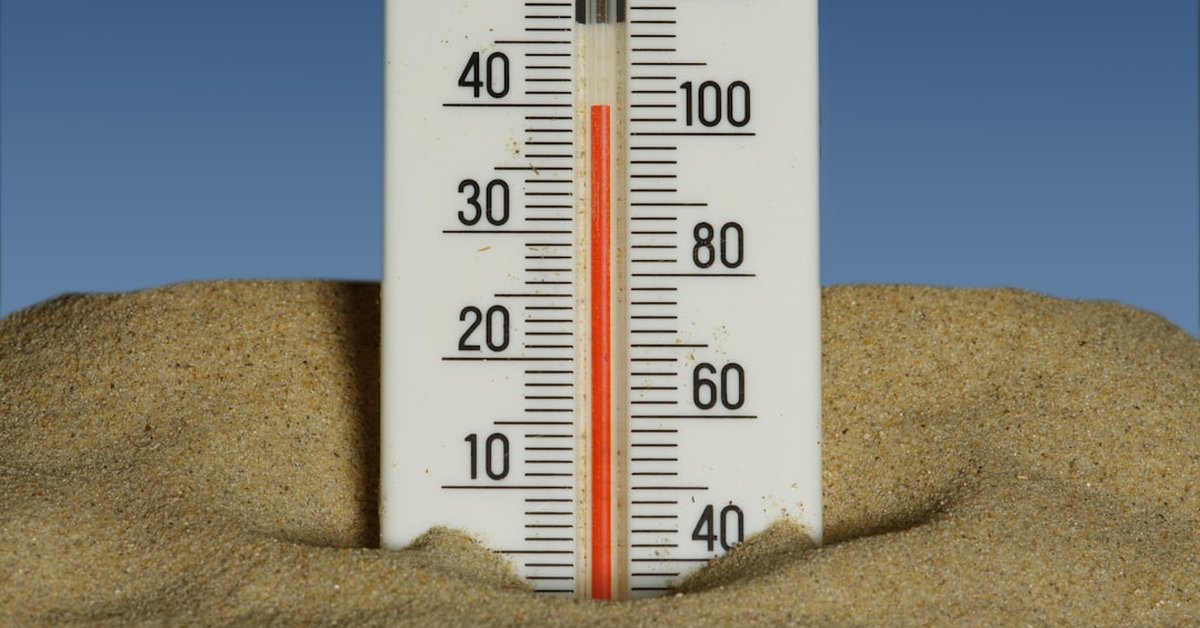







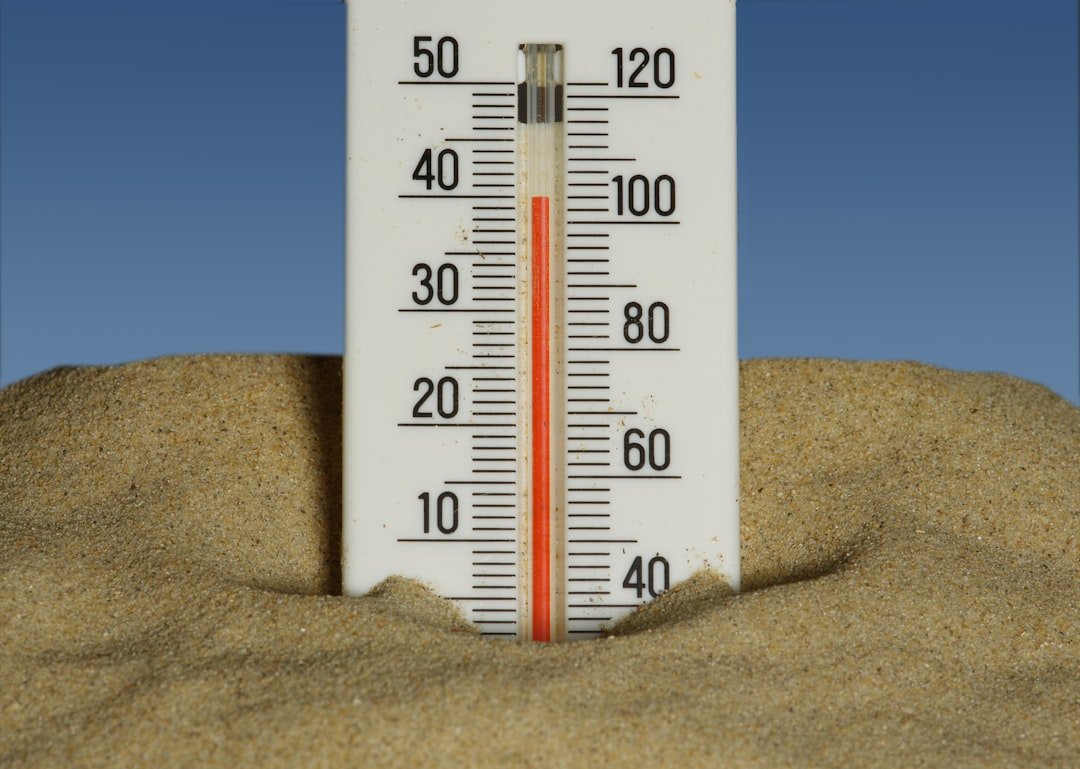
We treat 100 degrees like some kind of finish line. A badge of honor. “Oh, it’s a dry heat,” we say, or “At least it’s not humid.” Look, I’ve covered heatwaves for a decade, and that mindset is killing us. The number on the thermometer is only half the story — sometimes the less important half. When we talk about “feels like” 100°F, we’re not just being dramatic. That number — the heat index — is the one that actually matters for your body. And right now, it’s the one that’s shattering records across the US, the UK, and beyond.
Here’s the thing: your body doesn’t care about the air temperature. It cares about whether it can cool itself down. And when the heat index hits triple digits, that cooling mechanism — sweat evaporation — starts to fail. So let’s stop bragging about surviving 100-degree days. Instead, let’s talk about what that number actually does to a human being.
The Science Behind ‘Feels Like’ and Why Your Body Betrays You
The heat index was developed in 1979 by Robert Steadman — and it’s not a guess. It’s a calculation that combines air temperature and relative humidity to estimate what the temperature feels like to the human body. At 50% humidity, 100°F doesn’t feel like 100. It feels like 133°F. That’s not a typo. That’s the threshold where your body can no longer cool itself effectively, and heat stroke becomes a real, immediate threat.
Dr. Camille Mora, a climatologist at the University of Hawaii, puts it bluntly: “
We’re seeing a dramatic increase in the number of days where the heat index exceeds 100°F, especially in regions that historically didn’t experience such extremes. The human body has limits, and we’re pushing them.
” And she’s right. In July 2024, the National Weather Service reported that over 31 states were under extreme heat alerts, with heat indices hitting 115°F in parts of the Midwest and South. This isn’t a regional problem anymore — it’s a national crisis.
So when you step outside and feel that oppressive wall of air, that’s not just discomfort. That’s a physiological warning. Your veins are dilating. Your heart is pumping faster. Your sweat is evaporating slower. And if you’re over 65, have a chronic condition, or are taking certain medications, you’re in the danger zone faster than you think.
Why the UK and Canada Aren’t Spared
You’d think this is a story for the American South or the Australian Outback. But the heat index doesn’t discriminate. In June 2024, London hit a heat index of 97°F — not triple digits, but close. And the city wasn’t built for it. Most homes lack air conditioning. The Tube system turns into a sweatbox. The BBC reported that heat-related hospital admissions spiked by 43% during the 2022 heatwave, and officials are scrambling to prepare for what’s coming. The same goes for Vancouver and Toronto, where heatwaves are now routine. The infrastructure — built for mild summers — simply can’t handle a “feels like” of 100 degrees.
This isn’t just a weather event. It’s a design flaw. And it’s getting worse. A 2023 study published in Nature Communications found that the frequency of extreme heat index events has doubled since 1980. That means your kids will experience summers that you never did. And by “never did,” I mean a heat index of 105°F in places like Portland, Oregon, or Seattle, Washington — cities where people didn’t even own fans a decade ago.
And here’s the kicker: the heat index is the new normal. We’re not talking about a freak week in July. We’re talking about a seasonal shift that’s already killing more people than hurricanes, floods, and tornadoes combined. According to the CDC, heat-related deaths in the US have risen to over 1,200 per year — and that’s likely a massive undercount because heat isn’t always listed as the cause of death.
What 100°F ‘Feels Like’ Does to Your Body — Hour by Hour
Let’s walk through a typical scenario. It’s 11 a.m. The air temperature is 95°F, but humidity is 60%. The heat index is already 110°F. You feel a headache coming on. That’s your brain sending a signal — straight to the central nervous system — saying, “We have a problem.” By noon, if you’re outside without shade or water, your body core temperature starts rising. By 1 p.m., you could be experiencing confusion, nausea, or fainting. That’s heat exhaustion. And if you ignore that? Heat stroke kicks in by 2 p.m. Your internal temperature hits 104°F or higher. Your organs start cooking. You need emergency medical help — and even then, the survival rate drops fast.
Dr. Susan Yeargin, an exercise scientist at the University of South Carolina, told me: “
People don’t realize that heat index isn’t just a comfort scale. It’s a risk scale. When it says 100°F feels like 110, that’s the threshold where exertional heat stroke is a real possibility — even for healthy people.
” She’s seen athletes collapse in the middle of practice, and kids pass out at summer camp. And the problem is, we’ve normalized being uncomfortable. We think we can tough it out. But your body doesn’t negotiate with a heat index of 110.
So here’s what I want you to remember: the heat index is not a suggestion. It’s a warning. When your weather app says “feels like 100,” treat it like a red light — not a yellow one.
How to Survive — And What Comes Next
First, the basics: drink water — and not just coffee or beer. Stay in air conditioning if you have it. If you don’t, find a public cooling center. Check on elderly neighbors and people without AC. Don’t exercise outdoors after 10 a.m. And for the love of everything, don’t leave kids or pets in a parked car — even with windows cracked, the inside temperature can hit 140°F in minutes.
But the bigger picture is darker. We’re not going to retrofit every home in America with central AC overnight. And even if we did, the grid can’t handle the load. The Associated Press reported that rolling blackouts during heatwaves are becoming common, especially in Texas and California. So the real solution isn’t just individual action — it’s systemic. Better building codes. More reflective roofing. Urban tree canopies. And honestly, we need to stop building cities that look like parking lots.
The NYC braces for dangerous heatwave this week — and that’s not breaking news anymore. It’s routine. But here’s the uncomfortable truth: we’re not ready for what’s coming. The heat index of 100°F won’t just be a headline in July. It’ll be a June headline. Then May. Then we’ll start seeing it in April in the South. The question is not whether we can survive a few hot days. The question is whether we can survive the summer that lasts half the year.
The body of a healthy 25-year-old can handle a heat index of 100 for about three to four hours — with water, shade, and breaks. A 70-year-old with heart disease? Maybe one hour. That’s the real number you need to know. That’s the difference between a headline and a tragedy.
Frequently Asked Questions
A: The heat index is a measure of how hot it feels when relative humidity is factored in with the actual air temperature. Developed by Robert Steadman in 1979, it’s based on how the human body cools itself through sweat evaporation. When humidity is high, sweat evaporates slower, making the air feel hotter than it is. For example, an air temperature of 95°F with 60% humidity produces a heat index of about 110°F.
A: The National Weather Service issues heat advisories when the heat index is expected to reach 100°F or higher. At 100-105°F, heat cramps and exhaustion are possible with prolonged exposure. At 105-110°F, heat exhaustion is likely, and heat stroke is possible. Above 110°F, heat stroke is likely with continued exposure. The CDC recommends limiting outdoor activity and staying hydrated at any heat index above 90°F, especially for vulnerable groups.
A: Wind chill and heat index are opposite concepts. Wind chill measures how cold it feels based on wind speed and air temperature during cold weather. Heat index measures how hot it feels based on humidity and air temperature during hot weather. Both are tools to communicate the actual stress on the human body from the environment. Neither directly affects objects or inanimate things — only living organisms that sweat or lose heat.