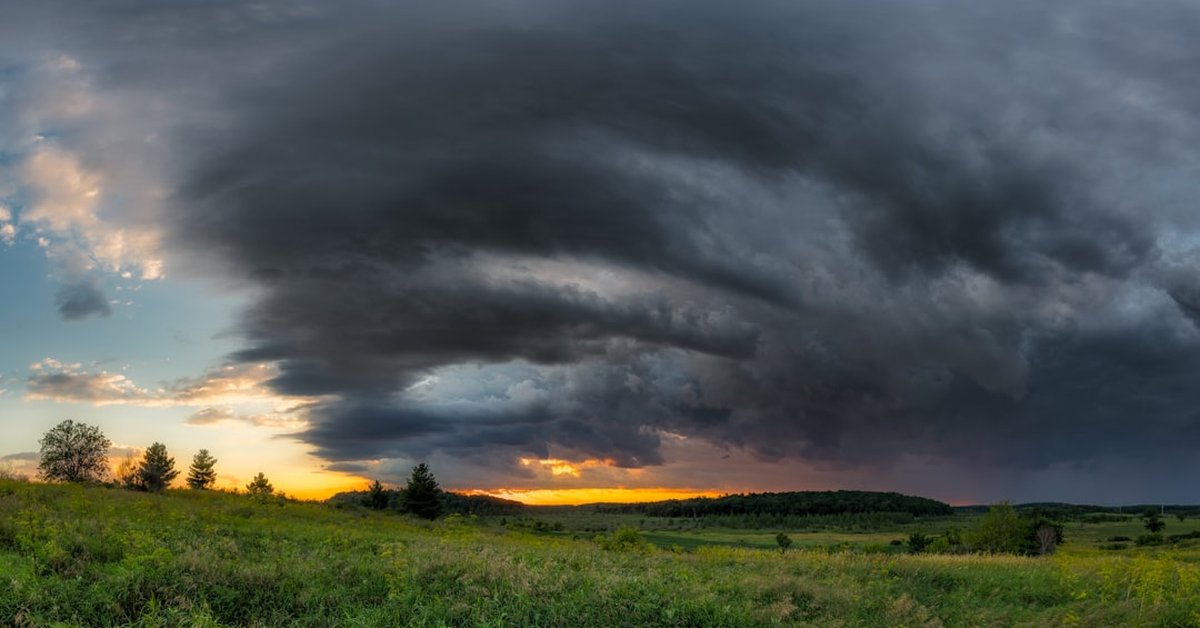






Most people think tornadoes are a Great Plains problem. That Kansas, Oklahoma, and Alabama are the places where the sky turns green and the sirens wail. But Vergil Ortiz didn’t know that assumption when he looked out his living room window in Vanceboro, North Carolina, on the evening of March 28, 2025. He saw not green, but black—a wedge-shaped cloud bearing down on his house, his wife, and his two young children.
What happened next is a story of split-second survival. What happened after is a story about a changing climate, a strained warning system, and a man who refuses to be defined by losing everything.
The Night the Sky Fell on Vanceboro
The National Weather Service had issued a tornado watch for eastern North Carolina by 4 p.m. that Friday. Forecast models showed a powerful low-pressure system colliding with warm, humid air from the Gulf. Classic severe weather setup—except the storms didn’t behave classically. They exploded.
By 7:11 p.m., a confirmed tornado touched down near Craven County, carving a 14-mile path through Briarwood Estates, Bell Creek, and eventually pummeling Ortiz’s neighborhood. The twister was rated EF-3, with winds clocked at 145 mph. It flattened dozens of homes, flipped cars, and left four people dead.
Vergil Ortiz, 45, a long-haul truck driver, had just returned home from a run to Charlotte. “I was exhausted, thinking about a shower and some sleep,” he told CyclonePost from a FEMA trailer parked where his front porch used to be. “But my wife, Maria, said the sky looked weird. So I went to the window. And then I saw it—this massive funnel, maybe a mile away. It was coming straight at us.”
He grabbed his kids—Liam, 7, and Sofia, 4—and pulled everyone into the hallway bathroom. The smallest room, the one with no windows. “I remember thinking, ‘This is it. This is how it ends.’” The roar was deafening. Debris hammered the walls. The door buckled. “Then silence. Just the sound of rain and my son crying.”
When Ortiz emerged, his house was gone. The roof was wrapped around a pine tree 200 yards away. His truck, a 2022 Ford F-250, lay on its side in the neighbor’s swimming pool. But his family was alive. That, he says, is the only thing that matters.
Eastern NC’s Tornado Problem Is Getting Worse
Here’s the part that doesn’t fit the classic caricature: North Carolina gets more tornadoes per square mile than any state outside the Midwest. And the frequency is climbing. Eastern NC has been battered repeatedly this spring—tornadoes, flooding, a dire forecast that keeps getting worse.
Dr. Anita Ramesh, a clinical meteorologist at North Carolina State University, explains: “We’re seeing a eastward shift in Tornado Alley. The southeastern U.S. now has a higher death rate from tornadoes than the Plains, because people here aren’t as prepared. They don’t have basements. They don’t have tornado drills. And the storms often happen at night.”
Indeed, the Vanceboro tornado struck after sunset—the deadliest scenario. Studies show nighttime tornadoes are twice as likely to kill people, because you can’t see them coming and you’re often asleep. Vergil Ortiz was awake only because his wife noticed the sky. He calls her their “guardian angel.” But not everyone has an angel.
“The warning system works—if people act on it. But in eastern NC, there’s a false sense of security. Many folks think, ‘That’s a Plains thing, not a coastal thing.’ That assumption can be lethal.” — Dr. Anita Ramesh, NCSU Clinical Meteorologist
Historical comparison: The deadliest tornado outbreak in North Carolina history happened on March 28, 1984—exactly 41 years to the day before the Vanceboro twister. That outbreak killed 42 people across the Carolinas. Yet public memory is short. “People don’t connect the dots between a 1984 storm and a 2025 storm,” Ortiz said. “They think it’s a fluke. It’s not.”
What It Means for the Rest of Us
Vergil Ortiz’s story isn’t just local news. It’s a warning signal for the entire U.S. and UK. In the UK, tornadoes are considered rare—but the country averages about 30 per year, mostly weak but occasionally destructive. The same atmospheric ingredients that produced the Vanceboro tornado—high instability, strong wind shear—are becoming more common in temperate regions worldwide.
America’s tornado warning system has improved dramatically over the past three decades. Average lead time is now around 14 minutes. But that’s only useful if people understand what a warning means. “Too many people ignore tornado warnings,” says retired FEMA coordinator James Whitford. “They think it’s overkill. ‘Oh, we always get warnings.’ Then a killer storm hits. We need a cultural shift.”
Ortiz now speaks at community meetings, pushing for more shelters in mobile home parks and better emergency preparedness in rural areas. He’s collected $12,000 in donations for building a community storm shelter in Vanceboro. “I don’t want anyone else to feel what I felt in that bathroom,” he says, his voice thick. “The helplessness. The prayer. The screaming of your kids.”
Whitford adds: “What Vergil is doing—turning trauma into advocacy—that’s how we save lives. Not just with technology, but with stories.”
What Comes Next
Vergil Ortiz is rebuilding—a new house, a new life. But he knows the next storm is just a season away. He checks the radar now. He’s bought a weather radio. He’s drilled his kids on what to do if the sirens sound again.
The broader pattern is unmistakable. As the planet warms, the atmosphere holds more moisture and energy. Tornado outbreaks are clustering into fewer but more intense events. The southeastern U.S. is becoming a hot spot. No one—not even in eastern North Carolina—can afford to assume it won’t happen to them.
“I used to think tornadoes were something you saw on TV,” Ortiz says. “Now I know: they can come for anyone, anywhere. And when they do, you better be ready.”
Frequently Asked Questions
1. Are tornadoes becoming more common in North Carolina?
Yes. Data from NOAA shows that the number of tornadoes in North Carolina has increased by about 30% over the past 50 years. The state now averages 31 tornadoes per year, compared to 24 in the 1970s. Much of this increase is linked to a warming climate that intensifies storm systems.
2. What should I do if I’m in a tornado warning with no basement?
Go to the lowest floor, an interior room without windows (like a bathroom, closet, or hallway). Cover yourself with a mattress, sleeping bag, or heavy blankets. Wear a helmet if you have one. Never stay in a mobile home—evacuate to a permanent shelter or community storm shelter. The key is to protect your head from flying debris.
3. How reliable are tornado warnings?
Modern warnings from the National Weather Service have an average lead time of about 13-15 minutes. But false alarm rates hover around 70%, which can lead to complacency. However, any tornado warning should be treated as real—your life depends on acting quickly. Always verify with multiple sources: weather radio, phone alerts, local news.