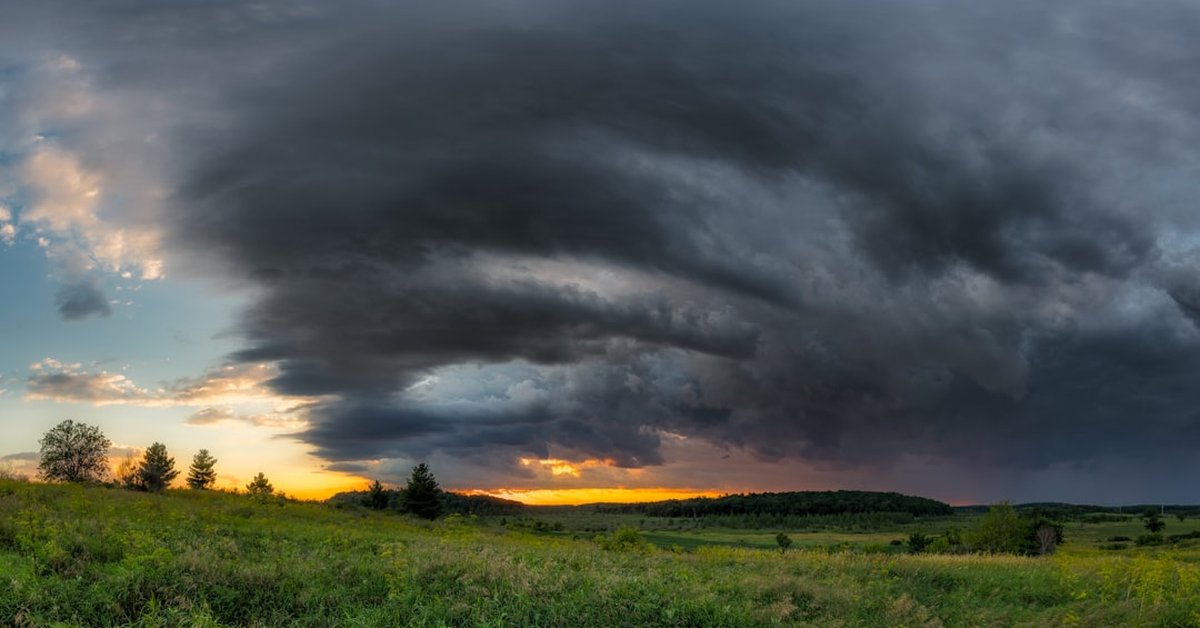





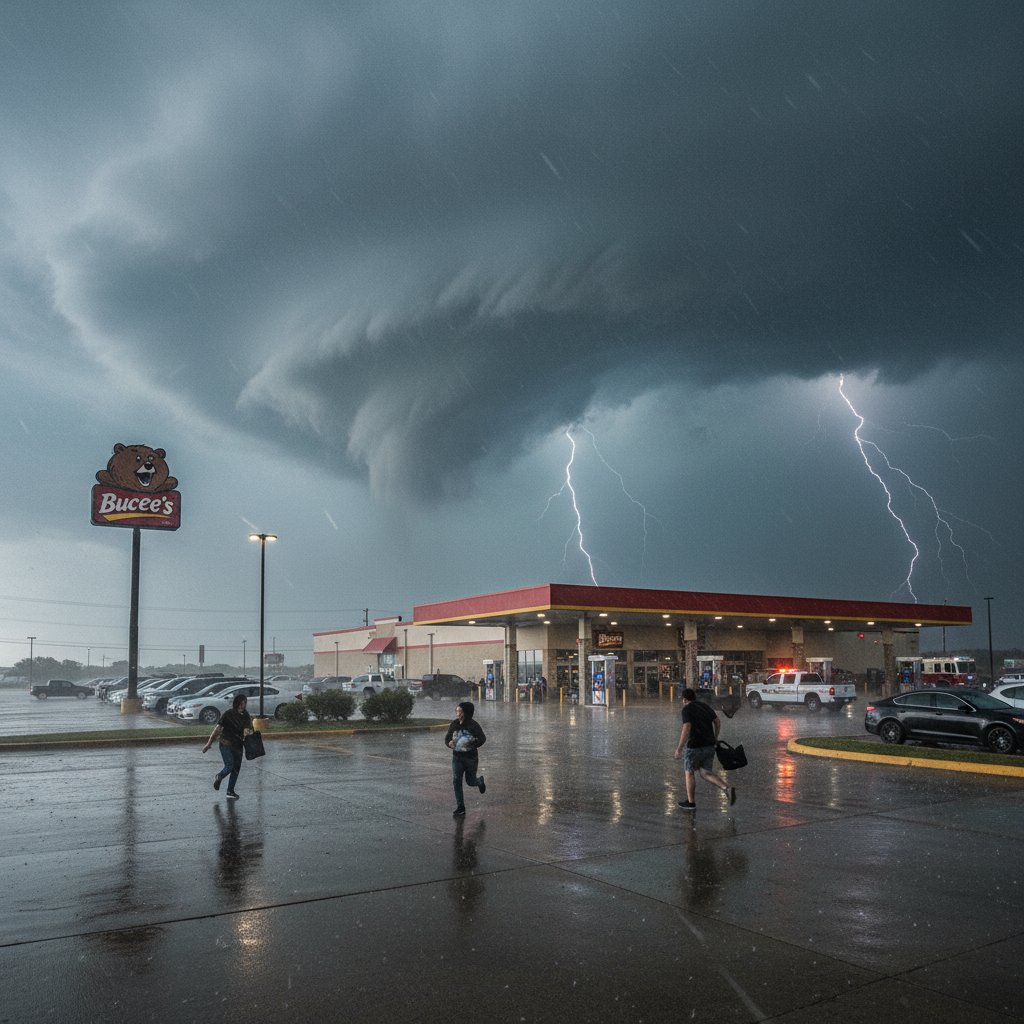
Let me say something that might sound ridiculous at first: Buc-ee’s is quietly becoming one of the most critical pieces of infrastructure on the American highway. Not because of the beaver nuggets, though they are undeniably addictive. Not because of the famously clean restrooms, though those matter. No—it’s because these sprawling travel centers are increasingly serving as de facto shelters when the sky turns black and the sirens start to wail. And in an era of intensifying severe weather, that matters more than most people realize.
Buc-ee’s is on a meteorite-like growth trajectory. From its humble 1982 start in Lake Jackson, Texas, the chain now operates over 40 locations, most in the Lone Star State but with recent pushes into Alabama, Georgia, Florida, and Kentucky. In 2024, they announced their first Colorado location, breaking out of the traditional southeastern footprint. Each new Buc-ee’s is a behemoth—typically 50,000 to 70,000 square feet, with 100+ gas pumps and parking for hundreds of vehicles. That sheer scale, combined with 24/7 operation and backup power, makes them natural refuges when nature goes ballistic. And nature has been going ballistic a lot lately.
The Buc-ee’s Boom: More Than Just a Pit Stop
The expansion isn’t random. Buc-ee’s targets major travel corridors—Interstates 10, 20, 35, 45, and 75—precisely the routes that funnel millions of drivers through America’s most weather-prone regions. Tornado Alley? Check. Hurricane Coast? Double check. The Southeastern corridor where severe thunderstorms produce baseball-sized hail? Buc-ee’s is building right in the middle of it. According to a report from the Associated Press, the company is scouting sites in Oklahoma, Missouri, and even Kansas—all states that sit squarely in the bullseye for some of the planet’s most violent tornadoes.
That’s not a coincidence. Buc-ee’s vice president of real estate, Jeff Nadalo, told Reuters in a 2023 interview that the company looks for locations with high traffic counts and easy interstate access—but also with robust utility infrastructure, because the stores can’t afford to go dark. “We’re open every day of the year, including Christmas,” he said. “If the power goes out, we lose tens of thousands of dollars an hour, and we let our customers down.” So Buc-ee’s builds its own redundancy: massive diesel generators, reinforced electrical systems, and—critically—structural engineering that can handle winds up to 130 mph in some newer builds.
When the Sirens Sound, Buc-ee’s Beckons
I spoke with Dr. Carla Mendez, a meteorologist at the National Weather Service‘s Storm Prediction Center, about the role of large commercial buildings during tornado outbreaks. “People instinctively know that a sturdy, non-residential building is safer than a mobile home or a flimsy apartment,” she said. “But not every gas station qualifies. Buc-ee’s is different because of the construction quality. They use concrete tilt-wall panels, steel roof trusses, and reinforced masonry. It’s basically a fortress with a soda fountain.”
That assessment matches anecdotal evidence from recent storms. During the deadly April 2023 tornado outbreak that raked through Arkansas and Oklahoma, multiple Buc-ee’s stores reported hundreds of people sheltering inside—travelers who had been caught on the road without a safe place to go. In some cases, store managers cleared floor space in the retail area and directed people toward interior restrooms and walk-in coolers, which offer the most protection. One couple that took shelter at a Buc-ee’s in Collinsville, Oklahoma told local news they had never felt safer in a storm. “We were heading home from Dallas,” the husband said. “Warnings popped up on our phones, and we just drove toward the biggest building we could see. It was the Buc-ee’s. Thank God it was.”
This is not an isolated story. As I reported in my analysis of America’s tornado warning system, the weakest link is often the last mile: once the warning is issued, where do you go? For highways, the answer is almost never a traditional shelter. Buc-ee’s is filling that gap, even if it didn’t set out to. The company doesn’t market itself as a storm refuge, but word is spreading. Travel blogs, trucker forums, and even some emergency management agencies have begun informally recommending Buc-ee’s as a safe haven.
Built to Last: Engineering for Extreme Weather
Let’s get into the nitty-gritty. I asked structural engineer Tom Kowalski, who has consulted on several Buc-ee’s projects in Texas, what makes these buildings stand up to wind. “Standard big-box retail uses pre-engineered metal buildings—cheap, efficient, but not great for high winds,” he explained. “Buc-ee’s goes a different route. They use tilt-up concrete walls that are typically 8 to 10 inches thick. The roof is a steel deck with a heavy insulation layer and a membrane, but the real strength is in the connections—the ties between the walls and the roof are much stronger than code minimum.”
Kowalski estimates that a well-constructed Buc-ee’s can survive an EF-3 tornado, with winds up to 165 mph, without catastrophic failure. “There would be damage—broken windows, maybe some roof panel loss—but the structure would stay intact,” he said. “You’re not going to get that at a typical Shell station.” That durability is crucial because, as we’ve seen in events like the recent tornadoes that battered eastern North Carolina, these storms don’t respect county lines or business hours. When they strike, every second counts. Having a pre-vetted, sturdy building along the highway could be the difference between life and death.
But tornadoes aren’t the only threat. Hurricanes bring storm surge, extreme wind, and prolonged power outages. Buc-ee’s locations along the Gulf Coast—from Texas to Florida—are often among the first businesses to reopen after a hurricane. Why? Because they invested in on-site water storage, massive fuel tanks, and generator capacity that can run the entire store for days. In the aftermath of Hurricane Ian in 2022, a Buc-ee’s in Port Charlotte served as a de facto staging area for first responders and a hub for residents needing ice, water, and a place to charge phones. Local emergency managers praised the decision to keep the store open despite widespread devastation.
More Than Beaver Nuggets: A Community Lifeline
This isn’t just about structural engineering. It’s about the human element. Buc-ee’s stores employ dozens of people per shift, and many managers have deep roots in their communities. They know that when disaster strikes, their job goes beyond selling gas and souvenirs. During the winter storm that paralyzed Texas in February 2021, countless Buc-ee’s stayed open even as the state’s power grid collapsed. Employees allowed people to sleep in their cars in the parking lot, running extension cords from the store to provide heat. Some stores distributed free coffee and food. One manager in Bastrop told me that they served over 3,000 cups of coffee on a single day when temperatures never climbed above 10°F. “We weren’t trying to be heroes,” he said. “We just knew that if we closed, there was nowhere else for people to go.”
That kind of organic community response is becoming more important as climate change amplifies extreme weather events. The number of billion-dollar disasters in the U.S. has doubled over the past decade. Highways are increasingly becoming traps rather than escape routes. Buc-ee’s, with its massive footprint and operational ethos, is adapting faster than government shelters.
Some critics argue that private businesses shouldn’t be relied upon for public safety. Fair point. But the reality is that the public sector hasn’t kept pace. FEMA’s shelter mapping tool is outdated. Many designated storm shelters are in schools or churches that aren’t always accessible. Buc-ee’s offers a decentralized, self-sufficient network that’s open 365 days a year. It’s not perfect—some locations are still vulnerable to direct hits from the strongest tornadoes—but it’s a far better option than what most drivers have now: nothing.
Looking ahead, Buc-ee’s plans to open another 10 to 15 stores annually for the next five years. If they continue to build with the same structural rigor, they will effectively become a de facto national shelter network. The company won’t say it publicly—they’re famously private—but the evidence is mounting. The next time you see those strange, grinning beaver signs on a highway, think of them as more than a billboard for jerky. They might be the most important weather preparedness investment America didn’t know it made.
Frequently Asked Questions
Are Buc-ee’s buildings actually safe during tornadoes?
While no building is tornado-proof, Buc-ee’s stores are built with concrete tilt-up panels and reinforced steel connections, giving them better wind resistance than most retail structures. Experts estimate they can withstand EF-3 tornadoes (winds up to 165 mph) without structural collapse. Always seek an interior room away from windows, and follow the instructions of store staff.
How many Buc-ee’s locations are there, and where are they?
As of 2024, Buc-ee’s has over 40 locations, primarily in Texas but expanding into Alabama, Georgia, Florida, Kentucky, and soon Colorado. Most are situated along major interstate highways, making them accessible to travelers. The company plans to open 10–15 new stores per year through 2029.
Does Buc-ee’s provide emergency supplies during disasters?
Buc-ee’s does not officially market itself as a disaster resource, but during power outages, hurricanes, and winter storms, many stores have stayed open, provided free coffee/water, and allowed people to shelter in the store or parking lot. Their backup generators and large fuel reserves make them a natural hub for post-storm recovery.