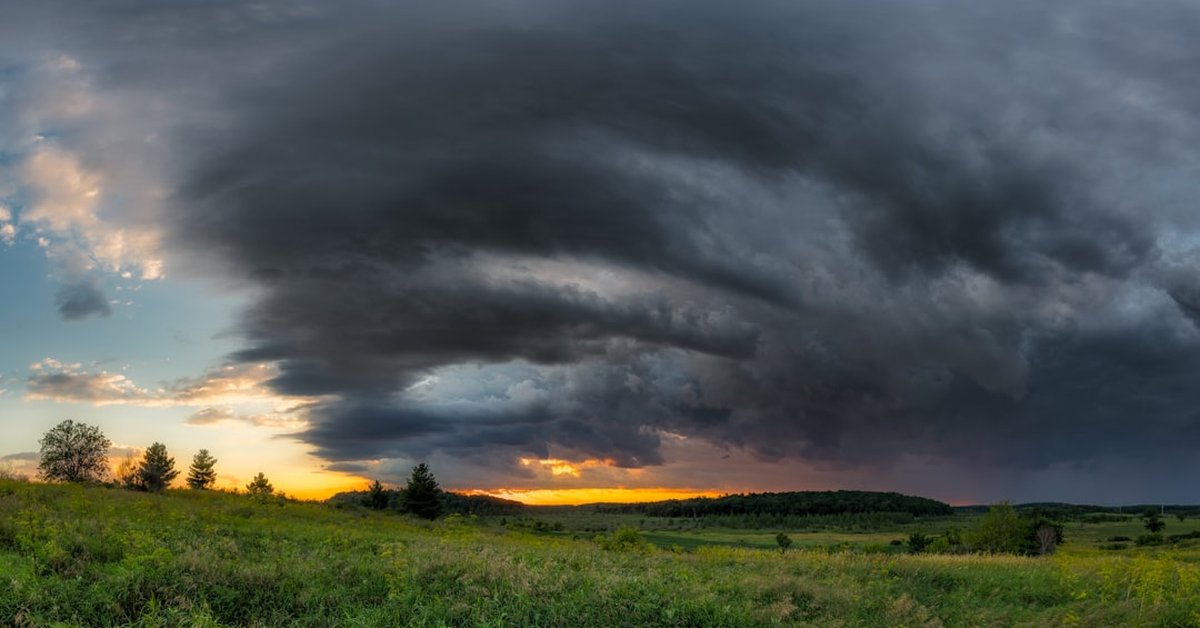







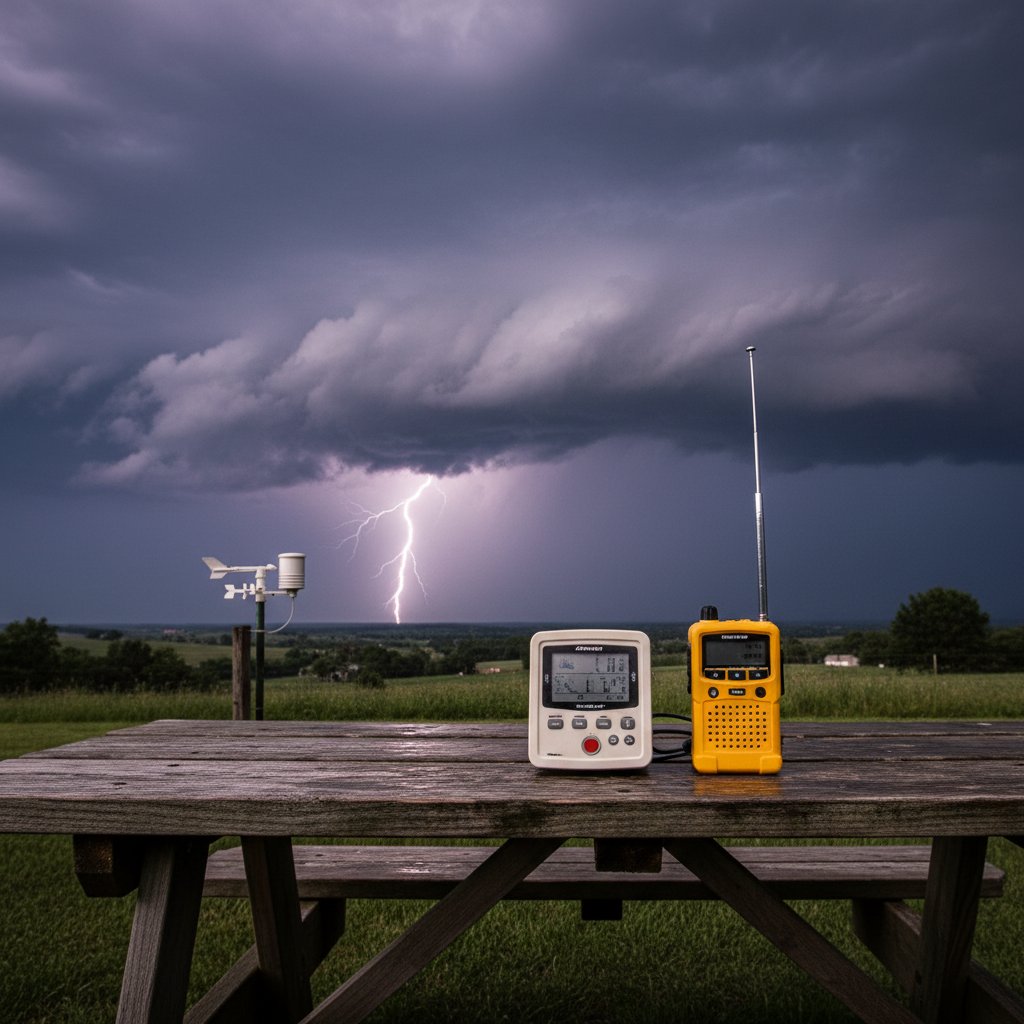
The siren didn’t go off until it was almost too late. That’s what Mark Thompson, a father of three in central Oklahoma, told me last month. A supercell had formed west of his town, and by the time the outdoor warning system activated, he had barely six minutes to get his family to the storm shelter. He made it — but he couldn’t shake the feeling that he’d been flying blind. “I had no idea how bad it was until I saw the debris cloud,” he said. “If I’d had a weather station in my backyard, I would have known fifteen minutes earlier.” His story is not unique. Across the U.S., UK, and Canada, millions of people rely on smartphone apps and outdoor sirens for severe weather alerts. But those systems have gaps — dead zones, lag times, and a critical flaw: they don’t tell you what’s happening right at your house. That’s where a basic weather station and weather radio combo comes in. For around $150, you can build a personal early-warning system that gives you real-time data on wind, rain, temperature, and barometric pressure, plus instant alerts from the National Weather Service or Environment Canada. No data plan. No internet dependency. Just the raw facts, delivered to your kitchen table. And with record-breaking heatwaves and dangerous humid heat surging across the U.S., the need for hyperlocal weather awareness has never been more urgent. Let’s break down what you need and why it matters.
Why You Need Both a Weather Station and a Radio
Think of a weather station as your eyes and a weather radio as your ears. One gives you continuous ground-level data from your own backyard — wind gusts, rainfall rates, temperature swings — while the other grabs official warnings from government meteorologists. Together, they close the information loop that smartphones leave open. “Phones are great for passive alerts, but they rely on cellular towers that can fail during storms,” says Dr. Sarah Johnson, a meteorologist with the National Oceanic and Atmospheric Administration (NOAA). “A dedicated weather radio uses the same broadcast system as emergency management, and it can wake you up at 3 a.m. with a tornado warning — even if your phone is silent.” And the station? It gives you the now. Barometric pressure is dropping fast? Winds shifting to the southeast? Those are signs your phone app won’t show until the storm is on top of you. The combo bridges the gap between official alerts and local conditions — something that’s especially critical in areas prone to flash floods or sudden severe thunderstorms. The National Weather Service’s All-Hazards Weather Radio network is free to receive, and basic stations like the Ambient Weather WS-2902 or the AcuRite Atlas start under $150. That’s less than many smartphone bills.
What to Look for in a Basic Weather Station
You don’t need a $500 professional setup. For home use, focus on four core sensors: wind speed and direction, rainfall, temperature, and humidity. Barometric pressure is a bonus — it’s a key indicator of approaching storms. Most consumer stations under $200 transmit data wirelessly to a display console that sits on your counter. The best ones also push data to Wi-Fi, giving you access on your phone via free apps or platforms like Weather Underground. Look for a station with an ultrasonic wind sensor — no moving parts, less maintenance. The Ambient Weather WS-2000 (around $160) offers that, plus a bright color display. The AcuRite Iris (around $90) is a reliable budget option with good accuracy. “The most common mistake people make is placing the sensor too close to the house,” says John Anderson, emergency preparedness coordinator at the National Weather Service. “Heat radiating from the roof and walls skews temperature readings by up to 5°F. Mount it at least 10 feet from any structure, ideally on a pole in an open area.” Also check transmission range — many consoles work up to 300 feet, but walls and metal roofs can block the signal. If your home is large, consider a repeater or a station with a stronger transmitter.
The Radio: Your Lifeline When the Grid Goes Down
Your weather station can tell you a storm is coming. But your radio tells you what to do — and it keeps working when the power goes out. A good weather radio is a dedicated receiver that locks onto your local NOAA or Environment Canada frequency and issues specific area message encoding (SAME) alerts. That means you only get warnings for your county, not the entire state. Look for models with battery backup, a hand crank or solar option, and an alert tone that’s loud enough to wake you. The Midland ER310 (around $70) is a top seller — it includes AM/FM, NOAA weather alerts, a flashlight, and a USB port for charging your phone. The Sangean CL-100 (around $55) is a no-frills alternative with excellent reception. “The key is to program it correctly,” Anderson adds. “Enter your SAME code — you can find it on the NWS website — and test it monthly. I’ve seen too many people buy the radio, set it on a shelf, and never turn it on until a tornado hits. By then, it’s too late.” Keep the radio in your bedroom or near your storm shelter. Package it with the station’s console in a small emergency kit: batteries, a printed list of local SAME codes, and a backup manual.
Top Combos Under $200
If you’re looking for an all-in-one solution, here are two combos that hit the sweet spot. Budget pick: AcuRite Iris (5-in-1 sensor with wind, rain, temp, humidity, and baro) at $89, plus the Midland ER310 radio at $70 — total $159. Mid-range pick: Ambient Weather WS-2000 (color console, Wi-Fi, ultrasonic wind) at $159, plus the Sangean CL-100 at $55 — total $214. Go a little over budget, but the WS-2000’s data logging and phone integration are worth it. Both combos are sold on Amazon, directly from the manufacturers, and at some hardware stores. Don’t forget to buy a mounting pole for the station — a simple 6-foot galvanized pipe from a home center costs $15. No subscription fees, no cloud service lock-ins. Your data stays yours. And when a derecho rolls through or a flash flood warning comes in at 2 a.m., you’ll be the one who knew first — not the last.
Frequently Asked Questions
What does a weather station do that my phone doesn’t?
Your phone’s weather app shows data from the nearest airport or a distant model forecast. A backyard weather station gives you hyperlocal, real-time measurements — the exact wind gust hitting your house, the rain rate at your rain gutter, the pressure change happening right now. That data updates every few seconds, not every hour. Plus, your phone loses connection during power outages or cell tower failures; a direct-reading console doesn’t.
Do I need a weather radio if I have a smartphone?
Yes. Smartphone alerts depend on cellular networks, which can be overloaded or knocked out during disasters. A NOAA weather radio uses a separate broadcast system (VHF frequencies) that is maintained by the government and works even when the power grid and cell towers are down. It also has a loud alarm that wakes you up — something a phone in silent mode won’t do. In a severe weather event, that extra layer of reliability can save your life.
How much should I spend on a basic setup?
You can get a reliable weather station for $70–$150 and a quality weather radio for $40–$70. A total of $110–$220 covers both. Stick with established brands like Ambient Weather, AcuRite, Midland, and Sangean. Avoid ultra-cheap no-name stations — their sensors drift after a few months and give inaccurate data. Spend once, install properly, and maintain with annual battery changes. It’s one of the cheapest insurance policies you can buy.