






“For so long, the story of coral has been one of loss, of irreversible decline. But this research—it reminds us that nature, even under immense pressure, still holds surprises. It gives us a target, a tangible place to focus our desperate efforts.”
— Dr. Elena Ramirez, Marine Biologist, Scripps Institution of Oceanography
The words hang heavy, a mixture of exhaustion and renewed purpose. Dr. Ramirez isn’t wrong. For decades, the narrative surrounding the world’s coral reefs has been increasingly grim, a relentless march towards an ecological catastrophe played out in vivid, heartbreaking colors. We’ve watched, often helplessly, as vibrant underwater cities—teeming with life, vital to countless species and human communities—have faded to ghostly white. Bleaching events, fueled by warming oceans, have become more frequent, more intense, and more widespread, leaving behind graveyards where once there was unparalleled biodiversity. The prognosis, frankly, has been bleak, a future where the planet’s most biodiverse marine ecosystems might simply cease to exist.
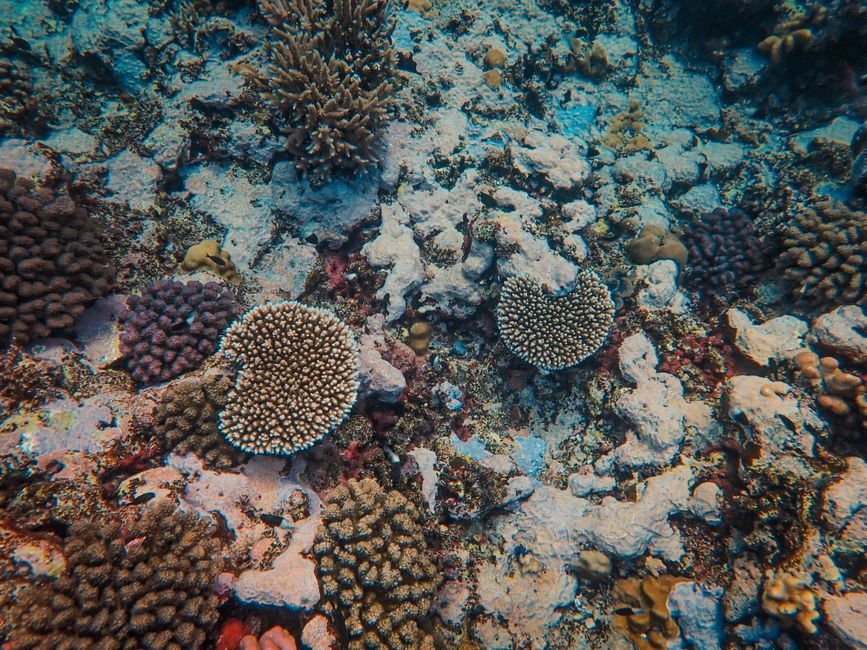
But a new study, a comprehensive global analysis, offers a rare, desperately needed glimmer of hope amidst the gloom. Published recently in a leading scientific journal, this research isn’t about magical cures or sudden reversals of climate change. Instead, it’s a detailed mapping effort, identifying specific areas around the world where coral reefs are, against all odds, managing to hang on. These aren’t just random patches; they are distinct havens, protected by a unique combination of cooler ocean currents, deeper waters, and other localized environmental factors that shield them from the worst impacts of rising sea temperatures. Think of them as natural refugia, pockets of resilience in an increasingly hostile ocean.
Here’s the thing: understanding *why* these reefs are surviving isn’t just an academic exercise. It’s a critical step towards developing more effective, targeted conservation strategies. It tells us where to concentrate our resources, where our efforts might actually yield meaningful results, and perhaps, how to even try and replicate these conditions in other vulnerable areas. It’s not a panacea, no. We are still facing an existential crisis for these incredible ecosystems. But it’s a map, a guidepost, pointing us towards the places where nature itself is offering a fighting chance.
The Fading Rainbow: A Dire Reality
Before we dive into the good news, it’s important to understand the scale of the challenge. Coral reefs, covering less than 0.1% of the ocean floor, support roughly 25% of all marine species. They’re the rainforests of the sea, providing nurseries for fish, protecting coastlines from storm surges, and supporting the livelihoods of hundreds of millions of people through fishing and tourism. They are, in a word, indispensable. Yet, their very existence is under threat, primarily from human-induced climate change. Increased ocean temperatures lead to coral bleaching, a process where corals expel the symbiotic algae living in their tissues, turning white and eventually dying if temperatures remain elevated for too long.
The statistics are stark. Since the 1980s, we’ve witnessed a dramatic increase in major bleaching events. The Great Barrier Reef, perhaps the world’s most iconic coral system, has suffered multiple mass bleaching events in recent years—in 2016, 2017, 2020, and 2022—each one leaving a deeper scar. Some estimates suggest that as much as 50% of the world’s coral reefs have already been lost, or are severely degraded. And the projections, for a long time, have suggested an even more catastrophic future, with up to 90% of reefs potentially disappearing by 2050 under current warming trajectories. This isn’t just an ecological tragedy; it’s an economic and humanitarian disaster unfolding in slow motion, impacting food security, coastal protection, and cultural heritage for communities globally.
And it’s not just temperature. Ocean acidification, caused by the absorption of excess carbon dioxide from the atmosphere, makes it harder for corals to build their skeletons. Local stressors like overfishing, pollution, and destructive fishing practices further weaken their ability to cope with global warming. The cumulative impact is overwhelming, creating a perfect storm that has pushed these delicate ecosystems to the brink. So, when scientists tell us they’ve found places where corals are actually *surviving*, where they’re actively *resisting* this onslaught, it’s not just interesting science—it’s a profound shift in perspective.
Uncovering Pockets of Resilience: Nature’s Last Stand
The new study, a collaborative effort involving researchers from dozens of institutions, utilized satellite data, oceanographic models, and historical observations to identify these critical refugia. What they found were specific conditions that offered corals a lifeline. In areas like parts of the Coral Triangle in Southeast Asia, the Western Indian Ocean, and certain deep-water sections off the coast of Brazil, corals are experiencing less severe thermal stress. This isn’t random. It’s often due to persistent upwelling of cooler water from deeper ocean layers, strong local currents that mix and cool surface waters, or even topographical features like deep channels that funnel cooler water through reef systems.
“We’re talking about microclimates for corals,” explains Professor Kenji Tanaka, an oceanographer at the University of British Columbia, whose team contributed to the modeling efforts. “These aren’t necessarily pristine environments untouched by human activity, but they possess a hydrological advantage. The consistent flow of cooler water, even by a degree or two, can make all the difference during a marine heatwave. It’s like having a natural air conditioner in the middle of a global heatwave.” The study specifically highlighted regions in the Indo-Pacific, such as parts of Indonesia and Papua New Guinea, and areas of the Caribbean that benefit from unique current systems. Some of these resilient reefs are also found in deeper mesophotic zones, where they receive less direct sunlight and are naturally cooler, offering a degree of protection from surface warming.
The research methodology was rigorous, combining decades of temperature data with ecological surveys to correlate environmental conditions with observed coral health. They looked not just at the absence of bleaching, but at the sustained health and growth of coral colonies, and the diversity of associated marine life. What emerged was a global map of hope, marking regions that, while still vulnerable to the long-term impacts of climate change, are showing a remarkable capacity for persistence in the near-to-medium term. These are not just places where corals are barely surviving; they are places where they are actively thriving, continuing to provide essential ecosystem services.
A Beacon for Conservation: Protecting What Remains
So, what do we do with this information? For conservationists, this study is a game-changer. It provides a clear mandate to prioritize and intensify protection efforts in these identified refugia. Historically, conservation has often focused on areas that are already severely degraded, trying to restore what’s been lost. And that work is vital, don’t get me wrong. But this new understanding shifts some of the focus towards safeguarding existing strongholds, ensuring these vital pockets of resilience can continue to act as sources of larvae and genetic diversity, potentially repopulating other reefs in the future.
“This isn’t an excuse to slow down on global climate action, not by a long shot,” Dr. Ramirez emphasizes, her voice firm. “But it gives us tangible, immediate actions we can take. We need to establish and strengthen marine protected areas in these zones, reduce local stressors like pollution and overfishing to give these corals every possible advantage, and advocate for strong, enforceable regulations that protect the specific hydrological conditions they depend on.” Imagine a future where these resilient reefs act as ‘seed banks’ for the ocean, slowly helping to regenerate degraded areas if global temperatures stabilize. It’s a long shot, perhaps, but it’s a future worth fighting for.
The implications for policymakers are equally significant. This study provides scientific backing for creating new marine parks or expanding existing ones, with a specific focus on areas identified as climate refugia. It also underscores the importance of regional cooperation, as many of these resilient zones span international borders. It’s a call to arms for governments, local communities, and international organizations to work together, to channel resources towards these last bastions of coral life. The science is clear: we know where some of the fight can still be won, at least in the short term.
Ultimately, while this research offers a much-needed ray of hope, it doesn’t diminish the overarching urgency of addressing climate change at its root. These resilient reefs are not immune to a world that continues to warm; they are simply buying us time. Time to dramatically reduce greenhouse gas emissions, time to innovate new conservation technologies, and time to truly commit to a sustainable future. The fate of these vibrant underwater worlds, and indeed, much of our own, hangs in the balance. This study reminds us that even when the chips are down, there are still places where nature is fiercely resisting, and where our focused efforts can still make a profound difference.