




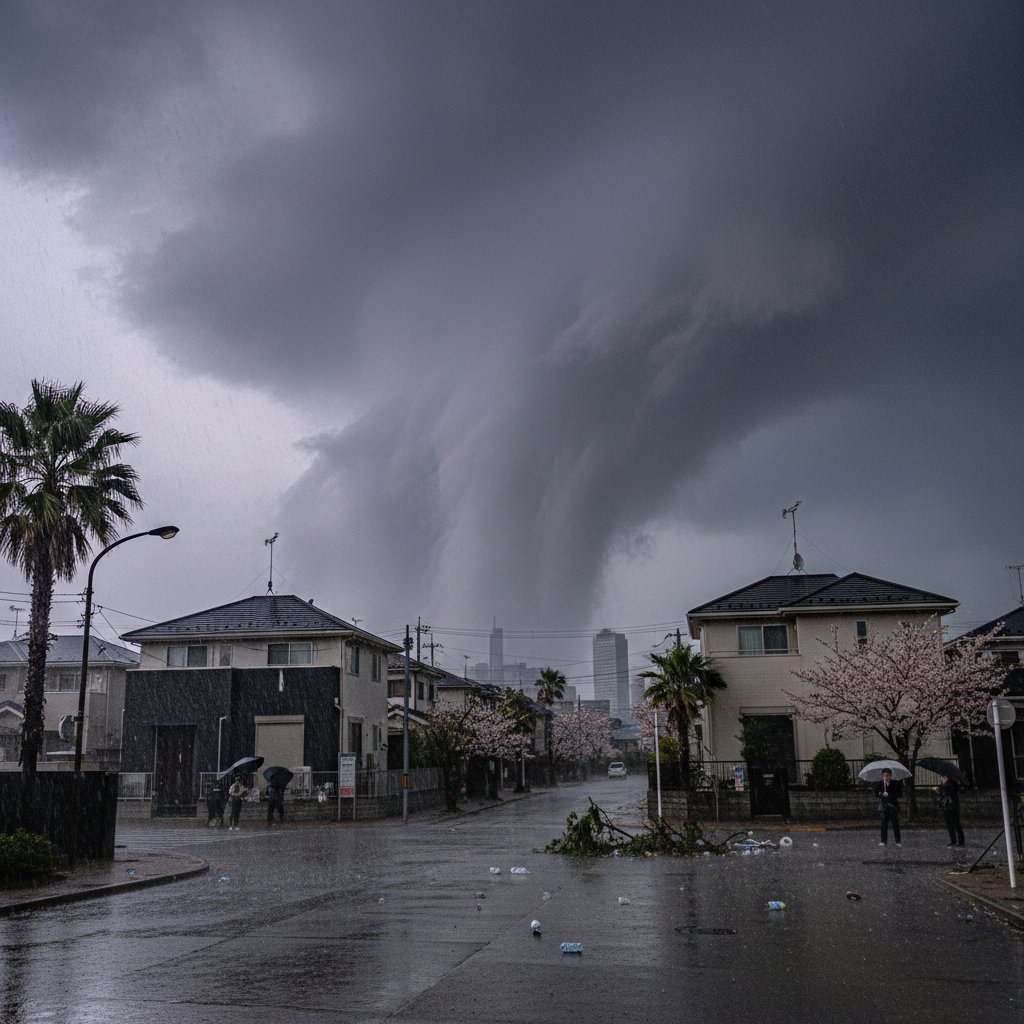
Yesterday afternoon, a violent downburst struck the suburban Tokyo district of Machida, packing 85 mph (137 km/h) straight-line winds that injured 12 residents and caused extensive damage to homes and power infrastructure across a 3-mile-wide swath. For residents in Machida and adjacent towns of Sagamihara and Tama, the sudden windstorm upended daily life, snapping century-old cherry trees, collapsing scaffolding at a construction site, and leaving over 8,000 households without power as of this morning.
This was not an earthquake, not a tornado—it was a microburst, a localized column of sinking air that accelerates upon hitting the ground and fans outward with hurricane force. Japan’s Meteorological Agency (JMA) confirmed the event at 3:45 p.m. local time, based on radar data showing a pronounced echo pattern and surface station readings at Tokyo International Airport recording a 38 mph (61 km/h) gust from the northwest around the same window. But the real hammer fell in the western suburbs.
The most impactful consequence for everyday people is the sudden disruption to commuter travel. JR East suspended service on the Yokohama Line, Odakyu Electric Railway halted trains between Machida and Hon-Atsugi, and several bus routes were diverted due to fallen trees blocking roads. The Tokyo Metropolitan Police reported 14 road closures in Kanagawa Prefecture alone, and cleanup crews estimate at least 48 hours before normal schedules resume.
What Exactly Is a Downburst? A Meteorological Breakdown
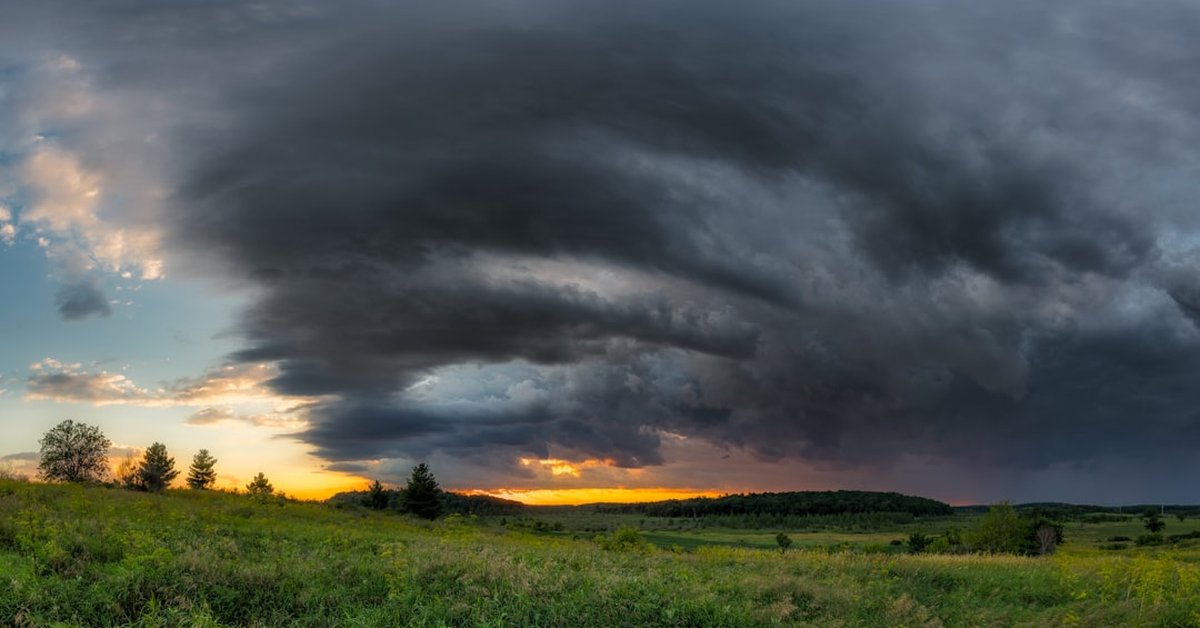
A downburst is an intense downward rush of air from a thunderstorm’s core. As rain-cooled air descends rapidly through dry air beneath the cloud base, it accelerates due to negative buoyancy. Upon hitting the ground, it spreads horizontally, creating damaging straight-line winds that can rival weak tornadoes. This one packed wind speeds equivalent to a Category 1 hurricane on the Saffir-Simpson scale, though for only 10-15 minutes at the peak.
JMA senior meteorologist Dr. Kenji Takahashi explained: “The conditions were ideal: a warm, humid airmass near the surface of 86°F (30°C) with dew points at 73°F (23°C), while a dry, hot layer from the foothills existed just above 5,000 feet. When afternoon showers formed over the western hills at 3:32 p.m., they quickly intensified into a thunderstorm with a collapsed downdraft. Our radar showed a clear ‘bow echo’ signature—a classic downburst indicator—within 12 minutes of initiation.”
Downbursts are categorized as wet or dry. This was wet: heavy rain accompanied the winds, dumpinging 1.2 inches (30 mm) of rain in just 20 minutes, flooding streets in the lower-lying wards of Naruse and Tamagawa. Dry microbursts, by contrast, occur in arid regions with virga—rain evaporating before hitting the ground.
The United States averages over 10,000 severe downburst reports annually, but they are less common but just as dangerous in Japan. Tokyo’s last comparable event was in August 2019, when a downburst in Ota Ward damaged 200 structures. Meteorologically, the difference between a downburst and a tornado matters: damage patterns are linear, not rotational. Investigators from JMA found debris scattered uniformly to the southeast, confirming straight-line winds, not cyclonic.
Damage Assessment: Homes, Hospitals, and a Shrine
The hardest-hit areas were neighborhoods in western Machida, near the Tsurukawa and Tadao districts. Preliminary data from the Tokyo Fire Department shows 52 structures sustained roof damage, 14 had broken windows, and two apartment buildings had partial wall collapses. One elderly resident suffered a head injury from a fallen ceiling beam and was hospitalized with non-life-threatening injuries. Six others sustained cuts from shattered glass; the remaining five had minor injuries from debris.
The Machida City Hospital saw a surge in emergency room visits between 4:00 p.m. and 7:00 p.m., but no fatalities were reported. “The timing was fortunate—many residents were indoors or still at work before typical rush hour,” said Dr. Yuki Watanabe, director of disaster medicine at Machida Hospital. “Had the downburst hit at 6 p.m., with more people on foot or bike, injuries would have been far greater. The triage load was manageable but high for a single suburban ER: 12 patients in under four hours strains any facility without prior warning.”
Cultural landmarks also suffered. The 400-year-old Sōjō-ji Temple in Tama-ku lost its 60-foot main gate, which collapsed onto a parking lot—an empty parking lot, luckily no injuries. A large ginkgo tree on the temple grounds was uprooted, crushing a section of the stone wall. The shrine’s head priest, Hiroshi Nakamura, stated: “This was the strongest wind I’ve experienced in my 50 years here. We are heartbroken but grateful no one was beneath the gate.”
“Power restoration for the 8,000 customers affected will take through Friday for most areas, but 1,200 homes in remote valleys may be without electricity until Sunday,” said TEPCO spokesperson Mika Yoshida. “We have 200 crews working through the night, but blocked roads and tangled lines slow access.”
Vegetation damage was severe: over 1,500 trees were downed across the 5-mile-long damage path, most notably in Machida Central Park, where 70% of the cherry blossom grove—an iconic spring destination—was flattened. The city’s green department estimates replacement will cost ¥30 million ($200,000 USD) and take years for newly planted trees to reach maturity.
Coordination and Response: Systems Tested, Lessons Learned
Japan’s disaster response system activated quickly. The JMA issued a “severe wind warning” for the Tokyo area at 3:38 p.m., six minutes before the downburst peaked. While this gave residents short notice, it was enough for schools to keep children indoors, and for the Tokyo Rail operation centers to initiate speed reductions and track inspections.
The timeline of alerts is instructive for future preparedness:
- 3:32 p.m. — JMA identifies thunderstorm cell moving east at 20 mph (32 km/h).
- 3:38 p.m. — Tornado watch canceled; severe wind warning issued for Kanagawa and Tokyo.
- 3:44 p.m. — Machida City activates emergency broadcast system via public speakers and mobile app.
- 3:45 p.m. — Peak winds measured at Tokyo Airport’s anemometer: 85 mph.
- 4:02 p.m. — First fire engine dispatched to Machida Hospital for structural assessment.
However, gaps emerged. Power line sensors detected fluctuations at 3:46 p.m., but TEPCO’s public outage map didn’t update until 4:35 p.m., leaving many residents unsure if they should shelter or evacuate. The Tokyo Metropolitan Disaster Response Center acknowledged a 45-minute delay in satellite imagery processing due to cloud cover, which hindered initial damage mapping.
Emergency management professor Akiko Saito at the University of Tokyo commented: “This event demonstrates that even with world-class monitoring, microbursts remain a hard-to-predict hazard. They develop in minutes, not hours. The real challenge isn’t just detection—it’s hardening infrastructure: building codes for wind loads on legacy structures, and vegetation management in urban green spaces. Tokyo’s aging suburbs have many trees and buildings from the 1960s that aren’t designed for such forces.”
Local fire departments and the Japan Self-Defense Forces are now conducting aerial surveys using helicopters to assess damage in hilly areas inaccessible by road. Three temporary evacuation centers are open at Machida City Gymnasium, Tama Civic Hall, and Sagamihara Elementary School, housing 47 displaced residents as of last reporting.
Looking Forward: Building Resilience Against Tomorrow’s Downbursts
This downburst is another warning in a pattern of increasing severe thunderstorm events in temperate regions. According to climate models cited by JMA, the number of days with conditions favorable for downbursts (high convective available potential energy and steep low-level lapse rates) over the Kanto Plain may rise by 10-15% by 2050 under a moderate warming scenario. The implication is clear: Tokyo’s already dense infrastructure must adapt.
In the near term, power and telecom companies face a grind. NTT Docomo reported 32 cell towers damaged, leaving some neighborhoods in Tama with one bar of service—enough for emergency texts, not reliable calls. The outage map for internet providers still shows scattered blank spots 18 hours post-event. Recovery coordination will dominate the next several days, with full restoration of water, power, and transport expected by Saturday.
For residents, the immediate focus remains safety: avoid fallen power lines, report gas leaks, and check on elderly neighbors. Yet the broader conversation in local government will likely turn to revising tree maintenance policies along public roads and considering more robust roof anchors for old wooden houses. Machida Mayor Masaki Ishii stated this morning that a “blueprint for windstorm mitigation” will be presented to the city council within 30 days.
As recovery crews clear debris and splice cables, one thing is already clear: this downburst isn’t a freak once-in-a-decade event. It’s a harbinger of a more volatile climate for one of the world’s most urbanized regions. The question isn’t if another will strike, but when—and whether Tokyo’s suburbs will be ready when the air comes crashing down again.