





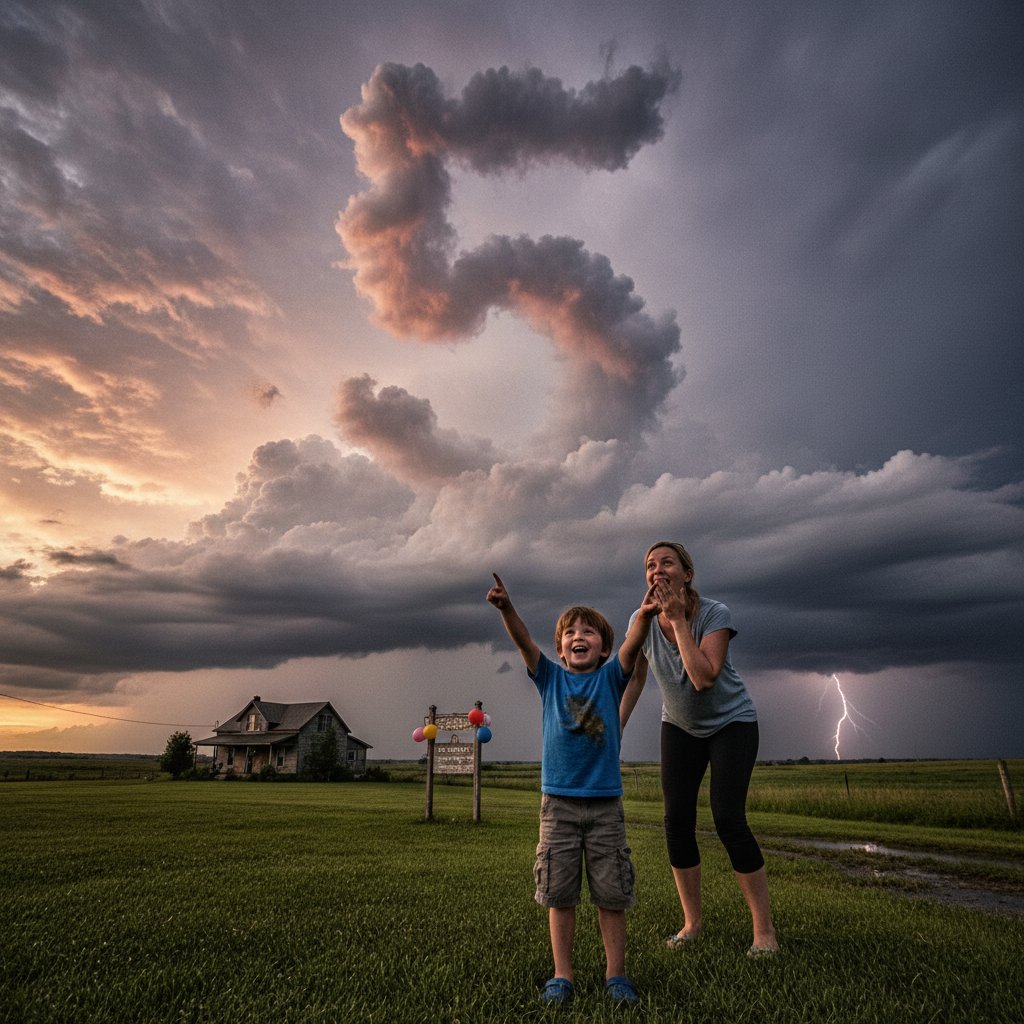
It was a moment of pure, unscripted magic. As Sarah Jenkins snapped photos of her son, Leo, blowing out the candles on his fifth birthday cake in their backyard in Boulder, Colorado, she glanced up and froze. There, drifting lazily across a brilliant blue sky, was a cloud shaped unmistakably like the number five.
“I couldn’t believe it,” Jenkins told CyclonePost. “It was like the sky itself was celebrating with us. Leo pointed and shouted, ‘Mom, it’s my number!’ We all just stood there, staring.”
The image, shared on social media, quickly went viral. But beyond the heartwarming coincidence, the sighting raises a fascinating question: How do clouds form such recognizable shapes, and what does it tell us about the atmosphere above our heads?
The Science Behind the Sky’s Serendipity
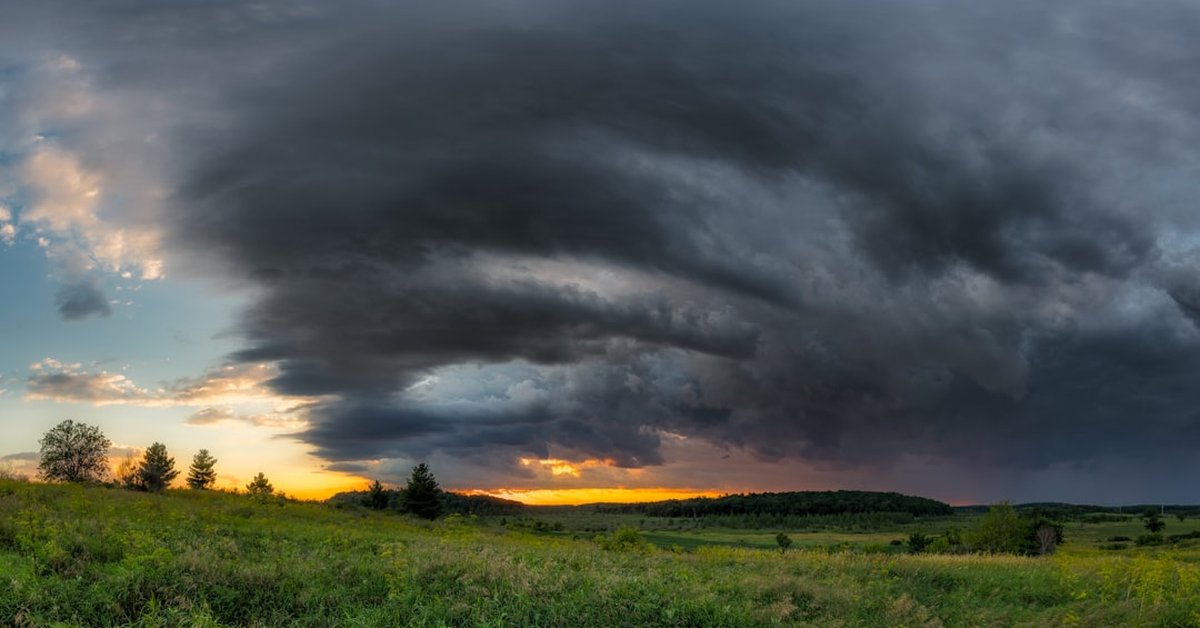
Clouds are not random puffs of water vapor. They are structured, dynamic systems shaped by temperature, humidity, and wind. The “5” that appeared over Boulder on June 14th was likely a cumulus cloud, formed when warm air rises, cools, and condenses into visible droplets.
“What we’re seeing is a combination of atmospheric physics and human pattern recognition,” explains Dr. Emily Hartfield, a meteorologist at the National Center for Atmospheric Research in Boulder. “The cloud’s edges were sculpted by subtle wind shear at different altitudes. The upper portion got stretched into a horizontal bar, while the lower part remained more vertical, creating the numeral shape.”
Dr. Hartfield notes that such formations are rare but not unprecedented. “We’ve seen clouds that look like letters, animals, even famous faces. It’s a reminder that the atmosphere is a fluid, ever-changing canvas.”
The timing—on a child’s birthday—adds an emotional layer. For the Jenkins family, the cloud became a symbol of joy and wonder. “It felt like a sign,” Sarah said. “A little wink from the universe.”
From Ancient Omens to Modern Viral Moments
Humans have long looked to the sky for meaning. Ancient cultures interpreted cloud shapes as messages from gods or predictors of weather. In medieval Europe, a cloud resembling a sword was seen as an omen of war. Today, we snap photos and share them online, but the impulse remains the same: we seek patterns and stories in the natural world.
“This is a classic example of pareidolia—the tendency to see familiar shapes in random patterns,” says Dr. Marcus Chen, a cognitive psychologist at Stanford University. “Our brains are wired to recognize faces and symbols quickly. When a cloud happens to align with a meaningful shape, it feels personal, even miraculous.”
For Leo, the cloud was simply a birthday gift from the sky. His mother captured the moment on her phone, and within hours, the image had been shared thousands of times. Local news stations picked up the story, and meteorologists weighed in on the science behind the sighting.
“It’s a beautiful intersection of meteorology and human experience,” says Dr. Hartfield. “While we can explain the physics, we can’t diminish the magic people feel. That’s what makes weather so compelling.”
What This Means for You: Spotting Your Own Sky Signs
You don’t need a special occasion to see remarkable cloud formations. With a little knowledge and patience, anyone can become a cloud spotter. The key is understanding the conditions that produce distinct shapes.
“Look for days with scattered cumulus clouds, usually in the late morning or early afternoon,” advises Dr. Hartfield. “That’s when thermal updrafts are strongest. If you see a cloud that looks like something, take a photo and note the time. You might be witnessing a fleeting masterpiece.”
For the Jenkins family, the cloud “5” lasted only about 10 minutes before wind currents reshaped it into an amorphous blob. But the memory—and the photos—will last a lifetime. “Every time Leo sees a cloud now, he asks if it’s his number again,” Sarah laughs. “I tell him to keep looking up. You never know what you’ll see.”
This phenomenon also serves as a gentle reminder of the beauty in everyday weather. In an era of climate anxiety and extreme storms, a simple cloud can offer a moment of respite and connection. “Weather isn’t just about disasters,” says Dr. Chen. “It’s also about wonder. These small, joyful events remind us that nature is full of surprises.”
The Future of Cloud Watching: Citizen Science and Shared Joy
As smartphone cameras improve and social media amplifies our shared experiences, cloud sightings like Leo’s “5” are becoming more common—and more documented. Citizen science projects, such as the Cloud Appreciation Society, encourage people to submit photos of unusual clouds, helping researchers track atmospheric patterns.
“Every photo is a data point,” says Dr. Hartfield. “If thousands of people send us images of cloud shapes, we can study how often these formations occur and under what conditions. It’s a fun way to engage the public in real science.”
For now, the Jenkins family is simply enjoying their moment in the spotlight. Leo has already requested a cloud-shaped cake for his sixth birthday. “I don’t know if the sky will cooperate again,” Sarah says, smiling. “But we’ll be watching.”
As the climate continues to change, the clouds above us may shift in frequency and form. But one thing remains constant: the human capacity to find meaning in the sky. Whether it’s a number, a heart, or a dragon, these fleeting shapes remind us that even in a world of data and forecasts, there is still room for awe.
So next time you’re outside, take a moment to look up. You might just see your own birthday surprise written in the clouds.