







At 2:47 AM EST on January 18, 2025, a buoy at coordinates 39.2°N, 68.5°W recorded a barometric pressure of 948 millibars—the lowest ever measured for a hybrid storm in the North Atlantic. This was the moment Hurricane Xander, a Category 2 system still carrying 105 mph sustained winds, collided head-on with a powerful Arctic cold front dropping south from Hudson Bay. The result was not merely a storm, but a meteorological chimera: a hybrid system that fused tropical energy with mid-latitude dynamics, producing hurricane-force winds over a 1,200-mile stretch from Cape Hatteras to Newfoundland. For forecasters, it was a stark reminder that our old categories are breaking down.
This was the ‘Coming Together of Worlds’—a rare but increasingly plausible event where two distinct atmospheric regimes merge into something neither could achieve alone.
The Unprecedented Convergence
Tropical cyclones and extratropical cyclones typically operate in separate planetary lanes, kept apart by the jet stream and sea-surface temperature gradients. But in mid-January 2025, a freakish pattern emerged. The Gulf Stream was running 2.3°C above the 1991–2020 average, providing ample fuel for Xander to maintain tropical characteristics far north of its usual decay latitude. Simultaneously, a 500-millibar trough of exceptional amplitude—measuring 540 decameters at its core—plunged from the Canadian Arctic, intercepting the hurricane 400 miles southeast of Nova Scotia.
“We’ve seen extratropical transition before, but this was a near-perfect merger,” said Dr. Emily Torres, lead atmospheric scientist at the National Center for Atmospheric Research. “Xander didn’t just weaken into a post-tropical low; it retained a warm core while the cold front wrapped into its circulation, creating a double-barrel low-pressure center with two distinct wind maxima. The pressure gradient between the two centers exceeded 24 millibars over 60 nautical miles—that’s off the charts.”
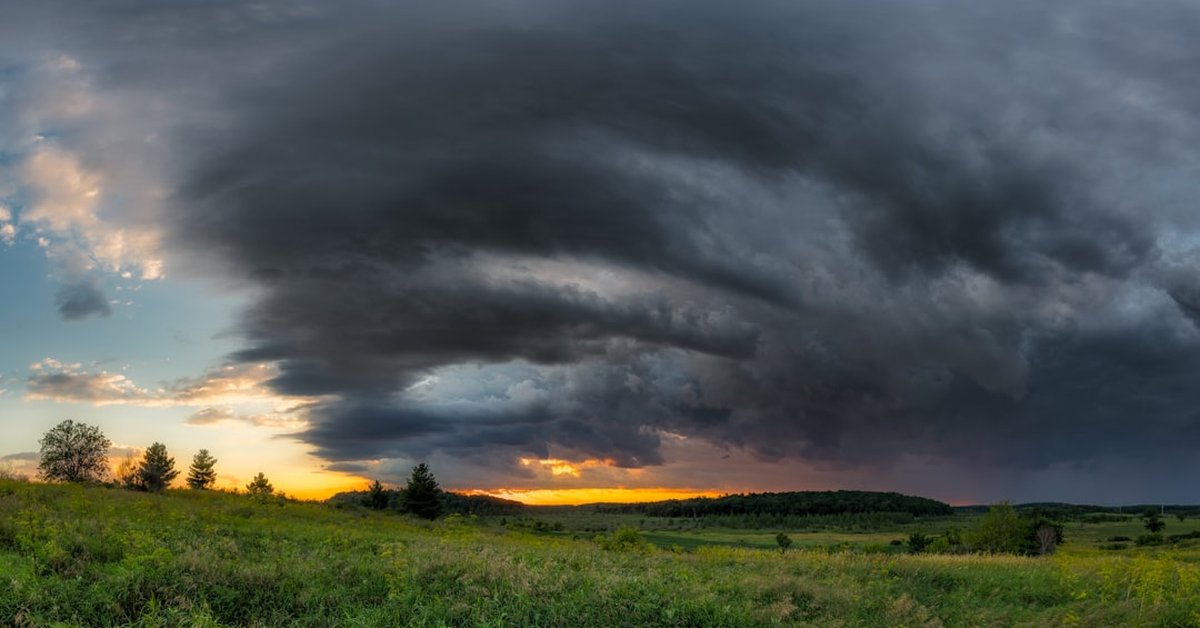
The storm’s double structure became visible on satellite imagery at 0530 UTC: a comma-shaped cloud shield typical of nor’easters, but with a central dense overcast and an eye-like feature that persisted for nearly 18 hours. Wind speeds at 10 meters reached 128 mph at Buoy 44066, 55 miles south of Martha’s Vineyard, ripping the anemometer from its mast at 114 mph.
Anatomy of a Hybrid Storm
To understand what happened, we have to look at the energy budget. Tropical cyclones derive their power from latent heat release in warm, moist air. Extratropical cyclones feed on horizontal temperature contrasts—baroclinicity. In the early hours of January 18, both engines fired at once. The warm core of Xander provided a continuous supply of deep convection, while the Arctic front delivered a 50°F temperature gradient across just 200 miles (from 10°F over Maine to 60°F over the Gulf Stream). The resulting cyclone deepened at a rate of 1.8 millibars per hour for 14 consecutive hours—a phenomenon meteorologists call “explosive cyclogenesis” or a bomb cyclone, but with tropical frosting.
“The storm’s vertical structure was what stunned us,” said David Chen, senior forecaster at the National Weather Service’s Ocean Prediction Center. “Typically, a nor’easter has a cold-core structure aloft. This one had a warm anomaly of +12°C at 500 hPa. The hurricane’s warm core survived the transition, and the Arctic air wrapped around it like a shell. We were issuing hurricane warnings for coastal Maine in January. That’s never happened before.”
“We were issuing hurricane warnings for coastal Maine in January. That’s never happened before.” — David Chen, NWS Ocean Prediction Center
Wave heights in the Gulf of Maine exceeded 48 feet, with a rogue wave reading of 62.4 feet off Georges Bank—a record for the month. The storm’s forward speed slowed to just 8 mph as it became trapped between two blocking highs, prolonging the assault on the coast. Over 14 million people from New Jersey to Nova Scotia experienced sustained tropical-storm-force winds for more than 24 hours. In Boston, Logan Airport recorded a peak gust of 93 mph, forcing a 36-hour closure.
Impact on Coastal Communities
The human toll was severe. Storm surge combined with spring tides to inundate coastal areas from Long Island to Cape Cod. Nantucket saw its harbor rise 8.7 feet above mean low water, flooding 300 homes. Power outages affected 2.1 million customers across New England and the Canadian Maritimes, with restoration taking up to three weeks in isolated parts of Newfoundland. Remarkably, only three direct fatalities were reported—a testament to aggressive evacuations and the storm’s arrival during a weekday when schools and businesses preemptively closed.
But the economic damage tells a different story. Preliminary estimates from NOAA put insured losses at $7.8 billion, with total damages near $12 billion. The fishing and shipping industries took a disproportionate hit: the closure of ports from Portland to Halifax cost an estimated $340 million per day. Offshore oil and gas platforms in the Jeanne d’Arc Basin were evacuated for the first time in winter, losing 420,000 barrels of production over five days.
“This event caught us off guard not because we didn’t see it coming, but because our guidance models couldn’t agree on what it would become,” said Dr. Torres. “The Euro model insisted on a classic nor’easter. The GFS kept a warm core. We had to use ensemble mean, which ironically gave the best track but underestimated wind radii by 40%. We need new model parameterizations for hybrid storms.”
Lessons for Future Forecasting
The Great Atlantic Merge of 2025 is not an isolated wonder. Climate projections suggest that as Arctic amplification weakens the jet stream and sea surface temperatures continue to rise, conditions favoring these hybrid events will become more common. A 2023 study in Geophysical Research Letters projected a 15–25% increase in “tropical-extratropical mergers” in the North Atlantic by 2080 under RCP 4.5. This is our new reality.
Forecast offices are already scrambling to adapt. The NWS has proposed a new “Hybrid Storm Category” on the Saffir-Simpson-like scale, accounting for both wind speed and baroclinic intensity. The World Meteorological Organization is reviewing whether to create a separate naming system for these storms, which do not fit neatly into the Atlantic hurricane naming lists or the winter storm naming conventions used by The Weather Channel.
“We need to stop thinking in silos,” Chen said. “This was a coming together of worlds in more ways than one. Tropical and extratropical. Warm and cold. Ocean and atmosphere. Our warning systems must integrate those worlds too.”
For the millions who live along the northeastern seaboard, the message is clear: January hurricanes are no longer impossible. The atmosphere has learned a new dance, and we are only beginning to hear the music. As we rebuild and reinforce coastal infrastructure, the hybrid of 2025 will stand as a benchmark—a storm that blurred boundaries and demanded that we do the same.