






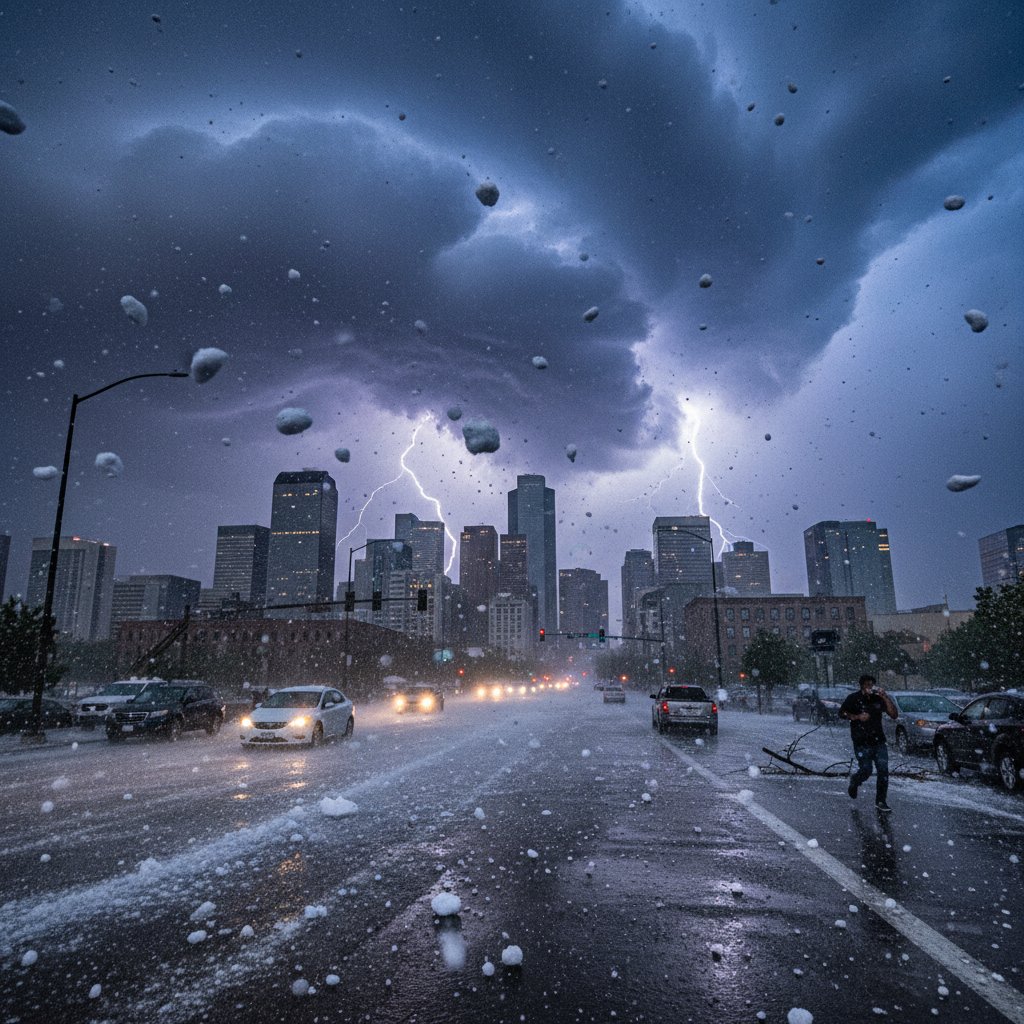
Denver residents are waking up to shattered windshields, battered roofs, and a city blanketed in ice. A severe supercell thunderstorm unleashed a massive hail core over the metro area late this afternoon, dropping hailstones the size of tennis balls—and in some reports, even larger. For thousands of homeowners, the immediate consequence is property damage running into the tens of thousands of dollars. Car dealerships, shopping centers, and residential neighborhoods from Lakewood to Aurora took a direct hit as the storm crawled eastward, dropping ice for nearly 45 minutes straight.
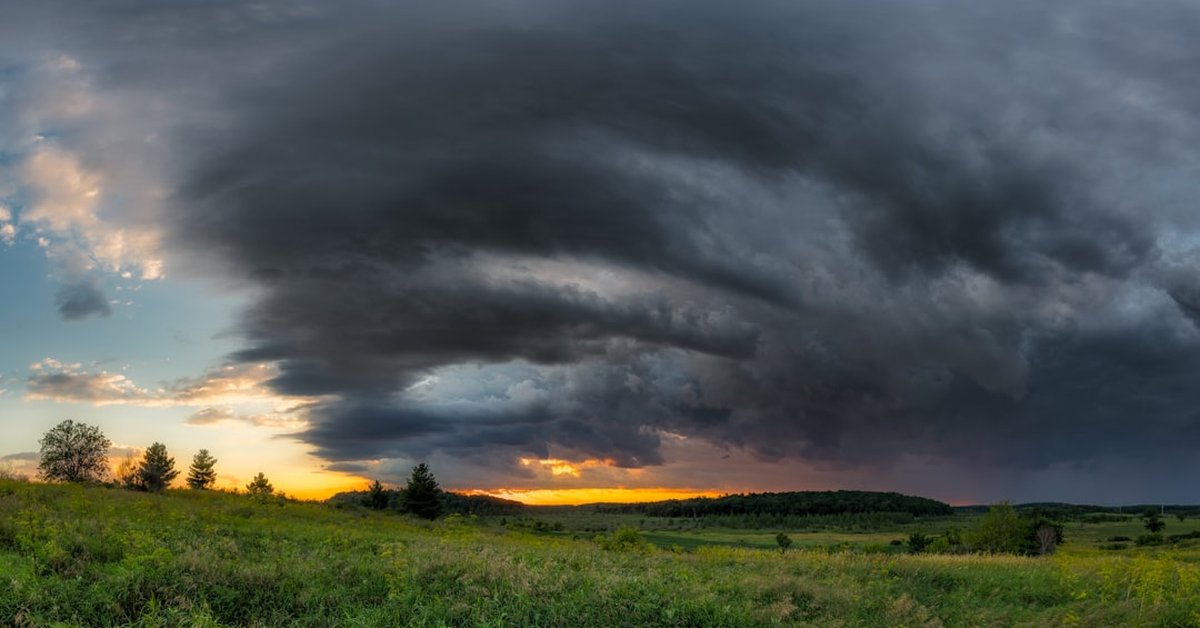
This wasn’t just a passing hailstorm. Radar imagery from the National Weather Service in Boulder showed a distinct ‘hail core’—a dense, elevated reflectivity signature indicating a high concentration of large hailstones. The storm’s updraft was strong enough to keep the ice aloft long enough to grow to destructive sizes before gravity finally pulled them down on the unsuspecting city.
The Anatomy of a Hail Core
Meteorologists use the term ‘hail core’ to describe the region within a thunderstorm where hail is most concentrated and largest. In yesterday’s storm over Denver, the hail core extended over a swath roughly 10 miles wide and 15 miles long. The National Weather Service confirmed hailstones up to 2.5 inches in diameter—larger than a baseball—in the central part of the city.
“What we observed was a classic ‘bounded weak echo region’ on radar, which suggests an extremely powerful updraft. These storms can produce hail that grows through multiple cycles of wet and dry growth, creating the dense, layered stones that cause so much damage,” said Dr. Elena Marchetti, a research meteorologist at the National Center for Atmospheric Research in Boulder.
The storm formed along a dryline that collided with Gulf moisture streaming northward. As the supercell matured, its updraft tilted the storm’s precipitation shaft, allowing hail to re-enter the updraft multiple times. Each cycle added a layer of ice. The result: stones that fell at speeds exceeding 80 miles per hour, packing enough kinetic energy to punch through asphalt shingles and crack tempered glass.
Denver International Airport reported a ground stop lasting over an hour as the storm passed. Several flights were diverted to Colorado Springs. The Federal Aviation Administration cited ‘severe weather with large hail’ as the cause.
A Costly Tradition: Denver’s History with Hail
Denver sits in a geographic sweet spot—or, more accurately, a bullseye—for hailstorms. The city lies just east of the Rocky Mountains, where warm, moist air from the Gulf of Mexico meets dry, unstable air from the high desert. This collision zone is one of the most hail-prone regions in the United States. According to the Insurance Information Institute, Colorado consistently ranks among the top states for hail damage claims, with insured losses frequently exceeding $1 billion annually.
Yesterday’s event invites comparison to some of the costliest hailstorms in Colorado history. In May 2017, a storm dropped golf-ball-sized hail across Denver, causing over $2.3 billion in insured losses—the most expensive hailstorm in U.S. history at the time. That record was later broken by a 2019 storm in San Antonio, but Denver remains a perennial hotspot. The 2017 storm damaged more than 100,000 vehicles and 50,000 homes.
“This storm may not have reached the sheer geographic extent of the 2017 event, but the hail core’s intensity was comparable. The damage per square mile could be very high,” said Dr. Marchetti.
Climate Signals: What This Means for the Future
While no single storm can be directly attributed to climate change, researchers have identified a troubling trend: hailstorms in the United States are becoming more severe, even if not more frequent. Warmer temperatures increase the amount of moisture in the atmosphere, providing more fuel for thunderstorms. At the same time, the melting level—the altitude at which snow turns to rain—is rising. This could theoretically reduce the risk of hail reaching the ground, but it also means that storms can develop stronger updrafts before hail begins to melt.
“The physics are complex. But the evidence we’re seeing from storm databases suggests that the proportion of hailstorms producing very large stones—greater than two inches—is increasing. That’s consistent with a warming world that has more convective energy available,” said Dr. James Rathburn, a climate scientist at the University of Colorado Boulder.
For Denver residents, this means that ‘hail alley’ is not going away. The city’s rapid suburban expansion over the past two decades has put more homes, cars, and infrastructure directly in the path of these storms. The 2023 storm alone may add another chapter to Colorado’s costly hail history, with early estimates from local adjusters suggesting insured losses could exceed $500 million.
What Residents Should Do Now
In the immediate aftermath, safety remains the priority. Large hail can cause serious injury; residents are urged to stay indoors until the storm passes completely. For those with damage, the next steps are critical. Document everything with photographs and video before cleaning up. Contact your insurance company promptly—most policies cover hail damage to roofs and vehicles, but deductibles may apply.
The Colorado Division of Insurance has activated a consumer hotline for storm victims. Additionally, the state’s roofing contractor regulations require that homeowners be cautious of storm chasers who pressure them into signing contracts on the spot. Check licenses and references.
Looking forward, Denver’s building codes may need to evolve. Some newer developments in the region have begun using impact-resistant roofing materials, but many older homes still have standard asphalt shingles that are vulnerable to stones larger than one inch. The Denver City Council is expected to revisit the issue of mandatory hail-resistant roofing in new construction during the next legislative session.
As the cleanup begins and the sun returns over the Front Range, one thing is clear: Denver’s dance with the hail core is far from over. The same atmospheric ingredients that make this region so beautiful also make it a target. With climate models projecting continued instability, residents and policymakers alike must adapt to a future where the ice falling from the sky is bigger, heavier, and more costly than ever before.